People who worked through an app in 2024 had an average monthly income of R$2,996. The value is 4.2% higher than the income of workers who did not work through platforms (R$2,875). 
This difference, however, was already greater. In 2022, the income of platform workers exceeded that of other employed people by 9.4%.
The finding is part of a module on workers using applications from the Continuous National Household Sample Survey (Pnad), released this Friday (17) by the Brazilian Institute of Geography and Statistics (IBGE).
>> Click here and read more about Pnad Contínua – work through digital platforms
If, on the one hand, the income of these workers was above average, on the other, the data shows that they worked more hours.
>> Follow the channel Brazil Agency on WhatsApp
The survey shows that workers working through popular apps – called platformized by IBGE – worked 44.8 hours a week; while those not platformed, 39.3 hours, in 2024.
Thus, IBGE found that despite having a higher income, these workers received R$15.4 per hour. The value is 8.3% lower than non-platformed ones (R$ 16.8/hour).
In other words, those who work through applications need to work harder to overcome those that are not platformed.
Applications
The IBGE survey, which is in its second edition (the previous one was in 2022), collected information from employed people aged 14 or over who deal with:
- taxi apps;
- private passenger transport, such as Uber and 99;
- delivery of food and products, such as Rappi and iFood;
- provision of general or professional services, which includes professions such as designerstranslators and even telemedicine, when the doctor uses the digital platform to capture patients and carry out consultations, for example.
The researchers identified 1.7 million platform users.
Education
Pnad classified workers’ income by level of education and identified that in all segments with education below higher education, the income of those on platforms exceeded that of those not on platforms.
Among those employed with complete primary and incomplete secondary education, they received 50% more than the national average.
But among employed people who had higher education, those on platforms received 29.8% less (R$4,263), while those who did not work via app received R$6,072 monthly.
According to the analyst responsible for the research, Gustavo Fontes, this information may be an indication that people who completed a university course did not find a place in the training area, they looked for an alternative through an app, but did not achieve the performance that was expected for the level of education.
“This is a reality. We know that there are people with a degree in engineering who are driving via app”, he explains.
“This is probably not the job that the person would most like to do, but it is what they found at that moment and is guaranteeing an income”, he adds.
Informality
The study identified that platform workers face more situations such as informality and non-contribution to social security.
Of the employed workers, 43.8% were informal, situations such as employees without a formal contract and self-employed workers without a National Register of Legal Entities (CNPJ). Among those on platforms, the proportion rose to 71.7%.
Of those not on the platform, 61.9% contributed to social security, while 35.9% of those on the platform did not have this social protection that guarantees assistance such as retirement and pension.
Drivers
IBGE made comparisons between people who worked as drivers. In 2024, Brazil had 1.9 million employed people who carried out this professional activity. Around four in ten (43.8%) were app drivers. This universe totaled 824 thousand people. Those not platformed were 1.1 million.
App drivers had an average monthly income of R$2,766, which was R$341 higher than that received by non-platform drivers (R$2,425). This difference is almost double that identified in 2022 (R$179).
In relation to working hours, platform workers drove five hours more per week, on average, reaching 45.9 hours compared to 40.9 hours for non-platform workers.
This relationship meant that the platform worker’s hour worked was worth R$ 13.9, very close to that of other drivers (R$ 13.7/hour). But if the comparison is with non-platformed drivers who were formal, they received a higher amount, R$14.7/hour.
Just like all app workers as a whole, app drivers contributed less to social security – just one in four (25.7%). Among those not on the platform, more than half (56.2%) had social security coverage.
Informality was also higher among app drivers, reaching 83.6% of them, compared to 54.8% of other drivers.
IBGE only sought information from people who used applications as their main form of work intermediation. This way, anyone who works as an app driver in their spare time to supplement their income was not included in the calculation.
Motorcyclists
When looking at information from motorcyclists, IBGE found some phenomena similar to those experienced by drivers.
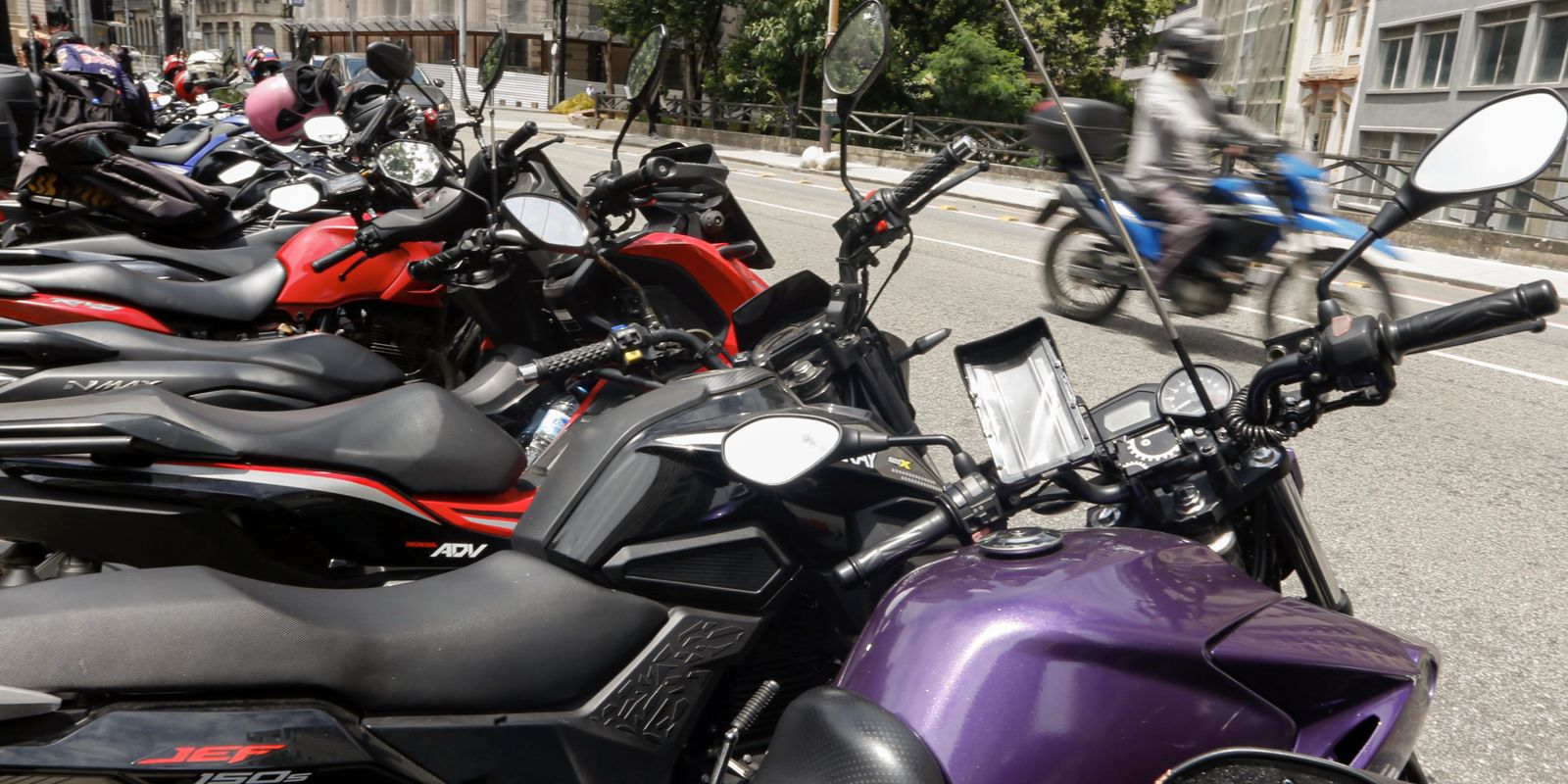
Brazil had 1.1 million people employed driving motorcycles. Of every three, one worked through an app (33.5%), totaling 351 thousand people.
This participation represents a jump compared to 2022, when it was 21.9%.
Those who worked with motorcycles via the app had a monthly income of R$2,119, a value 28.2% higher than those not on the platform (R$1,653).
Those employed by platforms worked 45.2 hours per week on average, 3.9 hours more than the working hours of non-platform workers, 41.3 hours per week.
The hour for those who were motorcyclists per app was worth R$ 10.8, above that paid to other motorcyclists (R$ 9.2).
The hourly remuneration of motorcyclists via app also exceeded that of non-platformed riders with a formal occupation (R$ 10.6/hour).
More than a third (36.3%) of non-platformed motorcyclists contributed to social security, while only 21.6% of platformed motorcyclists ensured protection.
Among those not on platforms, informality reached 69.3%, a level lower than that of those who use digital platforms (84.3%).
Bond discussion
Representatives of categories that work for applications, such as drivers, seek recognition of employment relationships with digital platforms to avoid what they consider precariousness of workan allegation that companies disagree with.
The matter became the subject of judgment at the Federal Supreme Court (STF), the highest court in the country, and should be resumed at the beginning of Novemberaccording to the president of the court, minister Edson Fachin.
An opinion from the Attorney General’s Office (PGR) argues that the STF do not recognize the bond.