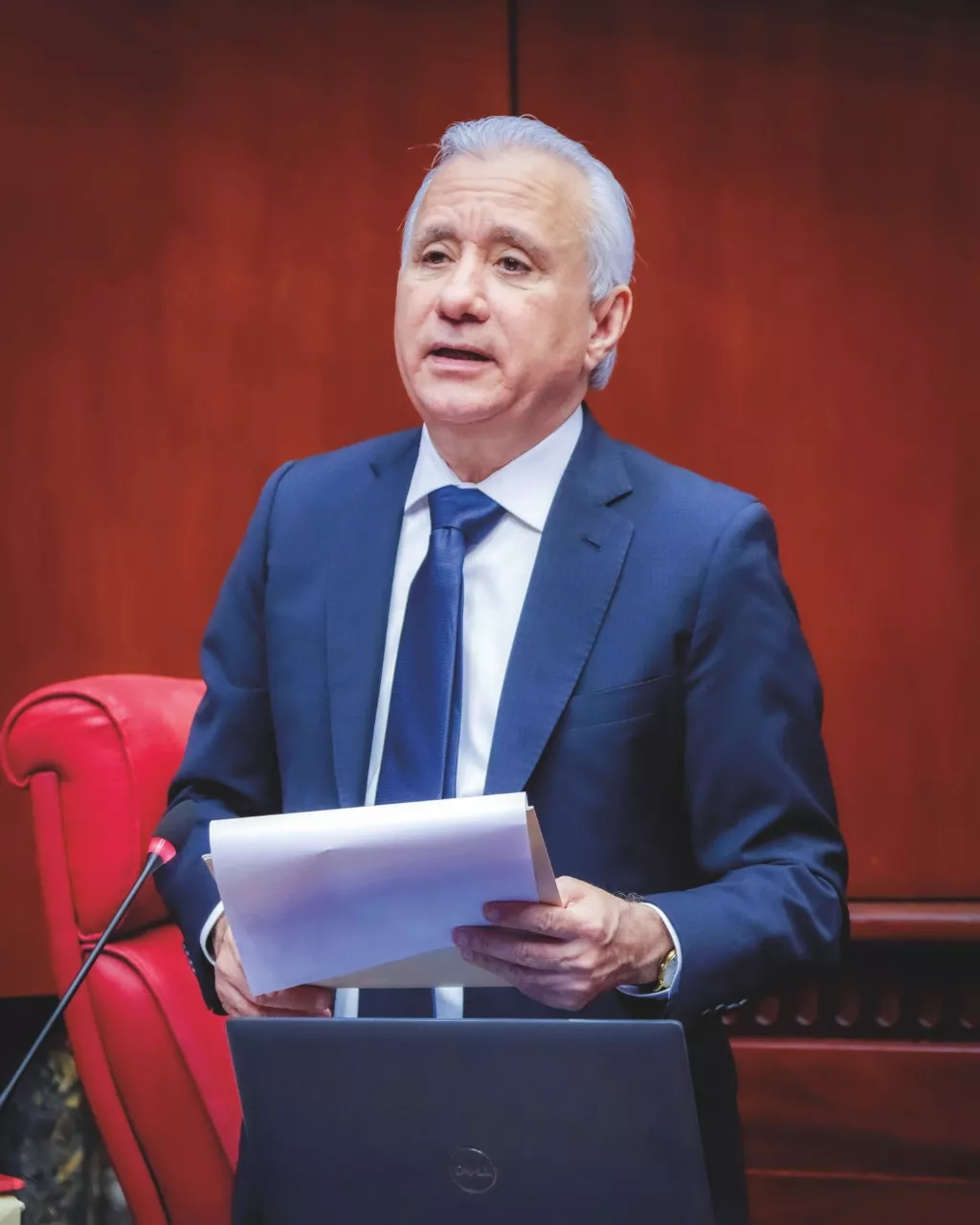
Santo Domingo.– The senator for the province Santo Domingo, Antonio Taveras Guzmán, explained the reasons why he voted against the new Criminal Code during the Senate session held this Thursday. Although he recognized the work of years to agree on the project, he said that the final process lacked transparency, violated institutional principles and was marked by the imposition of agreements external to Congress.
“For anyone it is a secret that, for five years, we have been working hard in the different versions of the Code. But part of the misfortune of our country is that we always skip the rules. And for feding up the rules, there has been a historical impunity that has not let us move forward as a country,” Taveras said before the senatorial plenary.
The legislator, member of the official Modern Revolutionary Party (PRM), said that it does not oppose the complete content of the code, but to the way in which the modifications introduced by the Public Ministry and subsequently agreed with deputies were managed, without the participation of the Senate. “We all know that the Public Ministry and the deputies gathered and agreed a series of changes that we did not know today,” he denounced.
Taveras criticized that, knowing that the Senate could not modify the piece at that stage of the legislative process, it was intended to impose a vote without space for the debate. “I do not accept that I put a shirt of force,” he said, and questioned why a mixed commission was not formed between senators and deputies to discuss the changes proposed by the Public Ministry.
He also pointed out that he had warned about the importance of consulting with the users of the Code, such as the Judiciary and the Public Ministry, granting them a reasonable time for review before taking the piece to the hemicycle.
“I do not accept blackmail. I do not have double morals. I am clear, I am in front and I propose my positions with responsibility,” he said when he reiterated that his vote against responding to a “historical responsibility” with the institutionality of the country.
Taveras insisted that, although valuable advances and proposals are recognized within the new Criminal Code, respect for democratic processes cannot be sacrificed. “I don’t believe in authoritarianism or in any kind of imposition,” he concluded.