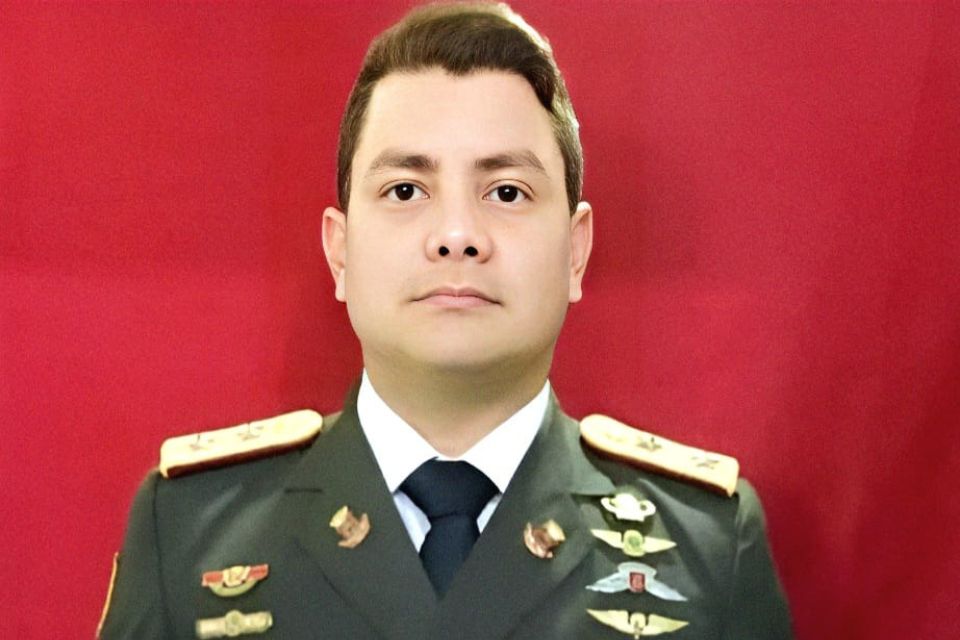
Fátima Sequea denounced that her brother, Captain Antonio Sequea, is “naked and handcuffed” along with other political prisoners in El Rodeo I. She also recalled that her mother, Merys Torreshe has been “in forced disappearance for 44 days and I am still waiting for the call”
Relatives of Captain Antonio Sequea denounced the soldier’s prolonged isolation in the El Rodeo I prison (Miranda state), where they claim he is being held naked and handcuffed along with other political prisoners.
“I denounce the isolation in which my brother, Captain Antonio Sequea, is kept in Rodeo 1, on the 4th floor, naked and handcuffed along with other colleagues,” said Fátima Sequea in a video spread on social networks.
Captain Antonio Sequea was captured along with several men, including his brother-in-law Fernando Noya, on May 4, 2020 during a raid on the coast of Aragua, under the so-called operation Gedeón, for which he was sentenced to 27 years in prison.
His relatives have reported that since his transfer to El Rodeo I he has lost considerable weight, he is barely allowed water for a few minutes a day and he does not have access to medical assistance.
The soldier’s sister called on the Minister of Penitentiary Services, Julio García Zerpa, to stop looking “the other way”, pointing out that his appointment was due to protests by inmates over overcrowding and lack of procedural attention.
He also called on international organizations such as the UN and the OAS: “Dedicate yourselves to looking at the issue of Venezuela and the violation of human rights.”
*Read also: NGO denounces “worrying increase” in arrests and forced disappearances in the country
Furthermore, Fátima Sequea recalled that her mother, Merys Torreshas been “in forced disappearance for 44 days and I am still waiting for the call.” Along with Torres, the disappearance of Zoris Gutiérrez, one of his nieces, was also reported. Both women were intercepted by hooded men in Guatire, Miranda state.
Likewise, he reported the disappearance of Mrs. Azucenet Agüero, “whose only crime was telling Nicolás Maduro that Venezuela is a country of famine, loneliness and diaspora.”
According to the Penal Forum, as of October 27, there were 875 people deprived of liberty for political reasons throughout the country, including four teenagers. The majority are civilians detained after the presidential elections.
*Journalism in Venezuela is carried out in a hostile environment for the press with dozens of legal instruments in place to punish the word, especially the laws “against hate”, “against fascism” and “against the blockade.” This content was written taking into consideration the threats and limits that, consequently, have been imposed on the dissemination of information from within the country.
Post Views: 313