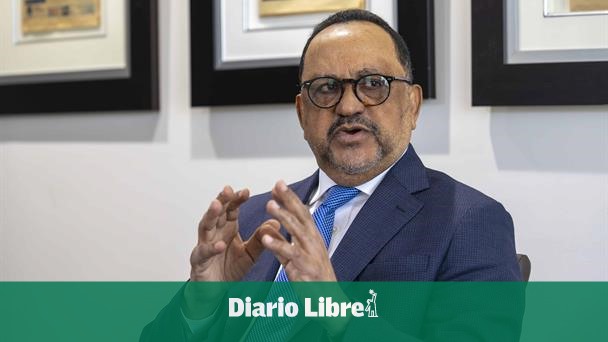
From a temporary office in the Ensanche Serralléshe Ministry of Justice begins to take shape. With a breakdown in an almost didactic tone, Antoliano Peraltaexplained to Diario Libre the complexities of the structuring process of this new institution that must assume neuralgic aspects of the judicial system, including the need to address the debt with Dominican prisons.
“We, and when I say we, I mean the Ministry of Justicewe will not rest as long as we remain there, until we do everything that needs to be done to humanize the prison system of the Dominican Republic,” said Peralta.
Traditionally, the prison system has been synonymous with precariousness to the detriment of the inmates, who are mostly deprived of liberty preventively, that is, they are people who remain in prison while they wait for a final ruling on the accusations they face.
He new minister of Justice—in charge of designing the policies of this network—highlighted the need to dignify prison conditions, without losing sight of what a prison represents.
“We cannot make a jail a hotel No, but not a place where people live with lack of dignity“, said.
In Peralta’s opinion, the low conditions of these spaces perpetuates criminal behavior and limits the possibility of inmates reforming as expected. In this sense, he highlighted that the Government has prioritized the maintenance of the prison system and has intensified the persecution of criminal structures that operate from prisons.
State Representation
Another of the main priorities of the Ministry of Justice will be to reinforce the representation of the State in the judicial processes. Since his inauguration as minister, Peralta has insisted on the need to strengthen the state’s defense against courts.
Historically, the Dominican state has been affected by demands for millions in amounts that, in many cases, have not been adequately attended to due to the lack of organization institutional.
“He Dominican state has historically been bled dry with endless demands for unsuspected amounts, whose attention has not been adequate in all cases, due to the lack of organization for this,” he said.
He explained that the competence that the ministry will assume will allow a better organization and preparation to face litigation against the State.
First steps
The new institution will absorb the functions of the Executive Branch in matters of administration of justice. In that sense, Peralta revealed that, since his appointment, he has been focused on the structuring of the ministry and the formation of the human capital that will integrate it.
Currently, the Ministry operates in the Government Building Dr. Rafael Kasse Acta, located on Gustavo Mejía Ricart Avenue and Agustín Lara corner, in the Ensanche Serralléswhere the offices of the Patrimonial Fund of Reformed Companies also operate (Fonper).
There is already a team working on the institutional structuring, and it was announced that the vice ministers They will be announced soon. They also evaluate where the definitive headquarters of the entity.
With a budget of 4,175.7 million pesos, the official estimates that more than 3,000 million will be allocated to the operations of the prison systemone of the areas that demands the most resources in the institution.
Ministry of Justice about permanence in the IACHR
As a former Legal Consultant and Minister of Justice, Antoliano Peralta is concerned with the debate on the connection of the Dominican Republic to the Inter-American Court of Human Rights (IACHR).
The official assured that one of his first approaches as minister will have to do with this issue, but he did not want to reveal what his position will be.
“He Ministry of Justice He will make a statement on this issue in due course. It is an issue that we must put on the table and it must be one of our first initiatives“, he stated.
Peralta narrated that in 2020 the Legal Consulting of the Executive Branch, which he headed, brought together a group of lawyers to define the Government’s position on the matter in response to a request from the Chamber of Deputies.
Legislators had approved a resolution to request the President of the Republic to define the legal status of fact and law of the Dominican nation regarding its permanence in the IACHR.
Peralta said that they came to celebrate three sessions with expert lawyers on constitutional matters, but “that was left halfway and there were never any proposals.”
“Some well-known jurists said that it was best to leave that as it is, but I do not want to tell you conclusively what the Ministry’s position is, because a ministry is a collective institution what has work teamswho sit down, discuss the issues and draw conclusions. A ministry is not the minister,” said the lawyer.
The debate has resurfaced in public opinion due to a complaint by the Duartiano Institute about alleged plans to return the country to the jurisdiction of the IACHRwhich would force him to comply with sentences that ordered granting nationality to children of undocumented foreigners.
Antoliano Peralta does not agree with paying debts for old works that have not been previously included in the State’s budget planning, as proposed by Congress with its bill that authorizes the payment of debt for works carried out without a formal contract to small contractors. He also suggested that many of the more than 500 works included in the piece should be reviewed.
“What I believe is that we must comply with the sentences, but that we must organize and even make payment plans and also define which debts are legitimate, because there are some that are, obviously, reviewable,” he said.
The Executive Branch returned the project to Congress with observations on its 14 articles several days after Peralta left his position in the National Palace. However, in his new position he will be responsible for defending the State in courts and arbitration forums.