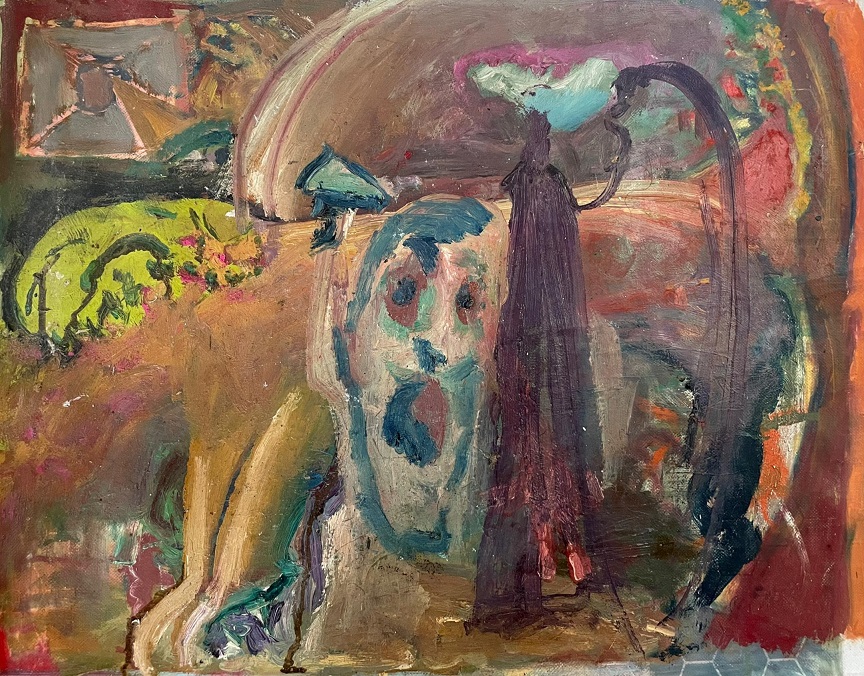
Antoine Mena (Havana, 1983) is graduated in the painting specialty of the National Academy of Fine Arts San Alejandro, promotion of 2008. In 2018 he participated in the Collective Exhibition of Cuban artists Bridges, not walls, that The headquarters of Cincinnati, United States was based.
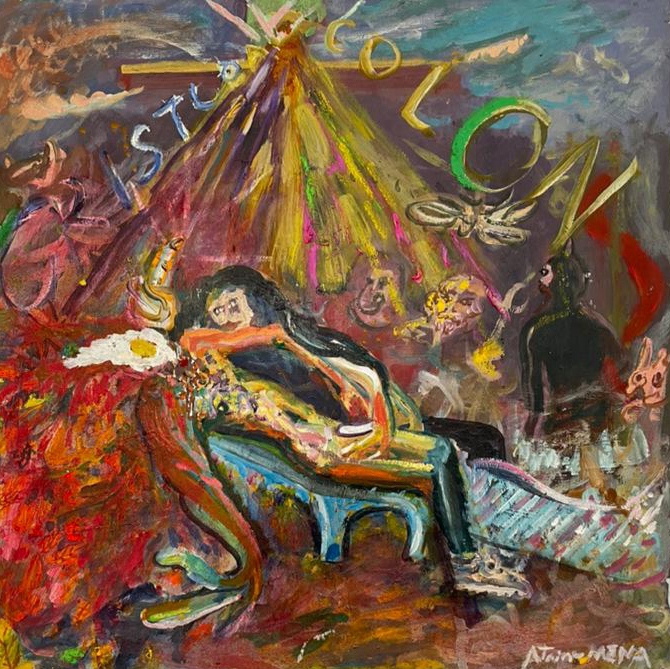
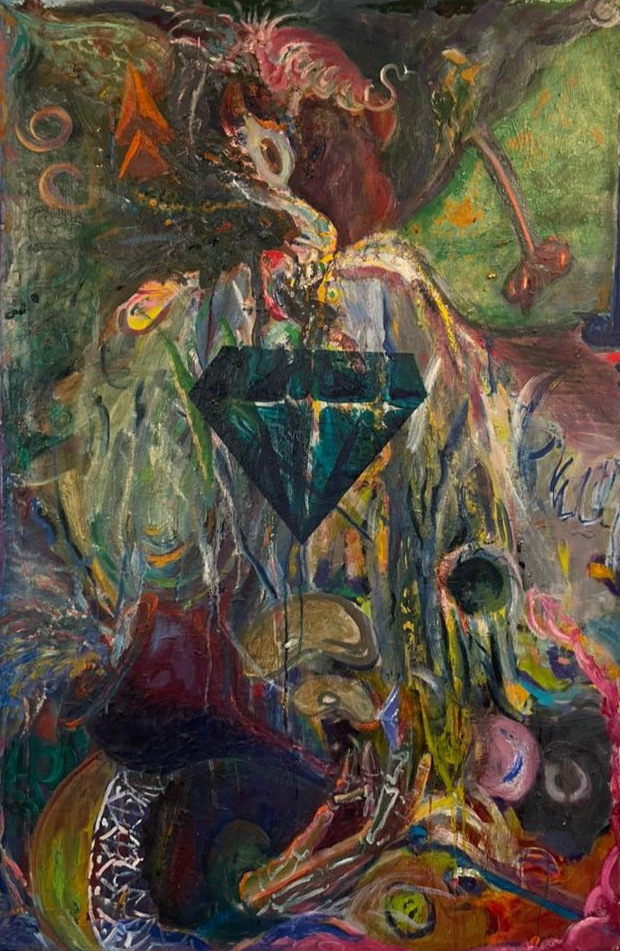
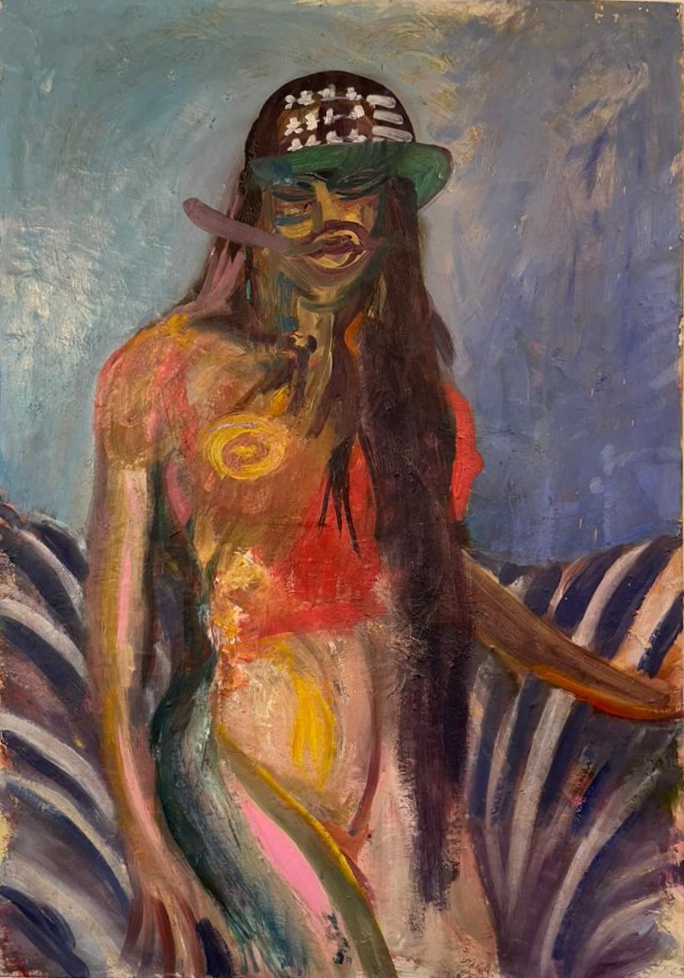
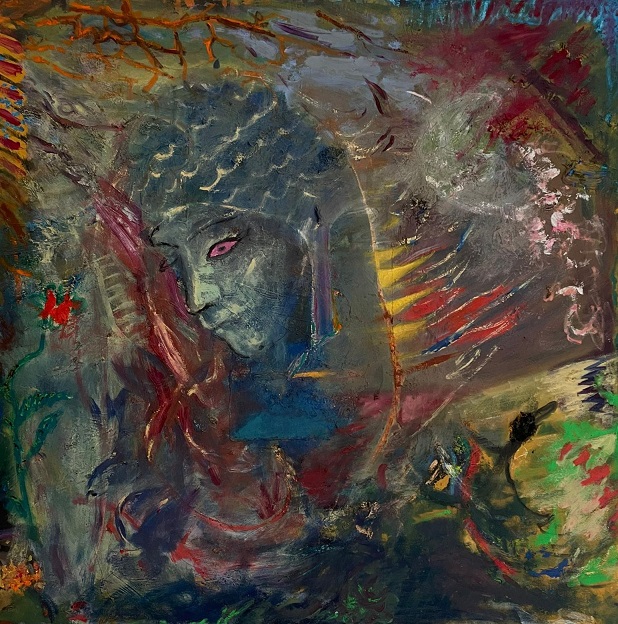
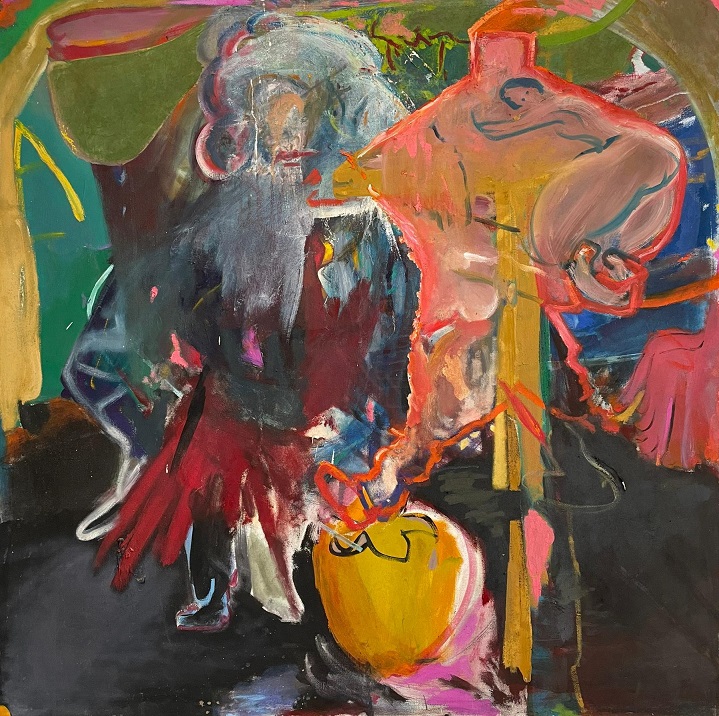
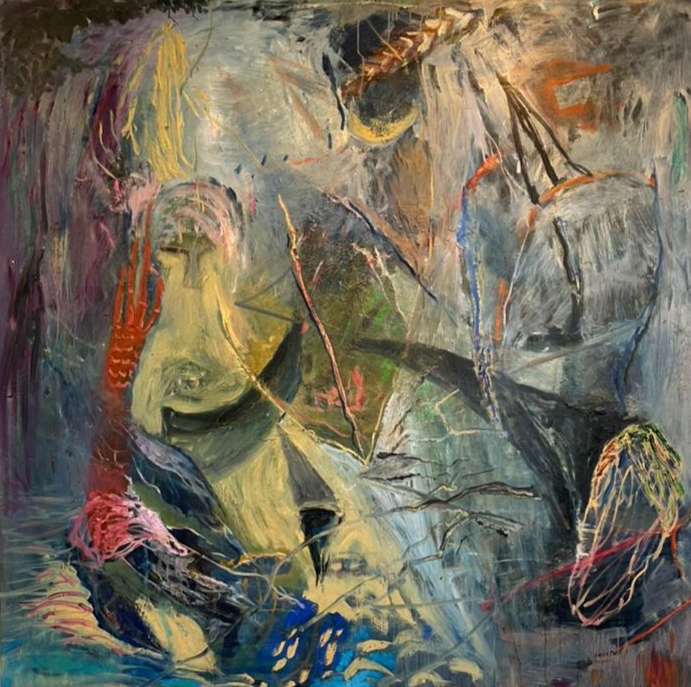
His work, difficult to definition, does not repair conventional labels. At times it is figurative; at times, abstract; Almost always, neo -expressionist. These ambivalences, which may seem a stylistic hesitation for some normative criticism, rather than a repertoire of searches or experiments, is an affirmation of its temperament of New Wilde.
He does not propose to like his painting, which is not, Stricto Sensu, A tangible world representation, but the result of the exploration of its own psyche. Antoine dialogues with Antoine out loud, with a palette that does not fear stridency. It is so. And one can embrace his creative gesture or observe him from afar, but never from indifference.
Antoine speaks little and thinks quickly and well. I record here from our most recent dialogue.
Where does your painting come from?
My painting is born from my experiences, my subconscious, my learning and my mistakes. It is a constant reaction to the lived, but also to something that escapes words: an energy that drives me to express myself even without clear answers.
Can you refer to artists who have influenced you in some way?
My father [Rigoberto Mena] It has been a great influence: he showed me the way to art since I was a child, and his authentic, elegant and deeply emotional work, has left a definitive mark on my creative universe.
Artists have also influenced Fidelio Ponce, Wifredo LamCarlos Enriquez, Mariano RodríguezLeopoldo Romañach and several talented friends.
Having a painter father somehow condition your vocational orientation?
Absolutely. Seeing him painting was an intimate and revealing experience. He took me to museums, bought me materials, and beyond the example, he showed me that painting could be freedom, therapy and a way of life.
How do you remember your time in San Alejandro?
It was a valuable training space.
Although I do not always follow a fixed methodology, what I learned there nourishes the basis on which I build my artistic language. The technique matters, but never again than feeling.
What is an artist?
An alchemist of the invisible, a balancer who throws himself without a network to the intangible.
When did you assume yourself as an artist?
I assumed myself as a painter in the most difficult moments, when art healed me.
If not having dedicated yourself to painting, what professional activity would you have liked to develop?
Perhaps I would have followed paths linked to music or writing: other emotional languages.
Do you consider yourself abstract, figurative, fovista, expressionist …?
I consider myself an expressionist, although my work is not limited to a specific aesthetic. Expressionism for me is a broad emotional universe, not a closed style.
How to read your painting?
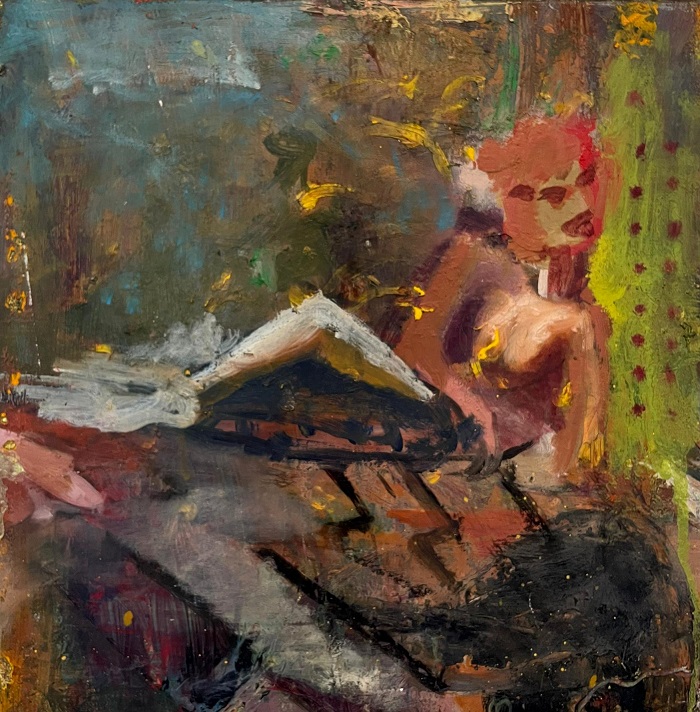
My work reads from the emotional and symbolic. Each picture is built without an apparent order, and reaches coherence when it manages to immerse me in something honest.
I use the visual language to open questions more than to explain, and rejection of your interpretation. The painting must be free: each spectator reconstructs it from their experience.
How do you get to the painting? Do you have a routine to create? Are you going to the fabric full of intuitions or in the fundamental work is already armed in the head?
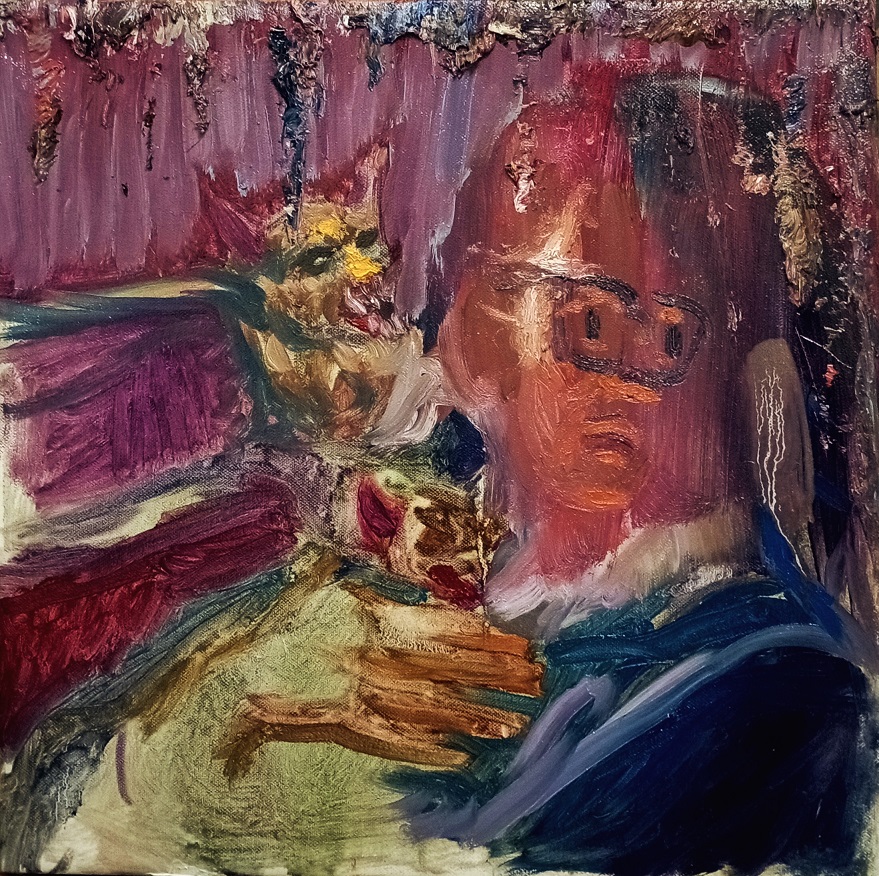
I don’t have a fixed method. Sometimes the music guides me; Others, my emotional state. Some ideas are diluted, others are transformed into symbolic waste that talk with the following. There is no apparent order until painting acquires poetic coherence. I don’t know when it will end.
Do you feed on other arts?
Yes, deeply. Music, especially, is an emotional trigger that influences my pictorial process. I also nourish my cinema, literature and poetry, which expand my ideas and sensations.
To what extent are you interested in criticism’s opinion? Does it help you recognize you?
Criticism is welcome, especially when it connects with something authentic. But my creative path continues its course, and on that journey sometimes I don’t even know where I am. That is why it is essential to believe in oneself not to get lost.
Do you live from your work?
Yes. Painting is my trade, my refuge and my way of dialogue with the world. It is a vital necessity.
In 2018 you had the first personal exhibition, Offering, In the gallery of the Palace of Lombillo, in Havana. You shared the space with Rigoberto Mena, your father.
It was a unique experience. Sharing the gallery with him made me meet our artistic connections. I constantly learn from him, in art and in life.
What opinion do you have of the work of Rigoberto Mena? Do you emulate her?
His work has an almost divine elegance and imprint. I consider it a master of emotions, a martial artist of feeling.
And no, not emulo with his work, but inspires me to create from freedom and authenticity.
If you were to collect Cuban painting at any time, what would be those ten artists who would not miss in your walls?
I would include Fidelio Ponce, Lam, Carlos Enriquez, Mariano, Romañach, Boffill, second plans, Antonia Eiriz, my father … and several young Cuban artists who deserve to be in any collection, for their talent and truth.
But you would spend ten.
Well, it’s my walls …