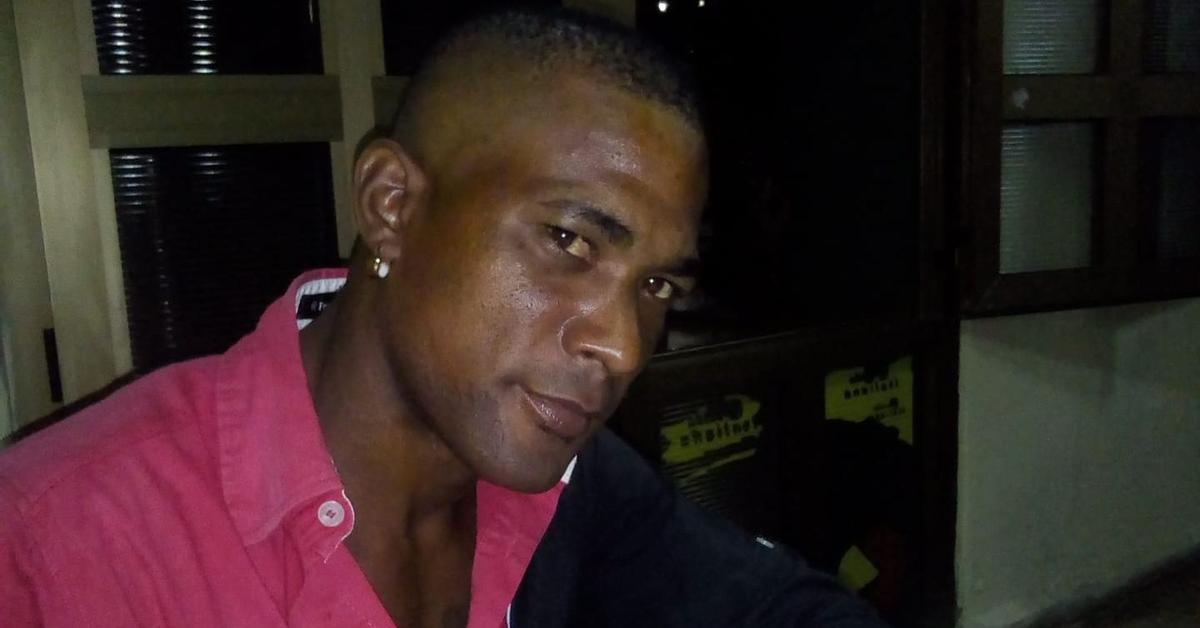
Havana/Yaciel Antúnez Antúnez, a 41-year-old common prisoner who was serving a sentence in the Santa Clara prison for people with HIV, died on December 6 after contracting a “serious” illness during his confinement, associated with the deplorable sanitary conditions there. The news, first reported by the profile Nio Reportando un Crimen, was confirmed by the Cubalex legal advice center with a relative of the inmate.
According to information received by the organization, Antúnez was in critical condition during a family visit on November 27. That day, his relatives reported, he experienced intense dizziness, severe headaches and even fainted. After alerting the authorities about his health, he was transferred to the prison infirmary, but he continued to deteriorate.
The prisoner was taken to the Santa Clara hospital a week later, “when his condition was already extremely serious.”
After the family’s insistence that he receive specialized medical care, the prisoner was taken to the Santa Clara hospital a week later, “when his condition was already extremely serious,” Cubalex indicated. That day, Yaciel Antúnez fell into a coma and died two days after being admitted to the hospital, the NGO added.
The prisoner’s family, the legal advice center noted, was not informed in a timely manner about the seriousness of his condition. “His mother found out from another inmate, she traveled from Cienfuegos and, when they finally allowed her to see him, he was already in a coma,” he noted.
Despite living with HIV, Antúnez did not receive antiretroviral treatment or other medications during his stay in prison, which left him “in a context of serious medical negligence.”
The family held the prison leaders directly responsible for the death. According to the Nio Reporting a Crime report, they reported inhuman treatment, lack of timely medical assistance and violation of the basic right to information and human dignity. “Even if they are imprisoned, they are still human beings,” the family said.
Antúnez did not receive antiretroviral treatment or other medications during his stay in prison
In its statement, Cubalex demanded an independent, exhaustive and transparent investigation, as well as justice and reparation for the family. Likewise, he indicated that the deaths in custody “are not isolated events.”
According to data from the organization, so far in 2025 there are 39 deaths of people deprived of liberty in the country’s prisons, “in scenarios marked by negligence and absence of basic guarantees.”
The Cuban Prison Documentation Center (Cdpc), which has been counting since 2023, records at least 116 deaths in State custody, from January of that year until now. Of the total number of deaths, six have been political prisoners (Yan Carlos González, Yasmany González, Yoleisy Oviedo, Manuel de Jesús Guillén, Geraldo Díaz Alonso and Luis Barrios).
Last month at least 18 inmates resorted to hunger strikes in Cuban prisons
According to a report from the same Cdpc, last month at least 18 inmates resorted to the hunger strikes in Cuban prisons as a last resort to demand basic rights such as medical care, protection against attacks or the review of sentences imposed with political motivations. “In several cases, these protests were linked to arbitrary transfers to prisons further away from families; in others, they responded to beatings, revocation of prison benefits, confiscation of belongings, accusation of new crimes or disproportionate disciplinary measures and requests for transfer to isolation cells,” he indicated.
In its report, the center indicated that the prisons where the most abuses against prisoners were documented were Combinado del Este (Havana), Agüica (Matanzas), the Cienfuegos Provincial Prison, prison 1580 (Havana) and Kilo 8 (Camagüey).