The Ministry of Public Health of Cuba (Minsap) confirmed this Wednesday another five deaths due to the current epidemic of dengue and chikungunya, bringing the total number of fatalities to 52.
The Vice Minister of Public Health, Carilda Peña, stated on television that the majority of the dead are under 18 years of age. According to official data, 34 died from complications associated with chikungunya, while the rest died due to dengue.
Peña stated that the day before, 2,049 cases of non-specific febrile syndrome, the first common symptom of both arboviruses, and 539 of chikungunya were registered for a total of 47,003 infections due to this disease.
Regarding dengue, the official commented that the incidence rate is 5.23 infected per 100 thousand inhabitants.
This would mean about 507 new infections, out of a total population of 9.7 million people, according to the National Office of Statistics and Information (ONEI), according to the agency’s calculations. EFE.
The Pan American Health Organization (PAHO), which collects official Cuban figures, indicated last week that, from the beginning of the year and until the end of November, the number of total infections so far in 2025 due to dengue in Cuba amounted to 25,995, recalls the Spanish agency.
The deputy head of Minsap maintained that the number of patients in intensive care was reduced to 36, 12 of whom are in critical condition, all of whom are under 18 years of age.
No absolute figures
Despite their periodic reports on the epidemic, health authorities have reiterated that the numbers of infected people are underreported, because many patients do not go to medical centers, mainly due to the deterioration of public services on the island.
Meanwhile, both network users, media and independent analysts question the official numbers, both in terms of the sick and the deceased, which according to these criteria and unofficial counts would be much higher than those reported by the Minsap.
This Monday, the Government assured that the outbreak of chikungunya and dengue was moving “towards an improvement in control” on the island, although “the curve” in the graph of new cases was still “in the epidemic zone.”
Peña made these statements in his usual television appearances, where he noted, without giving absolute figures, that new cases of nonspecific febrile syndrome had been reduced by 21% compared to the previous week.
Cuban authorities recognized for the first time on November 12 that the country was suffering from a chikungunya and dengue epidemic, despite the fact that the first cases were diagnosed in July and that infections had skyrocketed in September and October.
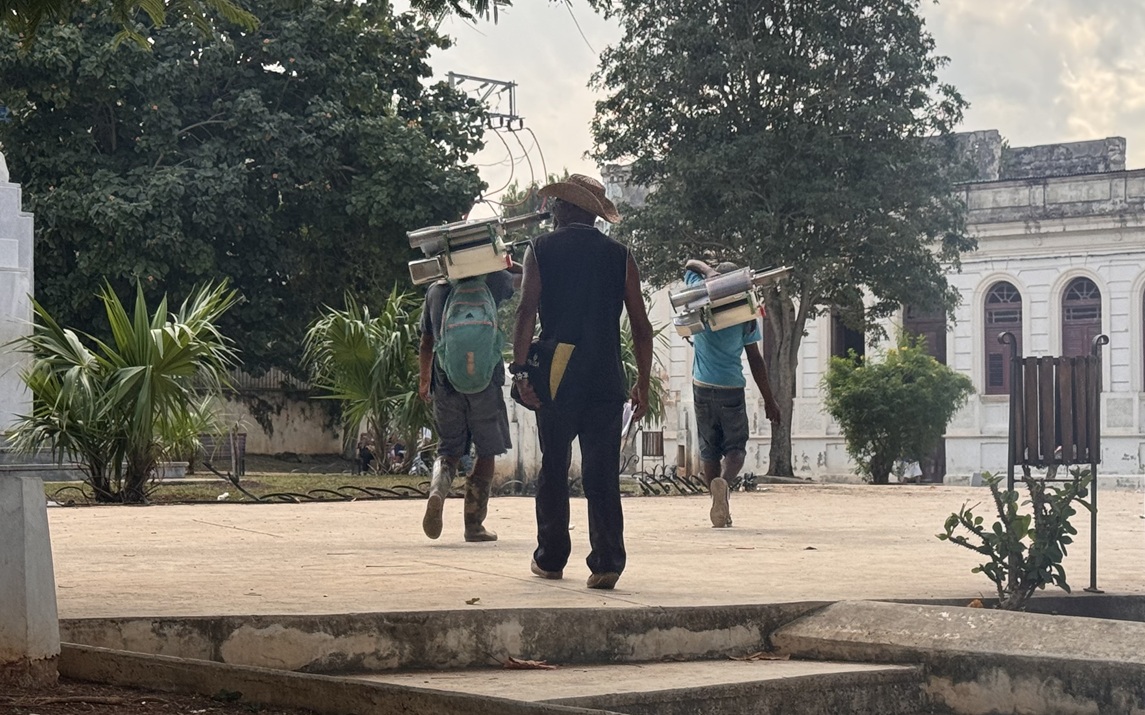
The epidemic has found fertile ground in Cuba to spread due to the country’s serious economic crisis, which limits the capacity for prevention – mainly through massive fumigation against mosquitoes -, control – with tests to confirm the type of disease – and care for the sick, due to lack of medicines and other health supplies.
EFE / OnCuba.