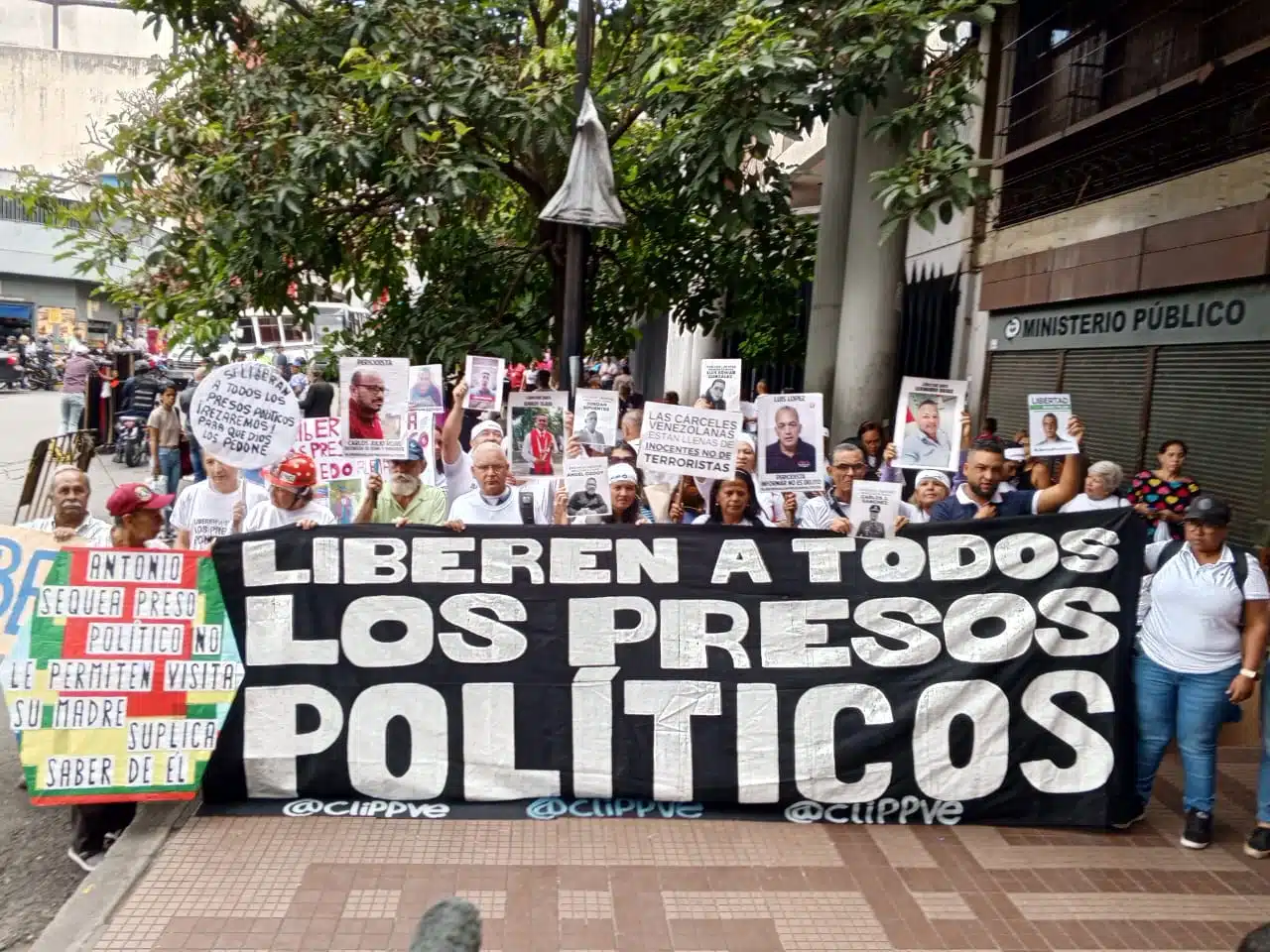
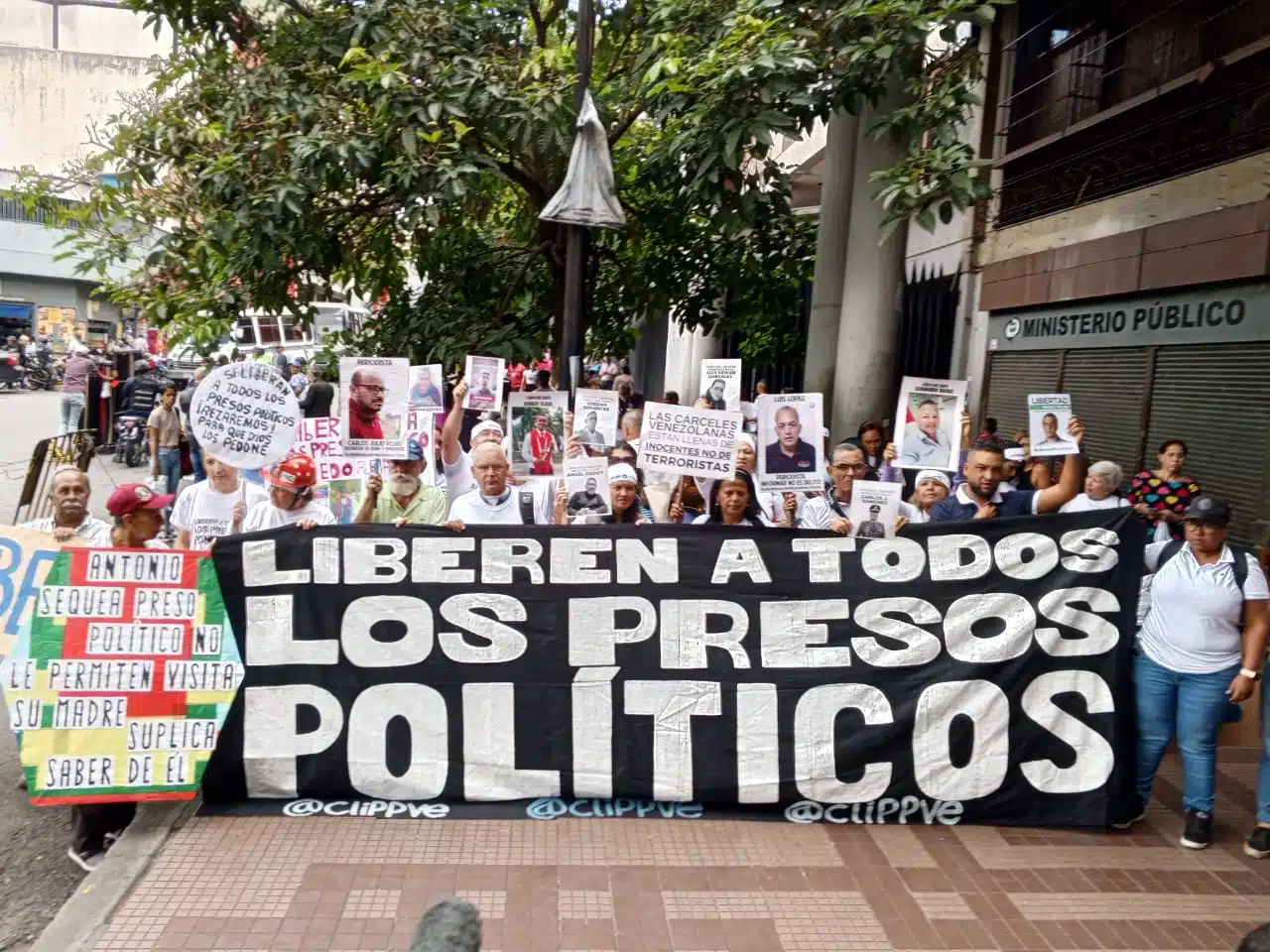
Any initiative in defense of political prisoners in Venezuela and denunciation of torture must be given visibility. So far, there are many who have left detention centers without really being free. Other prisoners are left with deep psychological and physical traces of torture. From Norway, February 10, 2026, the Anonymous Heroes organization, human rights defenders, presented a public request for the immediate implementation of an Assisted Release and Humanitarian Protection Protocol for people deprived of liberty in Venezuela who have been victims of torture and cruel, inhuman and degrading treatment.
The communication was addressed to the president of the United States, Donald J. Trump; to the secretary of state, Marco Rubio; to the United Nations High Commissioner for Human Rights, Volker Türk; to the Office of the United Nations High Commissioner for Human Rights (OHCHR); and to the international community committed to the defense of human rights.
The document exposes repeated complaints about detention conditions that compromise the life and physical and psychological integrity of civilians, soldiers and police deprived of liberty for political reasons. Likewise, it raises the need for immediate humanitarian intervention in official and unofficial detention centers. All of this, given the real risk to the lives of the detainees and the devastating impact on their families.
Letter from Anonymous Heroes in defense of political prisoners
Below is the full text of the petition:
Protocol for Assisted Release and Humanitarian Protection for Persons Deprived of Liberty in Venezuela, Victims of Cruel and Inhuman Treatment
Norway, February 10, 2026
Recipients:
Mr. President Donald J. Trump
Mr. Secretary of State Marco Rubio
Mr. High Commissioner Volker Türk
Office of the United Nations High Commissioner for Human Rights (OHCHR)
International community committed to the defense of human rights
Dear Sirs:
With due respect, and recognizing the efforts and advances that have been promoted in favor of freedom, justice and the protection of human rights in Venezuela, we address especially the President Donald J. Trumpto the Secretary of State Marco Rubio and High Commissioner Volker Türk, as well as the international community committed to the defense of human rights, to present this public petition, prepared by Anonymous Heroes, human rights defenders.
This request arises in light of the serious situation of people deprived of liberty for political reasons, both civilian and uniformed (military and police), who have remained in inhumane conditions, with the systematic violation of all their fundamental rights and with real risk to their lives. These people have been subjected to torture, cruel, inhuman and degrading treatment, prolonged isolation, incommunication, deprivation of adequate food and malnutrition, which has generated severe physical, psychological and mobility consequences as a direct consequence of captivity. Added to this is the deep concern for the situation of their relatives, the vast majority of whom survive in conditions of high vulnerability and economic precariousness.
Likewise, there is deep concern about the situation of civilians, soldiers and police in conditions of forced disappearance, whose relatives have not received official information about their whereabouts, state of health or legal situation. It is presumed, based on repeated complaints from family members and human rights defenders, that some of these people could be held in detention centers such as Fuerte Guaicaipuro, El Helicoide, the National Institute of Women’s Orientation (INOF), as well as in other official and unofficial establishments, including El Rodeo I and Boleíta, where they remain incommunicado, subjected to extreme punishments and without regular access to food, medical care or family contact, which puts their lives at risk. at serious risk.
Of particular concern is the situation of women deprived of liberty, who require a thorough and differentiated approach. There are reports of women who gave birth during their confinement, as well as cases in which newborns were separated from their mothers, and others in which babies and children remained in captivity, without regular access to adequate pediatric, gynecological or obstetric medical care, which constitutes a serious violation of the fundamental rights of both mothers and children.
Additionally, reports of sexual assaults suffered by men and women during their detention, allegedly committed by State officials, have been documented. These complaints are part of the elements that rest before the International Criminal Court, Venezuela Situation – Chapter I, and have also been reported by some people who, after their release, have managed to break the silence and bear witness to the abuses suffered. These events are of the utmost seriousness under international human rights law and international criminal law.
The situation described not only affects people deprived of liberty, but has generated a devastating impact on their families, many of whom lack basic resources to survive, treat illnesses, guarantee food or accompany the recovery processes of those who have been released in conditions of extreme vulnerability. In numerous cases, the detainees have lost their homes, vehicles (cars and motorcycles), means of transportation, work tools and other property, without due process or restitution, which compromises the direct responsibility of the Venezuelan State for the patrimonial and moral damage and the destruction of the life project of the victims and their families.
For all of the above, the immediate and mandatory implementation is requested, without exception, of Assisted Release and Humanitarian Protection Protocols, applicable to all persons deprived of liberty who have been victims of torture, cruel treatment or inhuman conditions, including civilians, military and police, with or without sentence, which contemplate at least:
- Comprehensive and specialized medical-forensic evaluation, carried out by independent forensic doctors, Venezuelan or foreign, without any link with officials, personnel or structures that exercise control over detention centers.
- Mental and psychological health care, with continuous monitoring for at least one year or the time determined by the treating professional.
- Complete nutritional evaluation, with immediate provision of adequate and balanced food.
- Comprehensive medical care, including specialized treatments, surgeries, rehabilitation and provision of technical aids.
- Guarantee of legal identity and right to defense, through the immediate restitution of identity documents, full access to trusted lawyers and effective judicial protection, excluding arbitrary restrictive measures.
- Safe transfer and protected return to homes, with medical support and security conditions.
- Full coverage by the Venezuelan State of all costs associated with release, medical, psychological, nutritional care, rehabilitation, technical aids, transfers, documentation and food support for at least six months.
- Specialized care for women, children and adolescents, including gynecology, obstetrics, pediatrics, special nutrition and comprehensive support for minor children of political prisoners.
- Immediate humanitarian intervention in all official and unofficial detention centers, including Fuerte Guaicaipuro, El Helicoide, INOF, El Rodeo I and Boleíta, guaranteeing access to independent doctors, lawyers and regular communication with family members.
- Guarantee of immediate freedom for any person whose status as a victim of torture or inhuman treatment is proven through forensic evaluation, in accordance with international law and the Rome Statute.
These requests are framed in international human rights law and international criminal law, considering the complaints and preliminary examinations before the International Criminal Court, Venezuela Situation – Chapter I, for the possible commission of crimes against humanity.
The implementation of these protocols is urgent to save lives, protect human dignity and restore rights.
There can be no talk of forgiveness or reconciliation without truth, justice and absolute respect for life. For the good of humanity, these practices must stop.
ANONYMOUS HEROES
Human Rights Defenders
The request submitted from Norway reopens the debate on the situation of political prisoners in Venezuela. It also places the detention conditions denounced by human rights organizations once again under international scrutiny. The implementation of an independent humanitarian protocol could become a decisive measure to preserve lives, restore fundamental rights and establish responsibilities under international law.
Defense of political prisoners
The historical role of human rights NGOs has been, in practice, that of a bridge between victims and the justice and international pressure systems. These organizations help ensure that facts are not lost in silence and that there are institutional routes to demand accountability.
In dictatorships and authoritarian regimes, the first front is usually information: denying, hiding, intimidating and misinforming. For this reason, one of the most decisive tasks of NGOs has been to document when power tries to erase. They collect testimonies, verify patterns, safeguard evidence and maintain files that have been used for truth commissions, judicial processes, international reports and pressure measures. This work, often silent and inconspicuous, ends up turning pain into proof.
They have also been fundamental in giving a name and method to the abuses. By standardizing forms of investigation and verification, they have managed to move the public conversation from “rumors” or perceptions to verifiable, comparable and traceable facts. Organizations such as Human Rights Watch have consolidated methodologies and public strategies for exposing violations, supported by verifiable reports and direct dialogue with decision makers, which has historically raised the threshold of evidence in the international debate.
NGOs have also opened doors in the United Nations system by providing information to rapporteurs, working groups and other international mechanisms. Participation is strengthened when they have consultative status with ECOSOC, which facilitates access to multiple instances. In practice, independent experts with thematic or country mandates rely heavily on credible input from civil society to document, warn and recommend action.
And although justice sometimes takes years, historical experience shows that sustained work prepares the ground for reparation. The files raised by NGOs have fueled processes in national courts, international bodies and rights restitution programs. Without this prior work, many cases remain unregistered, are socially diluted or end up buried due to impunity.