Today: December 8, 2025
December 8, 2025
2 mins read

Aniette González García released from prison after serving a three-year sentence in terrible conditions

Aniette González García released from prison after serving a three-year sentence in terrible conditions

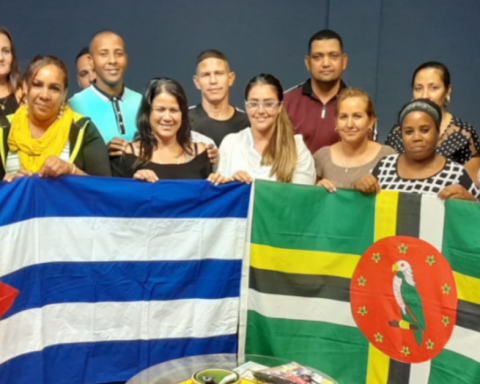
The Camagüeyan activist Aniette González García was released from prison on Saturday, after fully serving her three-year prison sentence for the crime of “outrage to national symbols.” His release was announced by journalist José Luis Tan Estrada, at an event held in Mexico, in favor of María Corina Machado, Venezuelan opposition activist and Nobel Peace Prize winner.

González García was arrested in March 2023 for publishing photographs on Facebook of her wrapped in the Cuban flag in support of a campaign for the artist’s release Luis Manuel Otero Alcántaraleader of the San Isidro Movement, who is also imprisoned for, among others, the same crime as her. The activist was imprisoned in the Kilo 5 women’s prison, in Camagüey, for almost a year awaiting trial, until she was handed down his sentencein February 2024.

In the ruling, not only did she receive three years in prison, but she was stripped of her right to vote. Likewise, as a formality, she was prevented from holding “positions” in entities that have to do with the economy and politics in Cuba during that period in prison, and she will be considered a “repeat offender” before being granted any benefit or mitigating circumstance.


She will be considered a “repeat offender” before being granted any benefit or mitigating circumstance.

After the conviction – originally the Prosecutor’s Office requested up to four years in prison – various legal appeals were presented that were rejected by the court. His family submitted an application for the special procedure of habeas corpus, appeal, revocation of the precautionary measure of provisional detention, challenge of the prosecutor and appeal to the verdict handed down, but all were in vain.

After learning of his release, various organizations celebrated the news and criticized the harshness with which the authorities acted. “His case is an example of the criminalization of dissent and the use of the criminal system to punish expressions protected by the right to freedom of thought and expression,” said the Cuban Institute for Freedom of Expression and Press (Iclep), which also condemned “the arbitrariness of his detention and the harassment he suffered in prison.”

The Cuban Observatory for Human Rights, based in Madrid, indicated that González’s case “continues to be a clear example of how the regime uses the penal system to punish peaceful expressions and repress any critical gesture,” and added that her release “does not erase the injustice committed or the conditions in which she was detained, denounced even by international organizations.”


Her release “does not erase the injustice committed or the conditions in which she was detained”

The arbitrariness in the process led to the case being addressed, in May of last year, by the Inter-American Commission on Human Rights (IACHR), which issued a precautionary measures in favor of the activist. In its resolution, it considered “especially serious” that Aniette González lacked access to medical service “for the diagnosis corresponding to the bleeding she suffers,” and warned about the “situation of seriousness and urgency, since her rights to life, personal integrity and health face a risk of irreparable damage.”

She also denounced the humiliations to which she was subjected by the prison authorities and State Security, such as insults, being confined in a cell “flooded in water, with humidity, little light and ventilation”, preventing her from resting by taking away “the necessary elements for this”, checking her clothing, giving her little food and in poor condition or interrogating her in rooms “with low temperatures, at any time.”

According to the most recent report of Prisoners Defenders (PD), in total there are 1,179 prisoners for political reasons on the Island, of which 35 are minors – the minimum criminal age in Cuba is 16 years. Of them, 29 are serving sentences and six are being criminally prosecuted with “precautionary measures without any judicial protection.”

Source link

Latest Posts

They celebrated "Buenos Aires Coffee Day" with a tour of historic bars - Télam
Cum at clita latine. Tation nominavi quo id. An est possit adipiscing, error tation qualisque vel te.

Categories

Previous Story

Alberto Betancourt Posada: The dignity of Africa in the face of colonial snub

Aniette González García released from prison after serving a three-year sentence in terrible conditions
Next Story

Aniette González García released from prison after serving a three-year sentence in terrible conditions

Latest from Blog

December 8, 2025
2 mins read

Aniette González García released from prison after serving a three-year sentence in terrible conditions

Aniette González García released from prison after serving a three-year sentence in terrible conditions

The Camagüeyan activist Aniette González García was released from prison on Saturday, after fully serving her three-year prison sentence for the crime of “outrage to national symbols.” His release was announced by journalist José Luis Tan Estrada, at an event held in Mexico, in favor of María Corina Machado, Venezuelan opposition activist and Nobel Peace Prize winner.

González García was arrested in March 2023 for publishing photographs on Facebook of her wrapped in the Cuban flag in support of a campaign for the artist’s release Luis Manuel Otero Alcántaraleader of the San Isidro Movement, who is also imprisoned for, among others, the same crime as her. The activist was imprisoned in the Kilo 5 women’s prison, in Camagüey, for almost a year awaiting trial, until she was handed down his sentencein February 2024.

In the ruling, not only did she receive three years in prison, but she was stripped of her right to vote. Likewise, as a formality, she was prevented from holding “positions” in entities that have to do with the economy and politics in Cuba during that period in prison, and she will be considered a “repeat offender” before being granted any benefit or mitigating circumstance.


She will be considered a “repeat offender” before being granted any benefit or mitigating circumstance.

After the conviction – originally the Prosecutor’s Office requested up to four years in prison – various legal appeals were presented that were rejected by the court. His family submitted an application for the special procedure of habeas corpus, appeal, revocation of the precautionary measure of provisional detention, challenge of the prosecutor and appeal to the verdict handed down, but all were in vain.

After learning of his release, various organizations celebrated the news and criticized the harshness with which the authorities acted. “His case is an example of the criminalization of dissent and the use of the criminal system to punish expressions protected by the right to freedom of thought and expression,” said the Cuban Institute for Freedom of Expression and Press (Iclep), which also condemned “the arbitrariness of his detention and the harassment he suffered in prison.”

The Cuban Observatory for Human Rights, based in Madrid, indicated that González’s case “continues to be a clear example of how the regime uses the penal system to punish peaceful expressions and repress any critical gesture,” and added that her release “does not erase the injustice committed or the conditions in which she was detained, denounced even by international organizations.”


Her release “does not erase the injustice committed or the conditions in which she was detained”

The arbitrariness in the process led to the case being addressed, in May of last year, by the Inter-American Commission on Human Rights (IACHR), which issued a precautionary measures in favor of the activist. In its resolution, it considered “especially serious” that Aniette González lacked access to medical service “for the diagnosis corresponding to the bleeding she suffers,” and warned about the “situation of seriousness and urgency, since her rights to life, personal integrity and health face a risk of irreparable damage.”

She also denounced the humiliations to which she was subjected by the prison authorities and State Security, such as insults, being confined in a cell “flooded in water, with humidity, little light and ventilation”, preventing her from resting by taking away “the necessary elements for this”, checking her clothing, giving her little food and in poor condition or interrogating her in rooms “with low temperatures, at any time.”

According to the most recent report of Prisoners Defenders (PD), in total there are 1,179 prisoners for political reasons on the Island, of which 35 are minors – the minimum criminal age in Cuba is 16 years. Of them, 29 are serving sentences and six are being criminally prosecuted with “precautionary measures without any judicial protection.”
Source link

Latest Posts

They celebrated "Buenos Aires Coffee Day" with a tour of historic bars - Télam
Cum at clita latine. Tation nominavi quo id. An est possit adipiscing, error tation qualisque vel te.

Categories

Aniette González García released from prison after serving a three-year sentence in terrible conditions
Previous Story

Aniette González García released from prison after serving a three-year sentence in terrible conditions

Rosa María Payá y Francis Suárez, alcalde de la ciudad de Miami
Next Story

Rosa María Payá receives the keys to Miami, “a city that has been a refuge for Cubans”

Latest from Blog

Go toTop