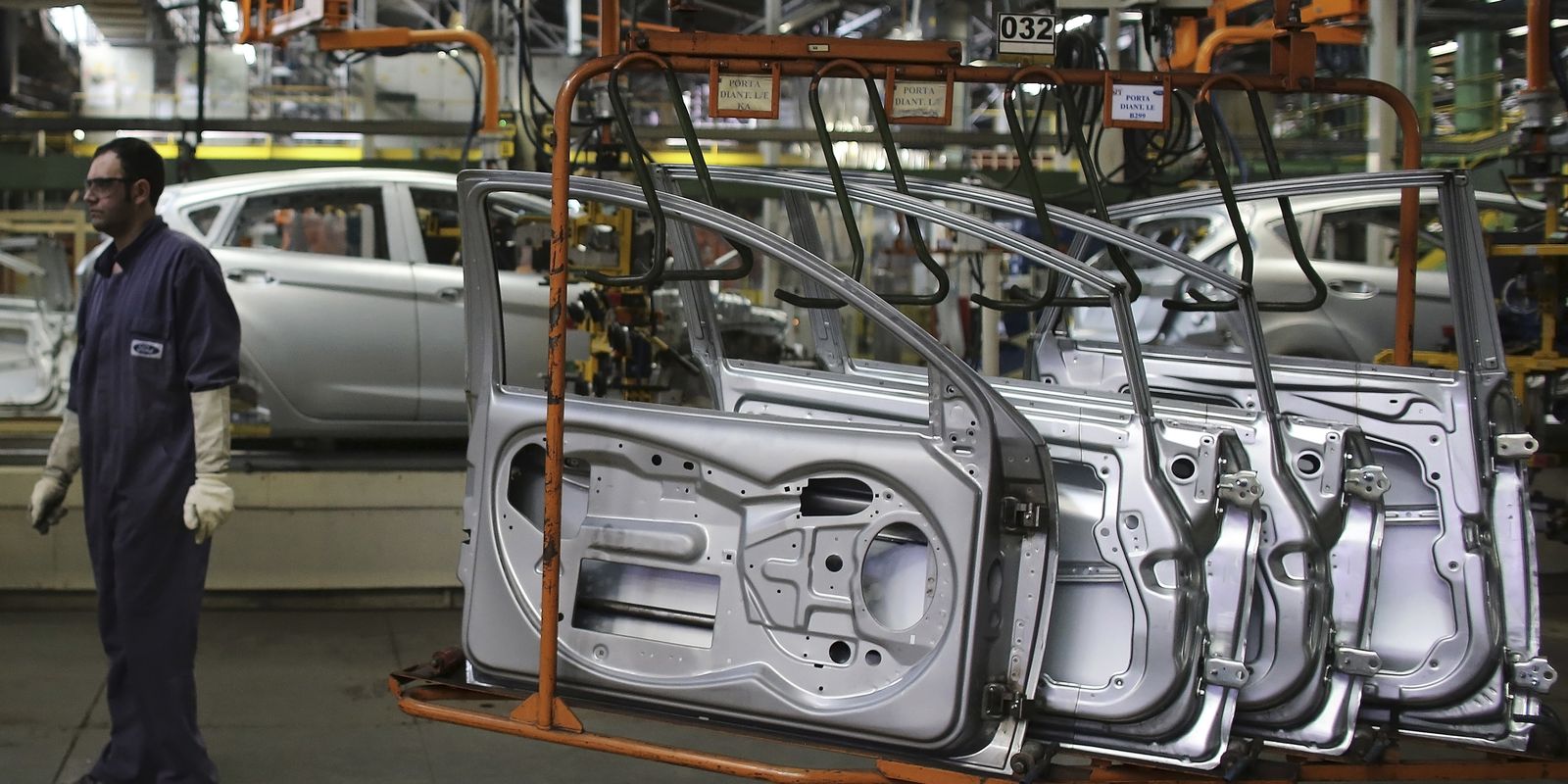
A study released this week by the National Association of Motor Vehicle Manufacturers (Anfavea) points out that the replacement of complete automotive production in Brazil by the assembly of kits imported products could eliminate 69 thousand direct jobs in the country and affect 227 thousand indirect jobs along the production chain.
According to the study, the expansion of the use of the CKD (Completely Knocked Down) and SKD (Semi Knocked Down) regimes as assembly models could have several impacts on the country’s automotive sector, with repercussions not only on employment, but also on auto parts manufacturers and exports.
“The survey also estimates an economic loss of up to R$103 billion for auto parts manufacturers and a reduction of approximately R$26 billion in tax collection in a single year. Losses in vehicle exports would be R$42 billion in one year, damaging the country’s trade balance”, highlights Anfavea.
In the CKD model, the vehicle is imported completely disassembled and, in Brazil, it would undergo welding, painting and component integration systems. Under the SKD regime, the vehicle is imported almost ready-made, in large sets, with simpler local assembly and less industrial complexity. Currently, the Chinese automaker BYD operates in Brazil mainly in the SKD model, which is used in its factory in Camaçari (Bahia), opened last year.
Pressure
In the middle of last year, the federal government authorized an additional quota of US$463 million, with zero import tax, for disassembled electric and hybrid vehicles. Valid until January 31st, the measure ended up benefiting BYD and generating many criticism of traditional automakers in the country such as Toyota, General Motors, Volkswagen and Stellantis, which are represented by Anfavea.
With the deadline close to expiry, Anfavea decided to pressure the federal government so that the Import Tax exemption benefit on dismantled electrified vehicles is not renewed.
“SKD and CKD are not harmful processes in themselves. Many automakers started their operations in Brazil using these models, collecting the due taxes and structuring, based on this, their local production. Others use the model to serve niche markets. The problem is maintaining incentives for simple assembly in high volume without requiring a national value contribution, which threatens the survival of the highly complex industry and the generation of qualified jobs in the country”, argues the president of Anfavea, Igor Calvet.
According to him, the industry already installed in the country and using more traditional models is prepared to compete with the new regimes, but if there are similar conditions. “Anfavea and its associates are not afraid of competition. The sector has received, over the last few decades, several international brands willing to invest and compete in Brazil. What we are looking for is a fair competitive environment, with equal rules for everyone”, says Calvet, in a note.
In a manifesto published in its websiteAnfavea reaffirms that it is against renewing the exemption from importing kits for high volume manufacturing in the country. “[Essa isenção] It may seem like a win-win solution in the short term, but it doesn’t build a strong industry. Simplified production models do not develop local chains, do not generate the same level of jobs and do not leave the same value in the country. And, in the long term, they weaken what took decades to build. We are in favor of competition without distortions and regulatory coherence”, says the association.
Wanted by Brazil AgencyBYD has not yet commented on the matter. The Ministry of Development, Industry, Commerce and Services informed, in a note, that “the quota system for imports of CKD and SKD ends this January and there is, to date, no request from the sector for renewal of the measure”.