Vehicle production in Brazil – which includes cars, light commercial vehicles, buses and trucks – is expected to grow 3.7% in 2026, according to estimates from the National Association of Motor Vehicle Manufacturers (Anfavea). 
The movement should be driven mainly by the production of light vehicles, such as cars and light commercial vehicles, which are expected to increase by 3.8% this year.
An increase in the licensing of these vehicles is also expected, which should grow by around 2.7% this year, Anfavea reported.
“We continue with a year of difficulties”, said this Thursday (15) the president of Anfavea, Igor Calvet, during a press conference in São Paulo. “I have said that we have contained optimism for the automotive sector. This is because the numbers will continue to grow, but the unpredictability factors continue. We now have very important geopolitical factors that could affect the supply chain and we have a year before the tax reform comes into force. We will have a year in which we need to stay alert and that is why we are proposing to review our projections quarterly to follow events step by step”, he pointed out.
Last year, the vehicle production grew 3.5% in relation to 2024, totaling 2.6 million units manufactured, keeping Brazil in eighth place in the world production ranking.
Sales totaled 2.69 million units in 2025, which represented an increase of 2.1% compared to the previous year and kept Brazil in sixth place in the world market ranking.
According to Calvet, these results were worse than expected for 2025, as Anfavea projected growth of 7.8% for production and 5% for licensing. Still, he highlighted, 2025 ended as a positive year for the sector.
“We had a year in which the market grew 2% and production grew 3%. It was a year of great instability, a year in which we had geoeconomic issues that influenced the sector,” explained the president of Anfavea.
Calvet highlighted that it was also a year in which important discussions took place, such as, for example, the Tax on Financial Operations, the IOF. “So this all has a huge impact on the sector, not to mention the interest rate. When we made the projection, back in 2024, we had an interest rate of 12%. Now we have an interest rate of 15%. The automotive market is very sensitive to these unpredictabilities and this all meant that the numbers were lower, but they were still positive numbers for the sector”, he added.

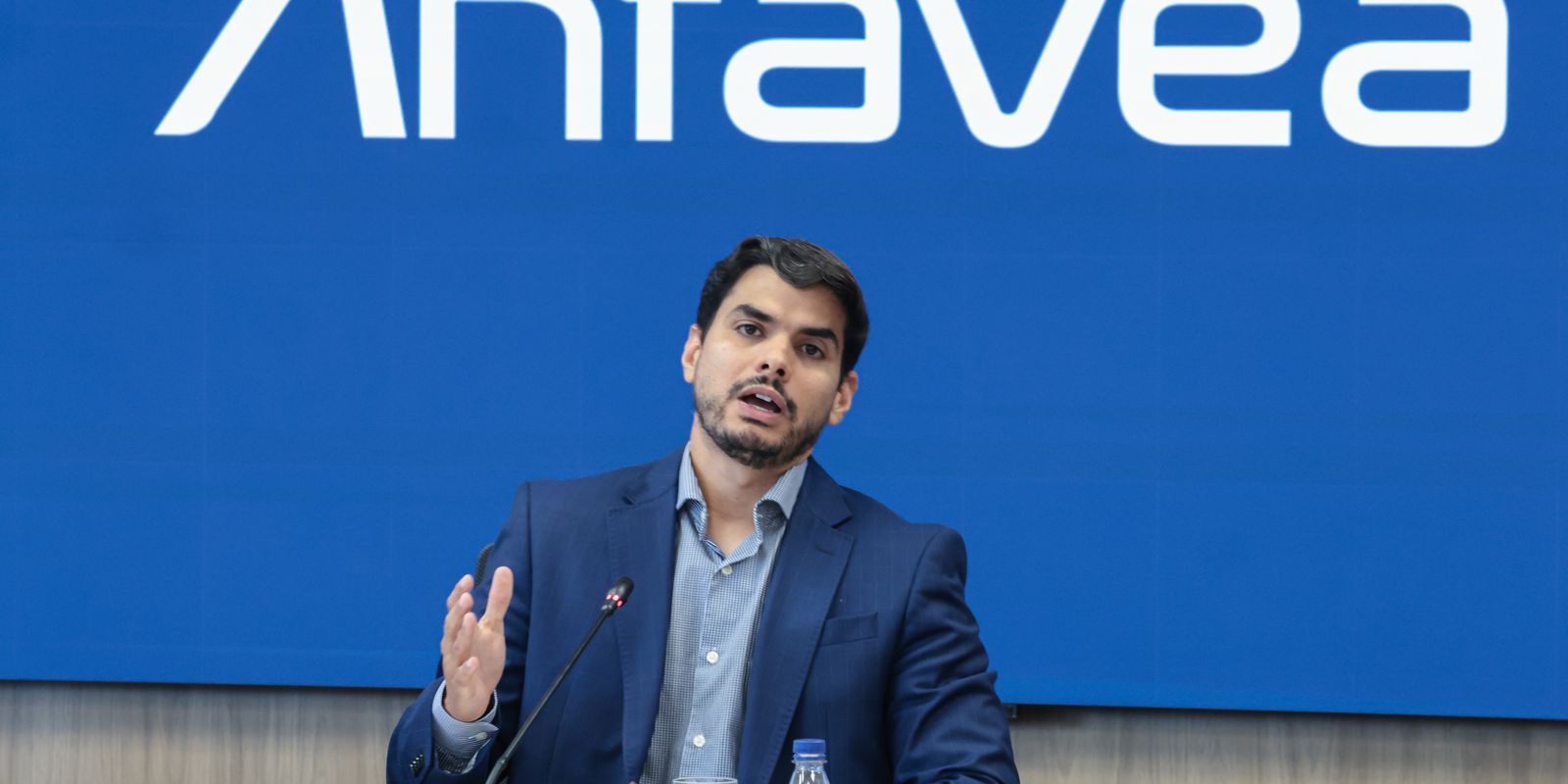
Igor Calvet presents the 2025 results of the Brazilian automotive sector- Paulo Pinto/Agência Brasil
Foreign trade
In addition to sales and production, The automotive sector also had a positive year in exports, with growth of 32.1% and almost 529 thousand units sold in the period.
“Exports were surprising in 2025. For Argentina alone the growth was 85% compared to 2024. Our shipments abroad surpassed imports, which were also at a high level. We had almost half a million vehicles imported into the country in 2025”, said the president of the entity.
For 2026, export growth expectations are around 1.3%.
Imports grew 6.6% in the period, driven mainly by the entry of vehicles manufactured in countries without a free trade agreement with Brazil, such as China. The Asian country represented 37.6% of the 498,000 imports that were registered in Brazil last year.
“This year we even believe that imports will decrease, because there are new entrants in the market and these new entrants plan to start their production now in the year 2026. Therefore, what was previously imported will start to be produced in the country, which is an excellent move. But we will still have a very challenging year in the sphere of foreign trade with our possibility of advancing in important agreements and strengthening our relationship with Argentina and also with Colombia, which is a partner with whom we had trade agreement problems in the last year.”
Move Brazil Program
At today’s press conference in the capital of São Paulo, the president of Anfavea stated that one of the major concerns of the automotive sector for this year is tax reform, as the tax rate that will apply to the automotive sector has not yet been defined.
Igor Calvet highlighted that the difficulty of planning is a great concern for the sector. “We still don’t know what rate will apply to each of our products, on the product portfolio. This is less than a year after the tax reform came into force. And this year we also have a big challenge, which is the challenge of accessing new markets. We traditionally have important partners in the South American region that have been taken over by other international competitors. This is a big challenge for our installed capacity to be able to be expanded, above all, producing for these countries.”
Another aspect that is causing concerns for the sector is the truck segment, whose production fell 46.4% last year and registered a 9.2% drop in registrations. “Trucks have a very strong correlation with GDP [Produto Interno Bruto]. If GDP grows, in principle the truck market would have to grow since a large part of our production is transported by road and the road mode is trucks. So, the trucking sector should grow, but what constrains the trucking sector today in Brazil are the high interest rates”, he argued.
Therefore, he highlighted, the program Move Brazilannounced this year by the federal government, and which offers credit for the purchase of trucks, will end up being very important for the sector. “Recently we had the announcement of an important provisional measure which is Move Brasil and which provides a line of credit with conditions in terms of very good rates. We understand that this is a defibrillatory measure for the Brazilian economy and that it involves the trucking sector. So we believe that this is a measure that will stop the significant declines in the sector at the beginning of the year.”