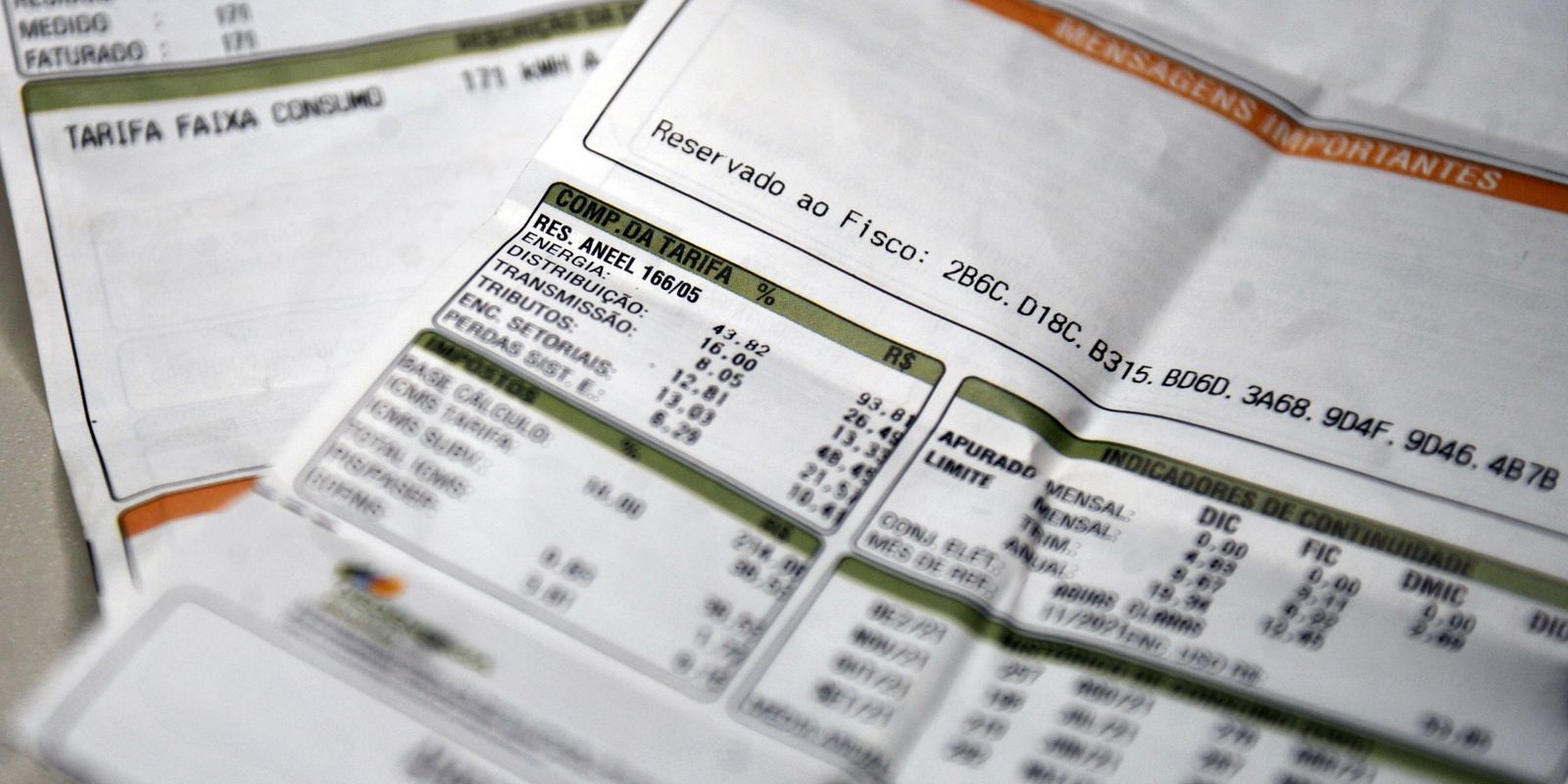
The National Electric Energy Agency (Aneel) announced this Friday (31) that the maintenance of the level 1 red flag will be in force in the month of October. This means that electricity bills will have an additional R$4.46 for every 100 kilowatt-hours (kWh) consumed.
In August and September, Aneel had activated the level 2 red flag, with an additional R$7.87 per 100 kWh. In October, the flag was reduced to level 1.
According to Aneel, the measure was adopted due to the low volume of rainfall, affecting the level of reservoirs for energy generation in hydroelectric plants.
“The scenario remains unfavorable for hydroelectric generation, due to the below-average volume of rainfall and the reduction in reservoir levels. Therefore, to guarantee energy supply it is necessary to activate thermoelectric plants, which have a higher cost, justifying the maintenance of the red flag level 1”, informed the agency.
The electrical energy regulatory agency added “that the solar generation source is intermittent and does not inject energy into the system throughout the day.” “For this reason, it is necessary to activate thermoelectric plants to guarantee energy generation when there is no solar lighting, including during peak hours”, he added.
Extra costs
Created in 2015 by Aneel, the tariff flag system reflects the variable costs of generating electricity. Divided into colors, the flags indicate how much it is costing the National Interconnected System (SIN) to generate the energy used in homes, commercial establishments and industries.
When the electricity bill is calculated using the green flag, there is no increase. When the red or yellow flags are applied, the bill increases for every 100 kilowatt-hours (kWh) consumed.