The Secretary of Transparency will occupy the position that César Julio Valencia rejected.
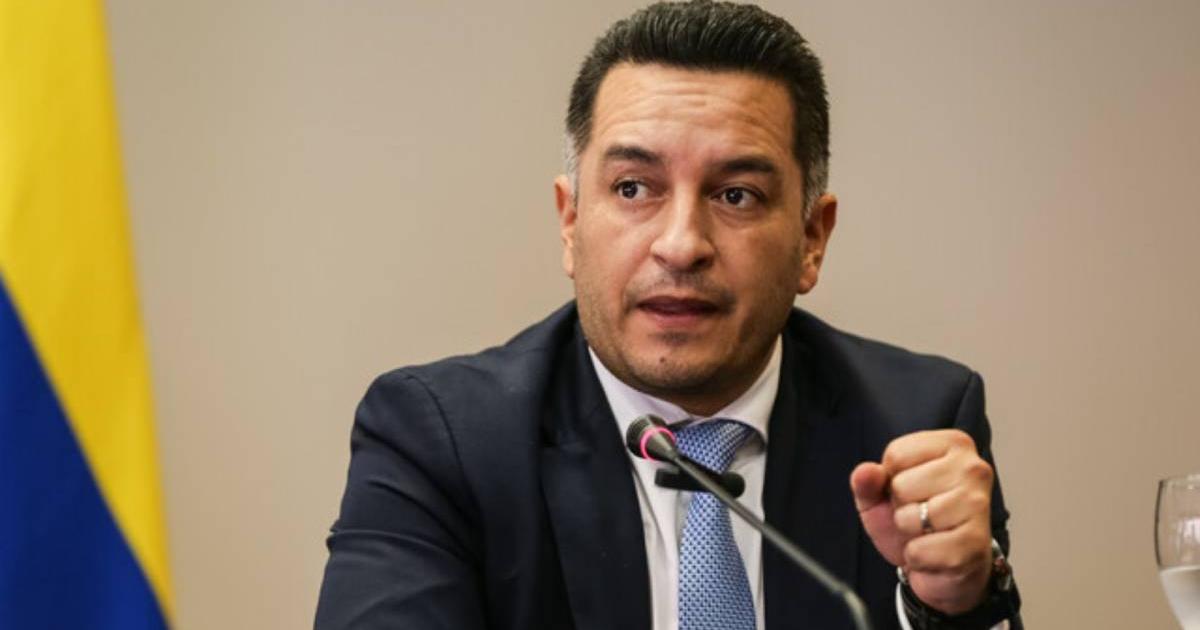
The Secretary of Transparency of the Presidency, Andrés Idárraga, will be the Minister of Justice in charge of the government of Gustavo Petroreplacing the legal secretary of the Palace, Augusto Ocampo. Idárraga will reach the position that the former president of the Supreme Court of Justice César Julio Valencia rejected for health reasons. Meanwhile, the Government will continue looking for who to appoint as property.
Petro gave Valencia the opportunity to be the new minister last November 13, replacing Eduardo Montealegre and Ocampo’s commission. However, less than a week later, the jurist rejected the offer.
You may be interested in: After the controversy, Keralty reaffirms his commitment to the country and his role in the health system
Idárraga will now take office and one of his tasks will be to promote government initiatives such as the so-called ‘Law of Submission’which establishes a legal framework for the ‘Total Peace’.
Reasons for Valencia’s resignation
According to the president, César Julio Valencia Copete did not accept the position for medical reasons. “I regret that the medical examination carried out on Dr. Valencia Copete does not allow him to work in the Government, to his regret and mine,” the president wrote on his X account.
Former magistrate Valencia was part of the Civil Chamber of the Supreme Court of Justice between 2002 and 2010, and president of that court in 2007. His period was marked by confrontations between the corporation and former president Álvaro Uribe. The robe defended judicial independence.
“In honor of the persecuted magistrates, former magistrate César Julio Valencia Copete will be Minister of Justice,” trilled the head of State at the time, who decorated the specialist in Commercial Law with the Cross of Boyacá in Knighthood last year.
Tensions in the Government
Eduardo Montealegre resigned from the Ministry of Justice on October 24. He said he wanted to dedicate himself to his defense in the witness tampering case in which Álvaro Uribe was acquitted, but in Congress a motion of censure against him was being prepared and the Attorney General’s Office was investigating it.
His last act as part of the Petro government was to leave ready the project with which he intended to call a national constituent assembly, which had no support in the Legislature. The president then appointed Augusto Ocampo as interim.
Ocampo was one of the voices of the Executive that spoke out in favor of the Minister of the Interior, Armando Benedetti, when he insulted Judge Cristina Lombana and accused her of persecuting himafter the togada ordered a raid on his house.
“The public complaints and complaints made by Minister Benedetti are worrying, which must be evaluated objectively and quickly,” said Ocampo, after the director of Dapre, Angie Lizeth Rodríguez, described Benedetti as a victim of persecution.
More information: Family of patrolman kidnapped in Cauca calls for march to demand his release
Andrés Idárraga arrives at a tense moment between the Executive and the high courts, in the midst of the attacks on the Supreme Court and the position of the president of the Constitutional Court, Jorge Enrique Ibáñez, to overthrow the pension reform due to defects in its process.
Source: Integrated Information System