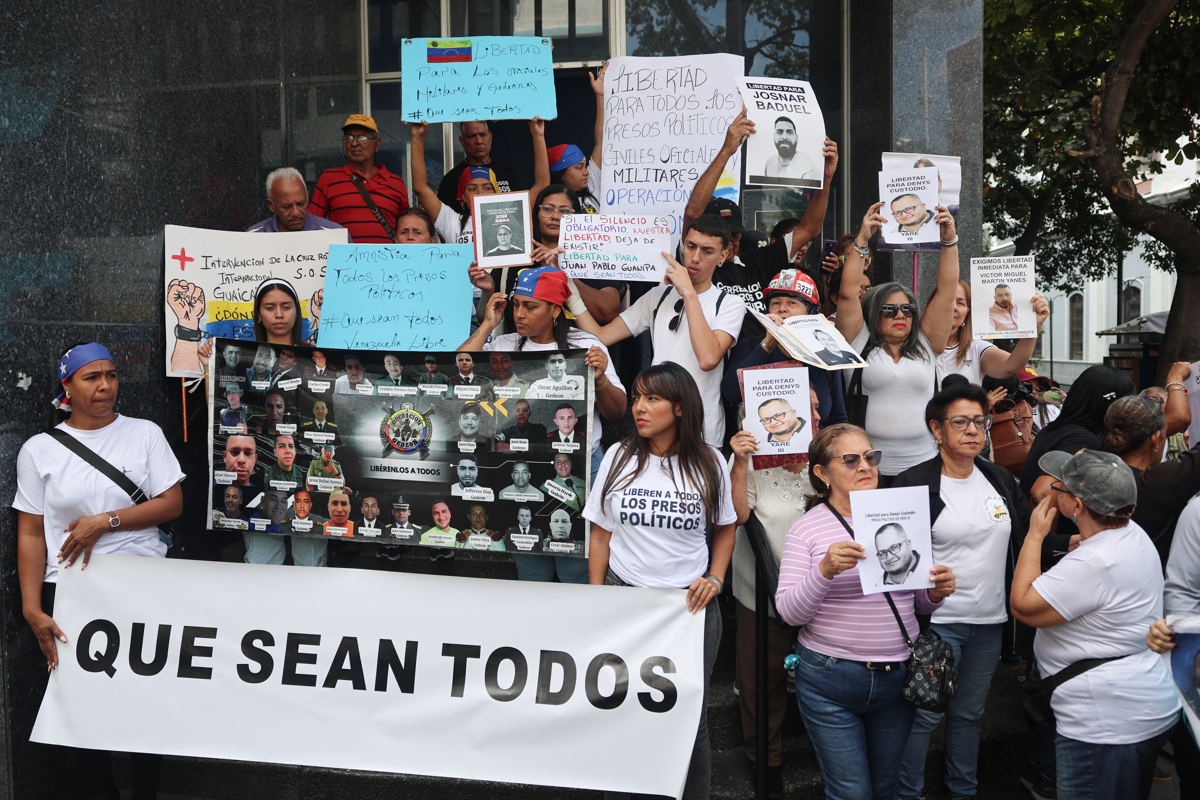
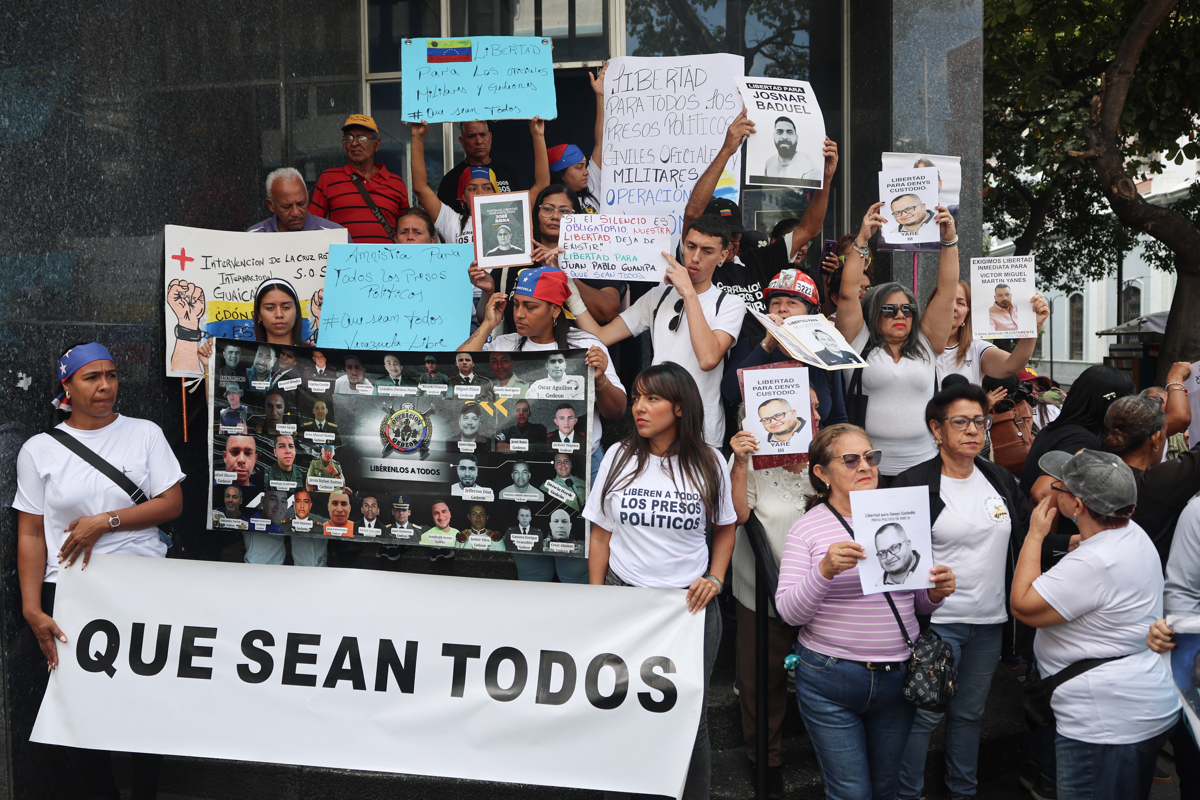
The amnesty bill for political prisoners in Venezuela It awaits its second and final discussion in Congress, amid questions from NGOs, activists and relatives who warn that the text excludes detained military personnel, exiles and various periods of arrest.
Below are the five areas that specialists consulted by Efe recommend incorporating into future legislation.
Periods
The amnesty, promoted by the government in charge of Delcy Rodríguez, was conceived to cover cases since 1999, covering the 27 years of Chavismo governments.
However, article 6 of the initiative limits it to ten specific periods of political situations in the country, between the coup d’état in April 2002 against President Hugo Chávez (1999-2013) to the protests after the controversial presidential election of July 28, 2024.
Covers specific events that occurred in the years 2002, 2003, 2004, 2007, 2013, 2014, 2017, 2019 and 2024.
“As the law is written, it excludes a number of political prisoners who were detained within the framework of systematic repression,” the enforcement coordinator of the Provea organization, Marino Alvarado, told Efe.
The selection of periods, he noted, leaves out even human rights defenders who were released from prison during the release process announced on January 8 by the government in charge.
Relatives warned that “more than half” of the political prisoners will remain imprisoned if the amnesty is approved with this limitation.
Among those possibly excluded would be the Provea lawyer Eduardo Torres – arrested in 2025 -, the Spanish-Venezuelan Rocío San Miguel – arrested in February 2024 – and the director of the NGO Fundaredes, Javier Tarazona – imprisoned in 2021 -, who have already been released, but with judicial processes still in force.
The charges
The project excludes people “prosecuted or convicted” of human rights violations, crimes against humanity, homicide, drug trafficking or crimes against public property, as well as corruption.
In the opinion of Alfredo Romero, president director of the NGO Foro Penal, which leads the legal defense of political prisoners, this is a “wrong” argument.
“The end of the detention is political on many occasions” and is not necessarily related to the charges filed, he explained.
Exiles
Although the legislation contemplates the extinction of all criminal, civil, administrative and disciplinary actions related to the amnestied events, “it is not clear” if political exiles with open cases will be able to return or “under what conditions,” Alvarado warned.
Chavista deputy Roy Daza stated, in an interview this Tuesday with the state channel Venezolana de Televisión (VTV), that the people who have been requested by the Prosecutor’s Office must return to the country and “put themselves right.”
Once it is investigated, he added, “the amnesty will be applied or not applied,” depending on the case.
Military
The vice president director of Criminal ForumGonzalo Himiob, indicated that in principle the project “seems that it does not exclude military political prisoners.”
However, he warned, when reviewing “in more detail” the events and periods included in the amnesty, the exclusion of “many” situations and “military operations” that left political prisoners is evident.
“It seems that the clear intention is not to include the military in the amnesty,” he considered.
The government in charge counts 896 releases since December, while since January 8 the NGO has verified 431 beneficiaries. None military.
Until February 2, Foro Penal counted 687 political prisoners in Venezuela, 182 of them military.
Repair
Alvarado pointed out that Provea has asked to include reparations and the return of property to political prisoners who, they claim, have been dispossessed.
“There are families who have taken houses, cars, businesses. If the acts by which those assets are linked are no longer crimes, all those assets should be incorporated,” he stated.
Himiob said that the project does not provide for symbolic or material reparation measures, nor does it guarantee non-repetition.
In his opinion, the exclusion of reparation measures is due to what he considers one of the “conceptual errors” of the text: “There is no recognition that the people who are going to be favored with the amnesty are, in effect, victims,” he said.