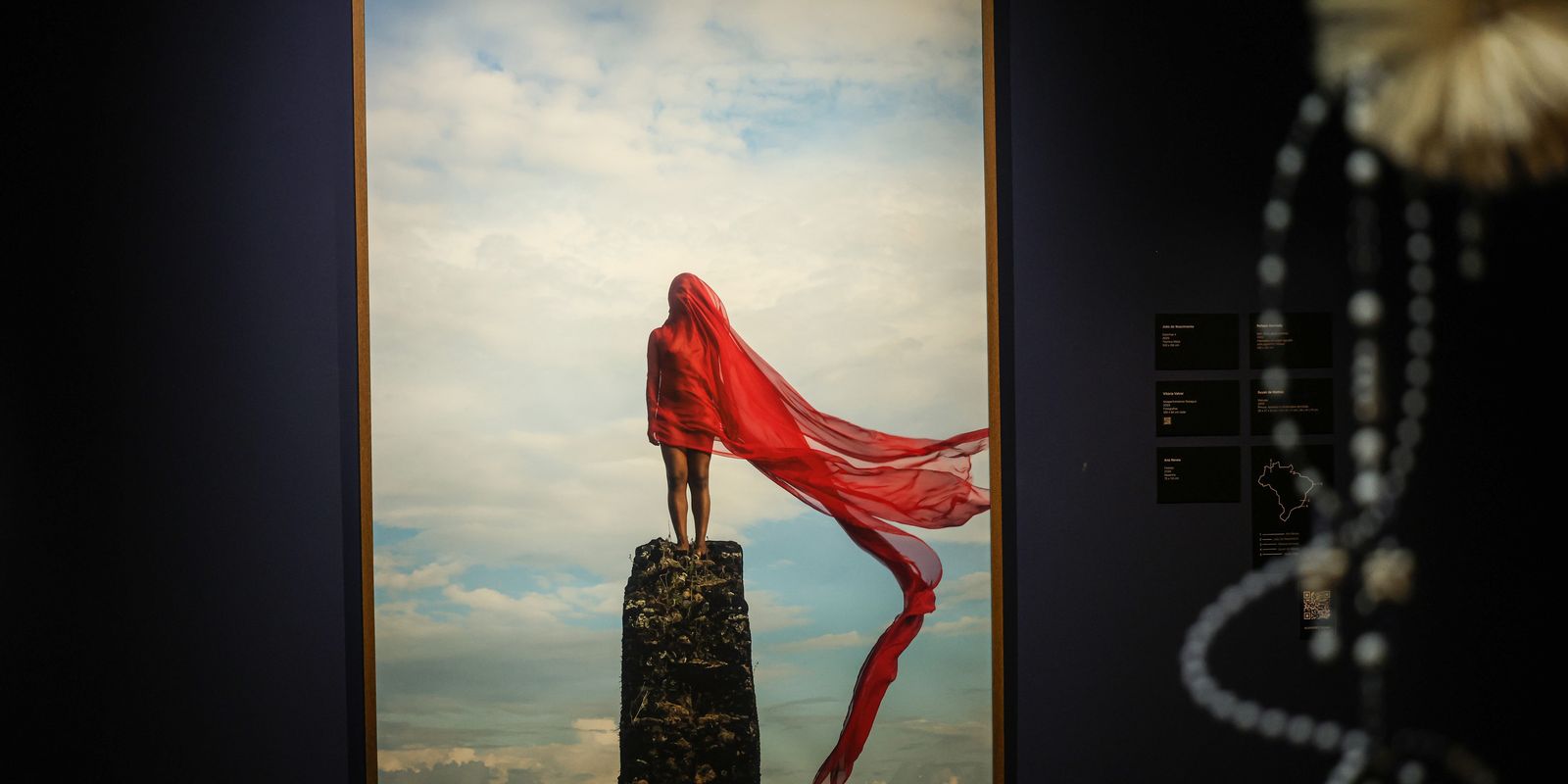
The Alumbramento exhibition, installed at the National Museum of the Republic, in the Center of Brasilia, gave the start, this Wednesday (23), for the numerous activities of the 18th Latin Festival until the 31st.
The gallery of works of 25 black and indigenous artists from the North, Northeast, Midwest and Southern Brazil make up a kind of plural cartography.
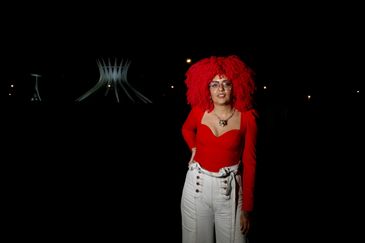
Jaqueline Fernandes invites the public to live art as a ritual – Ester Cruz/Disclosure
The founder of the Latinities Festival and director of the Afrolatinas Institute, Jaqueline Fernandes, told the Brazil agency That the Alumbramento exhibition invites the public to live art as ritual, memory and faith until August 24.
“Alumbrando is an exhibition that proposes a sensitive crossing for the dark fertile of artistic creation,” he details.
At the entrance of the room, the visitor faces the darkness as if it were the moment preceding the birth of everything and everyone. “Not as a vacuum, but as a matrix of all possibilities. From this perspective, each work presented is a fragment of expanding universes, echoing the creative explosion that constitutes us,” says the text that presents exposure to the public, contextualizing works as fertile, in the view of curator Nathalia Grilo.
All painted in blue, the space has the sensory works arranged without partitions, but organized in four solar cycles corresponding to the phases of existence, in the vision of the physical and spiritual world Bantu Dikenga: the first in the musony zone, dedicated to the invisible and the rebirth; Kala, space of dawn and origin; Tukula, representing the fullness. Finally, gloveba, territory of the hidden and restart.
At the opening of the exhibition, this morning, researcher Nathalia Grilo reported the process of choosing the authors, who are often young and she does not know them in the arts market or are outside the institutional circuit. “I do not necessarily know the processes within the studio. But the works communicate to me this commitment to daily doing, living in art of art. We are all the time open to these states of wonder.”
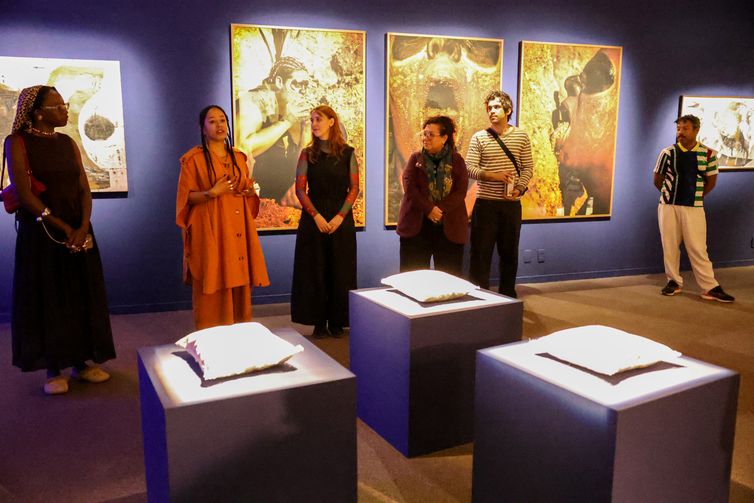
Natalia Grilo (2e) talks about the process of choosing artists- José Cruz/Agência Brasil
The scholar explains that the choice of the position of the arts considered the age of the artists, the generations that these artists are part and the experience within the Contemporary Art circuit and awards, within the four zones of Cosmo Dikenga. “They are like the moment before birth, maturity and death. […] Curator seeks to put these generations to dialogue, ”says Nathalia Grilo.
Who makes the art
Baiana de Salvador, Luma Nascimento is the author of the work Remembering body that floor is also memorywhich sewing orange, black and white beads, intertwined above popcorn arranged on the floor in a large circle and three darts of land collected in the 279 -year -old quilombo, located in the Western city (GO), where about 3,000 remaining families of slaves live.
Luma Nascimento recalled that this month, the Federal Regional Court of the 1st Region (TRF-1) determined that the National Institute of Colonization and Agrarian Reform (Incra) concludes within 12 months the process of land regularization of this quilombola community. Luma Nascimento talks about the symbolism of what she collects from the soils of other quilombola lands, since 2016.
“I realized that the Quilombo floor was one of the few spaces that Earth had a memory of freedom for black and black people. […] Inside and outside the religious field, this is a process of memory topology and how I can create a process of connection and reconnection with space. ”
Victory visual artist Vitroi led to the exhibition three photographs captured during the short film filming Dabblein the Zona da Mata do Pernambucana. After revisiting the photographs box left by her deceased grandmother, the artist knew she could find in Tracunhaém (PE), the city of origin of her family, the answers necessary to the lack of memory of the black population. “I look from my clay modeling to the performance process with the earth as a living and pulsating memories element […] Thinking that memory is a very expensive thing for Brazil’s black-indigenous population, because of this recognition of our ancestry, these fragments, these voids. ”
The transgender artist, Manaus, Rafaela Kennedy, brought the photograph of the Lamento series, taken in the Salvaterra territory, in the village of Joanes, on Marajó Island (Pará). He tells the story of his work portraying other transvestites and the experience of other people, but who in the Alumbramento exhibition wanted to speak of herself.
“As a Brazilian transvestite we know that staying alive in a territory that is extremely violent is a gift. I realize that when I becomes part of the work, I wonder about my belonging to the Amazon territory, being a person born in Manaus.”
Nelson Crisóstomo, born in São Gonçalo (RJ) 65 years ago, brought the work with tissues in tissues and deals with the intergenerational exchange of knowledge. “I work with affective memory, and my knowledge is derived from those who dominated dyeing techniques, extracting vegetable and mineral colors. These knowledge were intuitively transmitted in everyday life. Systematization came over time. Today, dealing with contemporary processes of printing, texturing and graphics as a form of expression is enriching through this exchange.”
Handing the Midwest, Goiania artist Gilson Plan worked with small leads of lead and black pearls, in a kind of material “enchantment”, as he defines himself. The installation also has speakers. “I think of the part of the materials and what they tell us, from the stories they carry.”
For the artist, this work has a simple provocation to think of two weights, but with the same measure. “It seems the same thing, but they are different values, because of the materialities that they [chumbo e pérolas negras] carry ”.
The Alumbramento exhibition has the exposed works of the following artists: Ana Neves, André Bódaa, Antônio Flag, Antônio Obá, arora, dani Guirra, Gesto Plan, guayasamin, João do Nascimento, josi, lane marine, luma Laguna, Luma, MAXWELL ALEXANDRE, nelson Chrysostom, nivalda Assunção, Paty Wolf, Pedro Neves, Rafaela Kennedy, EMULULO ALEXIS, SERGIO VIDAL, Mattos and Vatroi Vitroi.
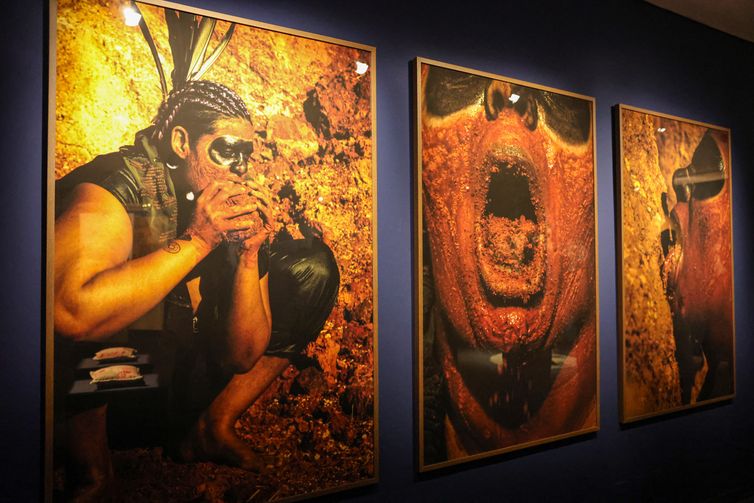
Mirasawá Exhibition Alumbramento at the 18th Latinidades Festival – José Cruz/Agência Brasil
Latinic Festival
In the 2025 edition, the Latinidades Festival has the theme Black women move the world and honors the intellectual and activist of the black movement Lélia Gonzalez (1935-1994).
The event is part of the actions of Afro-Latin American and Caribbean Women’s Day, celebrated annually on July 25.
Jaqueline Fernandes, director of the Afrolatinas Institute, says that the event discusses the confrontation of inequality structures that still profoundly mark Brazilian society. It details today’s main challenges to guarantee black women’s rights.
“This is in effective public policies, investment in anti -racist education, guarantee of representativeness in the spaces of power, valuing black culture and combating institutional violence. But it also involves changing mentalities and the collective construction of a new social ethics and civilizing pact,” says Jaqueline Fernandes.
>>>> Check out the full program of the festival.
*Collaborated Beatriz Arcoverde, National Radio