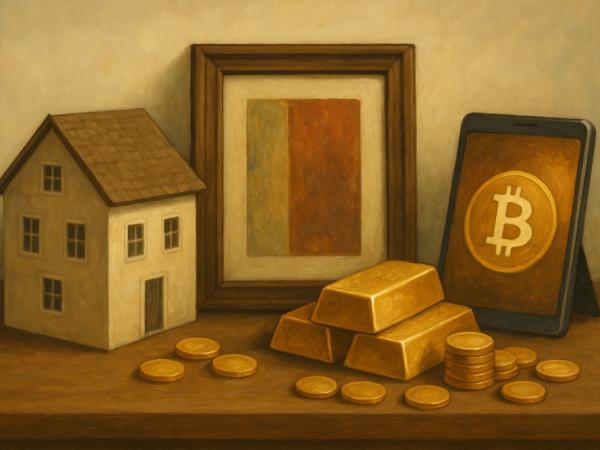
In the world of investments, not everything revolves around stocks, bonds or traditional funds. In recent years, a different category has taken hold: alternative assets, a set of instruments that include real estate, private equity, infrastructure, art, cryptocurrencies and other vehicles that are not listed on conventional markets.
Unlike traditional assets, whose value depends directly on the behavior of the financial market, alternative assets usually offer diversification, protection against volatility and, in some cases, superior returns.
However, they also imply lower liquidity and greater specific risks, which requires deeper knowledge and a long-term investment strategy.
Understanding how these assets work and what distinguishes them from classic instruments has become key for investors who They seek to balance their portfolios and protect themselves against global economic uncertainty.
The first thing to know is that the title of ‘alternatives’ is not associated with them being exotic or rare, but rather because they do not fall within the traditional classification of variable, fixed or liquidity income.
The reason why they are trending is because they move differently than stocks and bonds, that is, in a recession situation these assets can maintain their value. These are some of the best known.
(Read more: How much the Latin American economy would grow in 2025 and 2026: the WB projections)
Real estate
Includes investment in residential, commercial or industrial propertiesas well as in real estate funds. It is characterized by generating constant income and long-term capital appreciation.
Real estate
iStock
Private equity
Direct investment in unlisted companies, with the aim of financing them, growing them and then selling the stake at a profit. Requires long deadlines and knowledge of the market.

Private equity
iStock
(Read more: The law that puts a limit on the reconnection charge if your internet is suspended)
Infrastructure
Investments in projects such as roads, ports, energy or telecommunications. They are considered stable and long-term assets, often linked to public policies or concessions.

Infrastructure
iStock
Art and collectibles
Works of art, wines, watches, classic cars or pieces of historical value. Its appeal lies in the revaluation over time and its low correlation with financial markets.

Art and collectibles
iStock
(Read more: Bre-B: this is how you can receive and send money with this new payment system)
PORTFOLIO