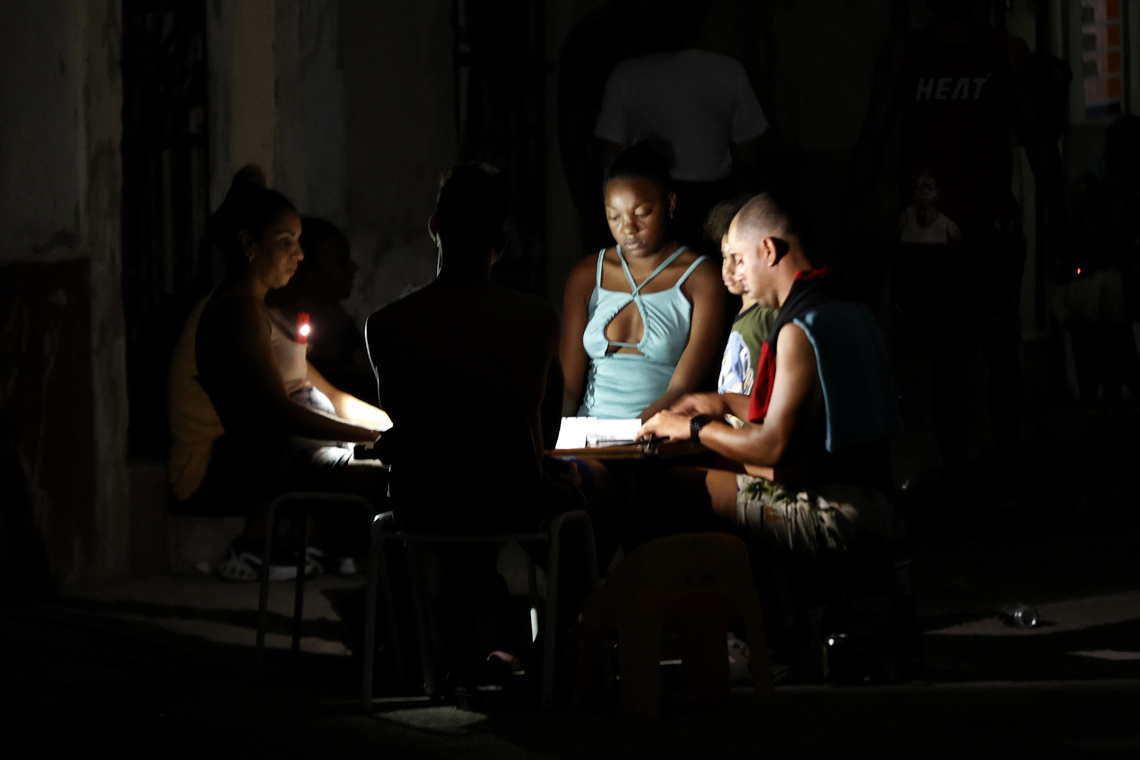
About 48% of the Cuban territory will experience electrical blackouts this Sunday, according to estimates by the Electrical Union (UNE), due to the structural energy crisis that the country is going through and the damage caused by Hurricane Melissa to the infrastructure in the east of the island.
The daily report of the state company calculates a maximum demand of 2,870 megawatts (MW) and an availability of only 1,560 MW in the evening peak hours. This represents a deficit of 1,310 MW and a scheduled impact of 1,380 MW, although the UNE warned that the real figures could exceed that forecast.
According to information from the EFE agency, seven of the country’s 16 thermoelectric units remain out of service due to breakdowns or maintenance, including Antonio Guiteras, the largest national generation block, which will remain paralyzed for several days. Added to this are 54 distributed generation engines inactive due to lack of fuel or lubricants.
He Hurricane Melissawhich hit eastern Cuba with winds of up to 200 kilometers per hour and rains that exceeded 400 millimeters in some areas, left most of the 3.5 million inhabitants of the provinces of Granma, Santiago de Cuba, Holguín, Guantánamo and Las Tunas without electricity.
So far, 64% of electrical service has been restored in that region, although Santiago de Cuba continues to be the most affected province, with only a 13% recovery reported last Friday, according to official data.
The energy crisis has been going on for more than a year, with generation deficit rates close to or greater than 50% and blackouts of more than 20 hours a day in several areas of the country. So far in 2025, Cuba has suffered five national blackouts, the last in September.
Are falls inevitable? of the national electrical system in Cuba
Cuban thermoelectric plants, the basis of the National Electroenergy System (SEN), are in an obsolete state after decades of exploitation and lack of investment. The government solar program, which has added 32 photovoltaic parks this year, partially contributes to daytime generation, although it lacks storage batteries, so it does not alleviate nighttime demand.
While independent experts attribute the crisis to the structural underfinancing of the state energy sector, the Cuban Government insists that United States sanctions aggravate the situation, causing what it describes as “energy asphyxiation.”
Various estimates agree that reviving the electrical system would require between 8 billion and 10 billion dollars, a figure that is unattainable for the country’s current financial capacity.
The electricity crisis also has a direct impact on the economy, which contracted 1.1% in 2024 and has accumulated a drop of 11% in the last five years, according to official figures. ECLAC predicts that Cuban GDP will close negative again in 2025.
Power outages have also intensified social discontent, linked to several citizen protests in recent years, from the massive demonstrations of July 2021 to recent episodes in Havana and Gibara.
EFE/OnCuba