One month after executive order signed by US President Donald Trump that sanctions the sale and delivery of fuel to Cuba, the island’s private trade faces an immediate and devastating impact.
Although the Office of Foreign Assets Control (OFAC) recently authorized private micro, small and medium-sized businesses (MSMEs) to purchase fuel, the reality is that 78% of them report drops in their sales, according to a report by the consulting firm AUGE.
The measure, added to the suspension of shipments from Venezuela after the fall of Nicolás Maduro, has left Cuba practically paralyzed. “We are not just talking about small businesses. When actors like Supermarket 23, Cubamax, Meliá or Sherritt reduce operations, the signal is clear: the impact is systemic,” says the document signed by the consultant and co-founder of AUGE, Oniel Diaz.
A crisis different from the pandemic
The report compares the current energy crisis with the 2020 pandemic, when businesses were able to reinvent themselves through teleworking, home deliveries and reconversion of services. “Today the question is different: what happens when what is missing is not a client, but the energy itself to operate?” says Díaz.
The difference is radical: energy is not just another input, but rather the basis on which all economic activity rests. While in 2020 there was a horizon of recovery with the arrival of vaccines, now the end is indefinite. Nobody knows when the fuel will return or when the blackouts will return to normal.
Immediate impact on MSMEs
The survey carried out by AUGE among 63 companies reflects that 78% are already experiencing drops in their sales. The blow is transversal: from small workshops to transnational corporations. 96% of MSMEs, according to a previous study, face an impact that ranges from severe to catastrophic.
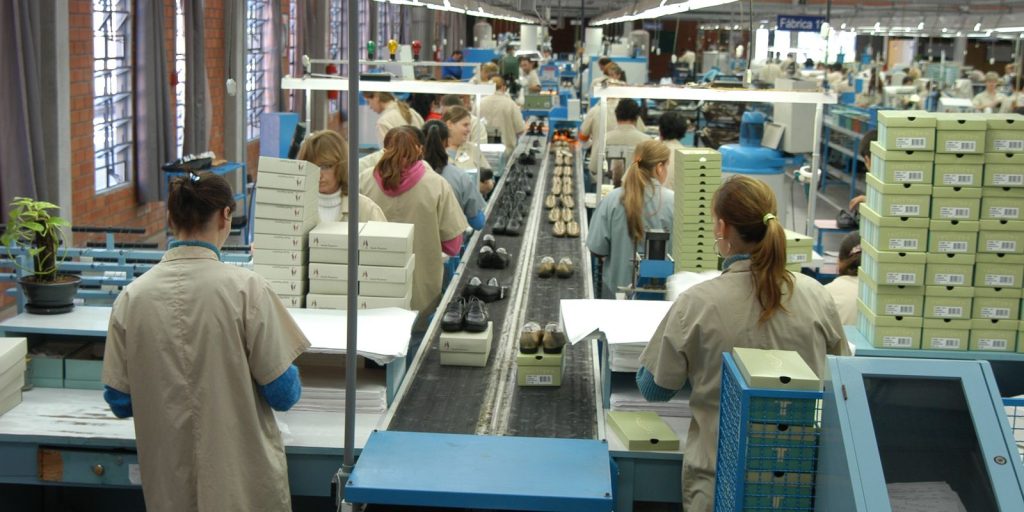
A manufacturing businessman explained that his sales are maintained thanks to accumulated inventories, but he warned that in three months he will have nothing to sell. “It’s like living on savings: you know they’re going to run out, but in the meantime the appearance is normal,” he said.
In contrast, a software company in Havana has held up better thanks to foreign clients and solar panels installed in its office. However, its programmers depend on electricity in their homes, which limits their ability to adapt.
Great actors also retreat
The crisis does not only affect small businesses. Supermarket 23, an e-commerce giant in Cuba, reduced operations since February 14.
For its part, Cubamax, a travel and shipping agency from the United States, adopted similar measures, while Meliá Hotels suspended the operation of three of its 35 facilities on the island, and Sherritt International faces serious difficulties in maintaining its operations.
When these actors decrease their activity, the magnitude of the problem stops being a hypothesis and becomes evidence of a systemic collapse, the study indicates.
The five wounds of the energy crisis
The five wounds of the energy crisis are severely felt in the Cuban business fabric. The first is that of the zero income: without energy there is no production and without production there are no sales, a simple and brutal chain that already hits the majority of MSMEs.
The second wound is loss of productionsince perishable foods and raw materials spoil due to lack of refrigeration.
The third is total decapitalization: Although 60% of companies invested in solar panels or power plants, the remaining 40% face the dilemma of buying fuel on the black market at astronomical prices or going paralyzed.
The fourth wound is absence of raw materialsbecause without transportation supply chains break; First it arrives less, then late and finally nothing arrives.
The fifth and last wound is fixed costs without returnsince rents, taxes and salaries continue to accrue even if the business is stopped.
Cuba runs aground as the most lagging economy in Latin America and the Caribbean, ECLAC warns
The mirage of stable sales
Some companies still report income thanks to accumulated inventories, but consultants warn that this is a mirage. When those inventories are depleted, the drop will be steep and massive. “The business crisis will show its true face,” Díaz warned.
The gradual nature of the collapse is treacherous: fuel reserves are depleted little by little, inventories are reduced without replenishment and the savings are consumed in gasoline at unattainable prices. The appearance of normality hides a deterioration that deepens day by day.
The consulting firm concludes that the energy crisis is more lethal than the pandemic because there are no substitutes for energy. No application can replace a kilowatt, and the ability to adapt has physical limits.
“There are companies that sell today but no longer produce, and their income is a mirage that will vanish when inventories run out,” the report warns.
78% of MSMEs already feel the blow in the first month, and the big players are also retreating.