The awakening … tribute
AND
Sto is not a desecration of Sunday space The awakening of my father, but just a loan
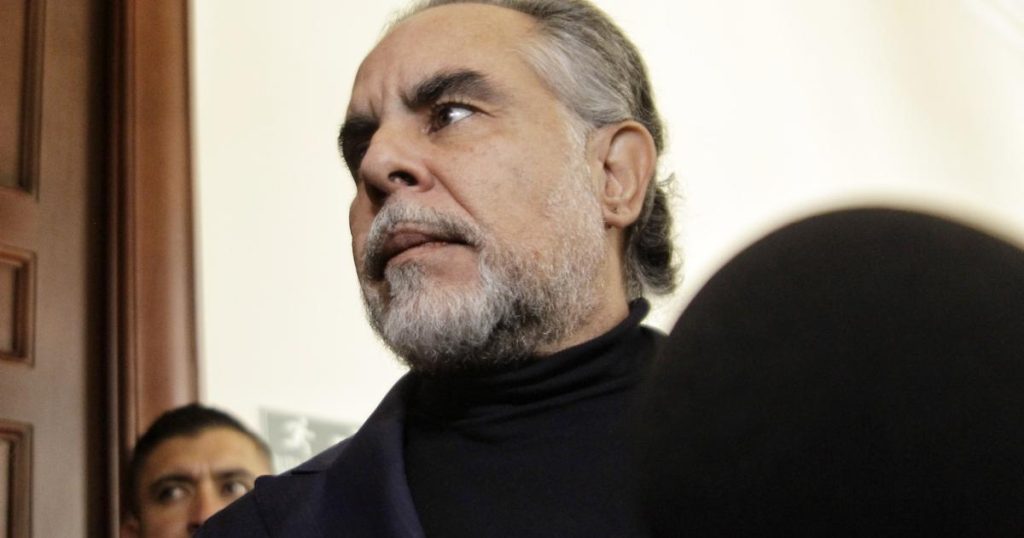
In his memory, now that this August’s first anniversary of José Agustín Ortiz Pinchetti (1937–2024). For 35 years he accompanied his readers with more than a thousand articles published uninterruptedly, until a few days before his death.
It was not only the means that he chose to share his ideals and encourage a critical and ethical political consciousness, but a vocation that he did not give up for travel, or for work, even during the most difficult moments of his illness, a consequence of a cerebral hematoma that physically invalidated him, but did not prevent him from writing until a few days before his departure; The work was the most important in his life, as their affections were, starting with his wife Loretta Ortiz Ahlf and his three children. He did it because he loved him and because he felt a genuine responsibility for his readers.
Endowed with a sharp sense of humor, the idea of being remembered with a wake up
I would have loved. But what I want to share with the reader is the least visible engine of his democratizing struggle from a deep secular spirituality, which merged primitive Christianity with Buddhism.
He told me in a series of unpublished interviews that I made weekly for more than a year, since December 6, 2020: I believe in God and in evangelical teaching, and from there my political vocation and my affinity have been born with Andrés Manuel López Obrador, who is also a believer. I am sure that without the Christian component I would not be a political activist
.
Some key episodes allowed Jaop – as they nicknamed him and as he had embroidered with tiny lyrics in the chest of his shirts – he would free himself from a heavy family heritage of Catholics, conservative and apolitical
in his words, and forge his own political consciousness.
This began in childhood. He told me how the indigenous world leaked in his life through nannies: tender, wise women, who came from the countryside and contributed an ancestral culture
. Although he did not have direct contact with peasant life until 10 or 12, his presence and his stories marked it deeply, especially because his mother had moved away emotionally. That contrast between the poverty of the nanas and the relative comfort of its urban middle class Maybe the first spark of social justice ignited in me
.
His paternal grandmother, Mom MagaIt was another crucial figure. Deeply religious, but also patriotic and social sensitive, such as their ancestors, the Ortices: My maternal family was antiliberal. My maternal great -grandfather had fought at the Querétaro site against Juárez. While my relatives on the paternal side were liberal and republicans. My grandfather was very close to General Obregón, he fought as a secret agent in his hosts
.
His grandmother gave him a firm affective structure and transmitted values of independence and love of work, because she was a single mother and worked until the end of her life as an administrator of a building, completely unusual for the time. It was also the one who encouraged his interest in writing early. My father urged his remains to deposit them with his ashes in the church of San Ignacio de Loyola, built on the land of the Patria College, the Jesuit school where he studied, which he loved and where his spiritual and political liberation also began.
There he began to separate himself from conventional Catholicism, in particular, thanks to Father Rodolfo Mendoza, who was an answer in religious matters, who perceived my doubts and freed me from that weight of beliefs that he no longer shared; He advised me to follow the evangelical teachings and forget the dogmatic issues that, according to him, were philosophy, but not absolute true
. Since then, Jaop He moved away from the institutional church and his rituals. He even obtained an official permission from the Patria College so as not to attend masses or religious ceremonies, horrifying his parents and causing hard family conflicts.
Already adult, he developed a non -orthodox religious practice, such as baptizing his children without a priest, and came to consider the possibility of becoming Lutheranism for his more friendly and practical doctrines
. He explored other spiritualities: he discovered yoga at age 20, then Zen meditation with Dr. Jorge Derbez during a personal crisis for his divorce – practical that he maintained for decades – until he found the mindfulness guided by her friend Leticia Picazo.
So, Jaop He forged his own awakening: he merged the Christian faith with social conscience, oriental mysticism with political commitment. His spiritual search was not a refuge, but the engine of transformation.