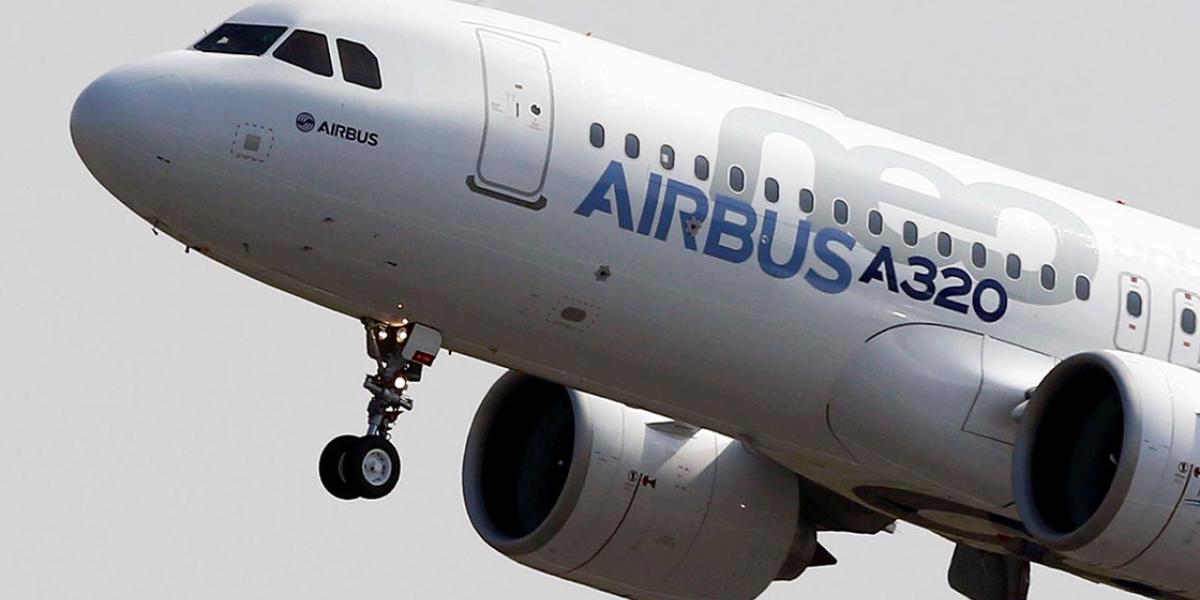
Airlines such as the American American Airlines, Air India, the Hungarian Xizz Air or Air New Zealand have warned throughout this Friday of delays, interruptions and cancellations in their services as a result of the Airbus notice in relation to a problem in the A320neo family aircraft that are currently in service.
In the United States, American Airlines has estimated that around 340 of its planes have been affected by the announcement, with which it has anticipated “some operational delays”, although the company expects that most of the updates required for the correct functioning of its devices will be completed between today and tomorrow (Saturday).
Delta Airlines, also from the United States, has guaranteed that it will comply with the safety guidelines issued by Airbus and has been optimistic by stating that it expects “any resulting operational impact to be limited.”
JetBlue and United Airlines are other companies in the sector that have been affected in the country, which is celebrating the Thanksgiving holiday this weekend, a date for which the US Federal Aviation Administration last week predicted the highest rate of activity in the last 15 years, according to statements reported by CNN.
In Europe, Wizz Air has warned passengers with trips planned for this purpose of possible interruptions as a result of the update required by Airbus.
For its part, the British EasyJet has notified its users that “it is currently working closely with security authorities and Airbus to implement the measures they (must) take”, and have added that “they will inform customers directly about any changes to (their) flight schedule tomorrow, doing everything possible to minimize the impact.”
Likewise, one of London’s main aerodromes, Gatwick airport, has reported impacts on some 80 of the routes scheduled for this Friday “for the same reason. On the other hand, other airports such as Heathrow have celebrated that “the maintenance required on some Airbus aircraft currently has no impact on their operations.”
This reality shows, as Tim Johnson has illustrated from the United Kingdom Civil Aviation Authority, “as (in the country) not all airlines fly with Airbus A320 or the affected aircraft, for some airlines there will be no impact at all.”
“For some, there may be some impact. My advice is to check airline websites and apps for the latest information on what is happening,” Johnson told the BBC.
In any case, a directive from the European Aviation Safety Agency (EASA) has determined that, starting this Saturday, November 29, airplanes that are considered affected will be able to transport people once they have been repaired. In the meantime, they will only be allowed to make flights without passengers to reach maintenance facilities.
From the other side of the globe, New Zealand’s Air New Zealand has shared on its social networks that the “global software problem affecting Airbus A320neo aircraft” will affect the regular provision of its services.
“As a precautionary measure, all our A320neo aircraft will receive a software update before operating their next passenger service,” the airline has indicated in its account on X, guaranteeing that they will communicate “directly” with those of their customers whose flights are among those affected.
Similarly, the Japanese airline All Nippon Airways (ANA), one of the main Japanese airlines, has notified the cancellation of more than 60 flights so far due to problems related to its fleet of Airbus A320 aircraft, noting that the review of each of them will take approximately four hours. According to the Kyodo news agency, these cancellations have affected a total of around 9,500 passengers.
This Friday, Airbus has identified a problem in the A320neo family of aircraft, currently in service, and has urged operators working with this model to take immediate preventive measures in this regard.
Analysis of a recent incident involving an A320 family aircraft has revealed that intense solar radiation can corrupt data critical to the operation of flight controls.
The European manufacturer has identified a “significant” number of A320 family aircraft in service that could be affected and has collaborated with aeronautical authorities to request operators to take immediate preventive measures through an alert transmission to operators (AOT) in order to implement the available ‘software’ and/or ‘hardware’ protection and ensure the safety of the fleet.
Thus, Airbus has indicated that it is aware that these recommendations will cause “operational disruptions” to passengers and has apologized for the inconvenience caused, insisting that it will work with its collaborators, “keeping safety as the number one and absolute priority.”