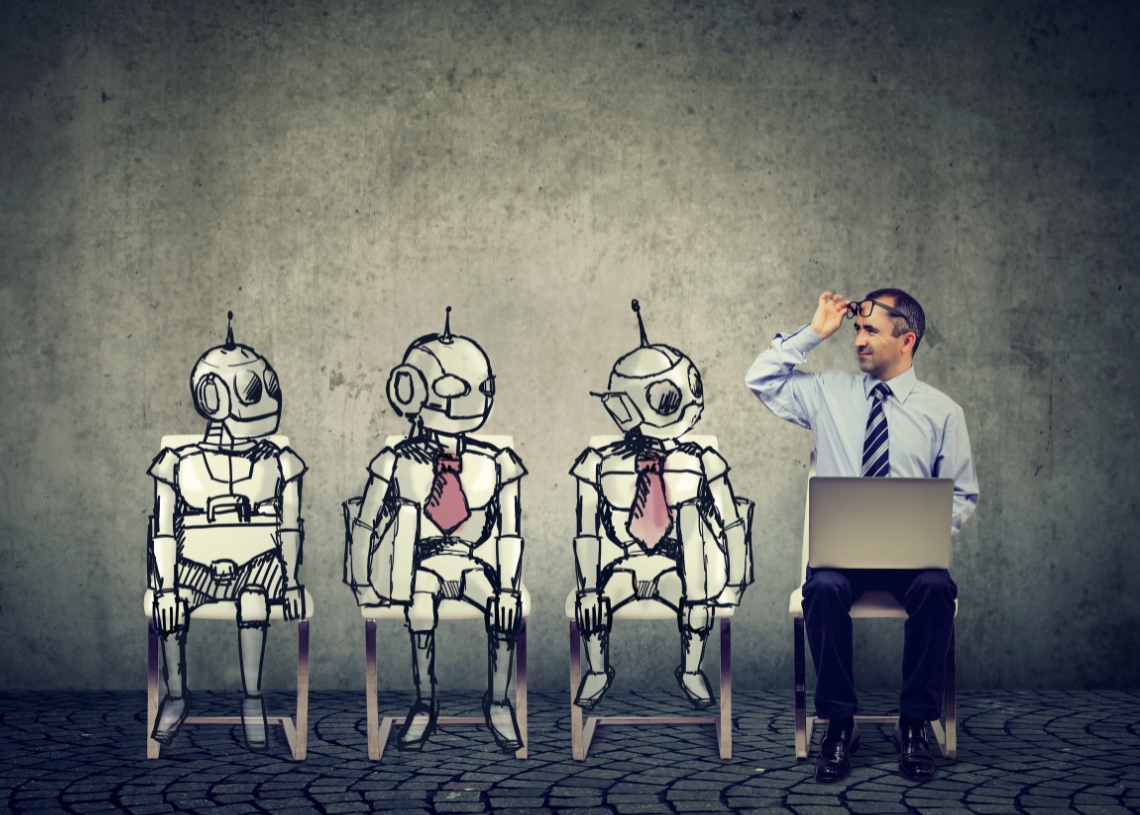
When talking about work and artificial intelligence, opinion seems to oscillate between exacerbated techno-optimism and prophetic techno-pessimism. Far from the major debates, the relationship between AI and the future of employment raises not so obvious problems to which it is necessary to dedicate time to analysis.
This article reflects on the incipient tension between the algorithmic and human management of organizations based on the opinion of the part of the employment relationship that is usually presented as the victim: the workers.
Artificial intelligence and the future of work
In February 2025, the Eurobarometer 554 about AI and the future of work. Among other questions, the pollsters asked the more than 25 thousand participating European citizens what their opinion was about the use of digital technologies and AI.
The overall perception of its use in the workplace was, in general terms, favorable. The report indicates that 62% of the participants expressed a positive attitude compared to 32% who responded negatively. At first glance, it could be said that European citizens are notably in favor of artificial intelligence at work. However, the results by country give a different color to these data.
While attitudes in northern Europe are clearly positive, optimism declines as you move south. As an example, in Denmark 86% of those surveyed rate this issue favorably, while in Portugal only 48% think the same.
What opinions does the impact of AI on the labor market generate?
At European level, 66% of participants agree on two things. First, AI will eliminate more jobs than it will create. Secondly, it will steal people’s jobs.
Here the results by country are reversed and those who previously showed a less compliant position agree with these statements. To continue the differences between north and south, 80% of Greeks agree that more jobs will disappear than will be created as a result of artificial intelligence, compared to 45% of Danes.
What about the impacts on critical areas of the workplace?
Regardless of the above differences, there is a remarkably shared opinion on this point. When asked about the use of AI to fire employees, 78% of respondents are against it. In Denmark, 94% of those interviewed disagree, while in Portugal this percentage is 70%. Poland and Romania are the countries in which respondents are most satisfied with the use of AI for the worker dismissal process (33 and 28% respectively).
Questions are also asked about the use of artificial intelligence systems to monitor workers. The results go in the same direction, with 63% of those interviewed disagreeing. Regarding automatic candidate selection and performance evaluation, the percentage of unfavorable evaluations is 57%.
In contrast to the illusion of unanimity, this review of some of the Eurobarometer results shows that opinions are far from being homogeneous. Variables such as idiosyncrasy, trust or the values associated with the work of each country influence the position of European citizens, calling into question this supposed global consensus.
Algorithmic management and human management: an emerging tension
The difference between apparent social unanimity about the goodness of AI and what the data shows is something organizations need to remember. In their projection into the future, it is in companies’ best interest not to forget the human part that makes them up or the need for certain actions to continue to be executed by people and not in an automated manner mediated by algorithmic rationality.
In the workplace, the promises of artificial intelligence and its developers are destined to boost productivity and streamline processessomething that does not necessarily imply the improvement of jobs or employment in general, although this association is often made.
While the use of AI may seem positive on a superficial level, it can also have counterproductive consequences for the organization. As an example, it could generate an increase in stress levels until leading to paintings of burnout (a state of emotional exhaustion, depersonalization and loss of effectiveness at work), contribute to isolation and loneliness at work or increase workload. This is stated by Sue Cantrell, Jason Flynn and Nic Scoble-Williams (2025) in their contribution to the report “Global Human Capital Trends 2025” published by Deloitte, where one of the most worrying results of the silent effects of artificial intelligence was that 77% of workers surveyed stated that its use had increased their workload and decreased their productivity.
In recent years, personnel management has emphasized the need to enhance aspects of work that are not purely productive, such as internal cohesion or the construction of meaningful work, among others. These “human” aspects of employment are even more relevant today, considering the job expectations of future generations of workers. As an example, according to the data, the absence of perception of purpose in employment is a factor that generates anxiety and stress in a large part of the workers belonging to the so-called generation Z, as well as in the millennials.
In many aspects, the human-based management approach clashes head-on with the rationality imposed by algorithmic management. As notes the French philosopher Eric Sadin: “The human represents (…) the agent with whom we must continually negotiate and who inevitably ends up doing slower the great economic machine“, so on many occasions the opposition between human management and algorithmic management It resolves to “disqualify human action for the benefit of a ‘computational being’ that is judged superior.”
It seems clear then that the future of work must also involve resolving the tension between the increased productivity proposed by AI and its promoters, and human rhythms. That is, resolving the tension between algorithmic management and human management.
A version This article was published in the Telefónica Foundation’s Telos magazine.
Adrian Serrano SanzTeaching and Research Staff, Saint George University
This article was published in The Conversation. Read the original.