According to the Continuous National Survey of workforce (ENCFT) of the Central Bank of the Dominican Republic, to the second quarter of 2025 the Labor informality It stood at 54.0 %, which represents a decrease compared to 56.1 % registered in the same 2024 period.
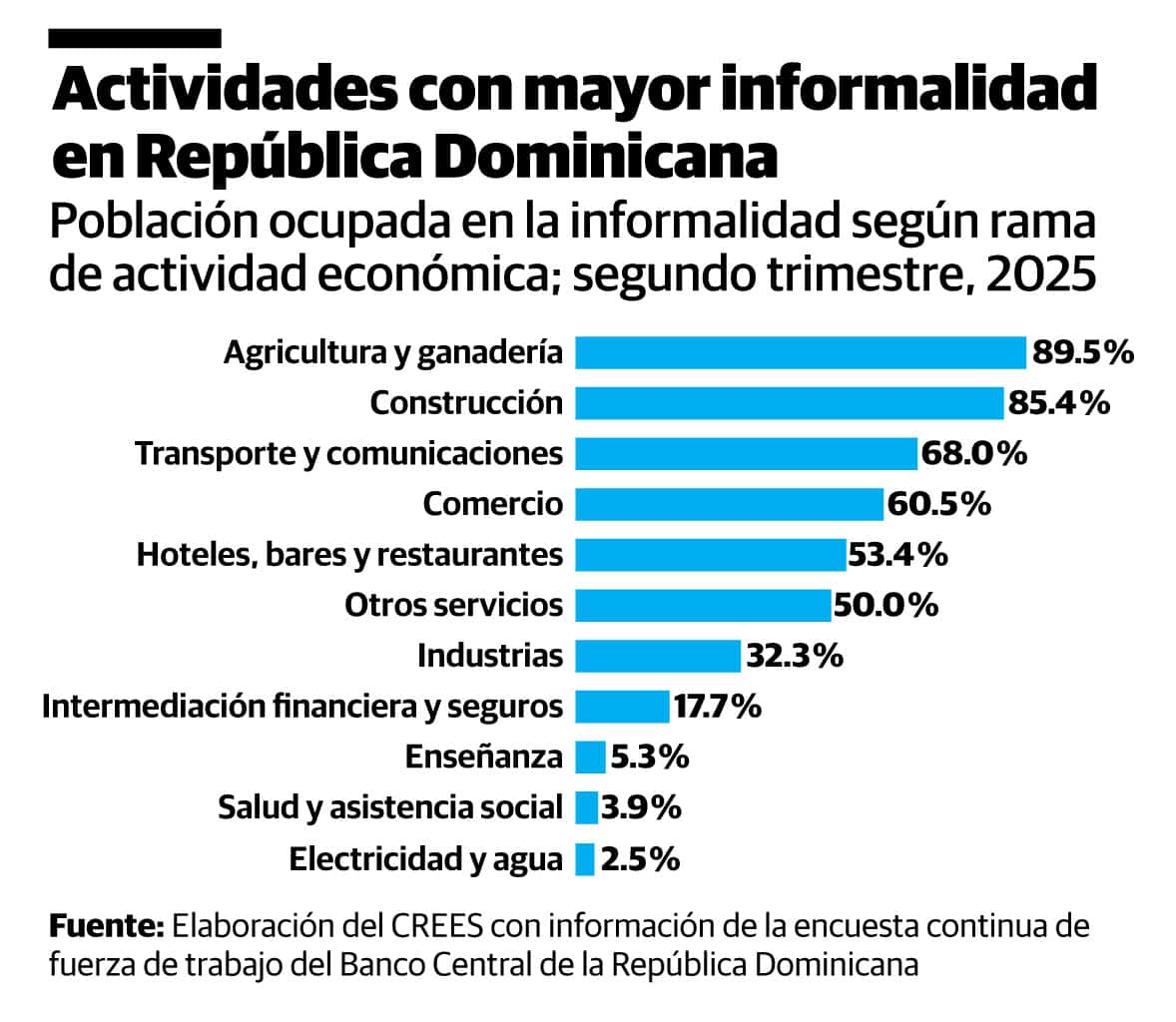
By branch of economic activity, the highest levels of informality were concentrated in Agriculture and livestockwith 89.5 % of workers. Second, the construction with 85.4 % of informal employed, followed by Transportation and communications (68.0 %). The trade sector also reported 60.5 % informality.
In contrast, the branches with lower levels were teaching (5.3 %), health and social assistance (3.9 %), and electricity and water with only 2.5 %, being the branch with less informality.
The High informality It reflects the weight of the laws, regulations and institutions that shape the Dominican labor market. For much of companies and workers, the costs of operating in the formal framework are too high, which encourages them, and even pushes, to remain out of formality. The Non -salary job costs such as unemployment, regulations and extensive Bureaucratic procedures They make hiring more and restricted the capacity of the private sector to create formal jobs.
Reduce informality requires deep reforms Both at work level and taxes that eliminate distortions, reduce the costs of hiring and relieve the load on production. While the Tax system maintain an approach that concentrates only on collection, ignoring the effect it has on the Employment generationthis will continue to maintain workers within informality.
__________
A collaboration of the Regional Center for Sustainable Economic Strategies (You believe).