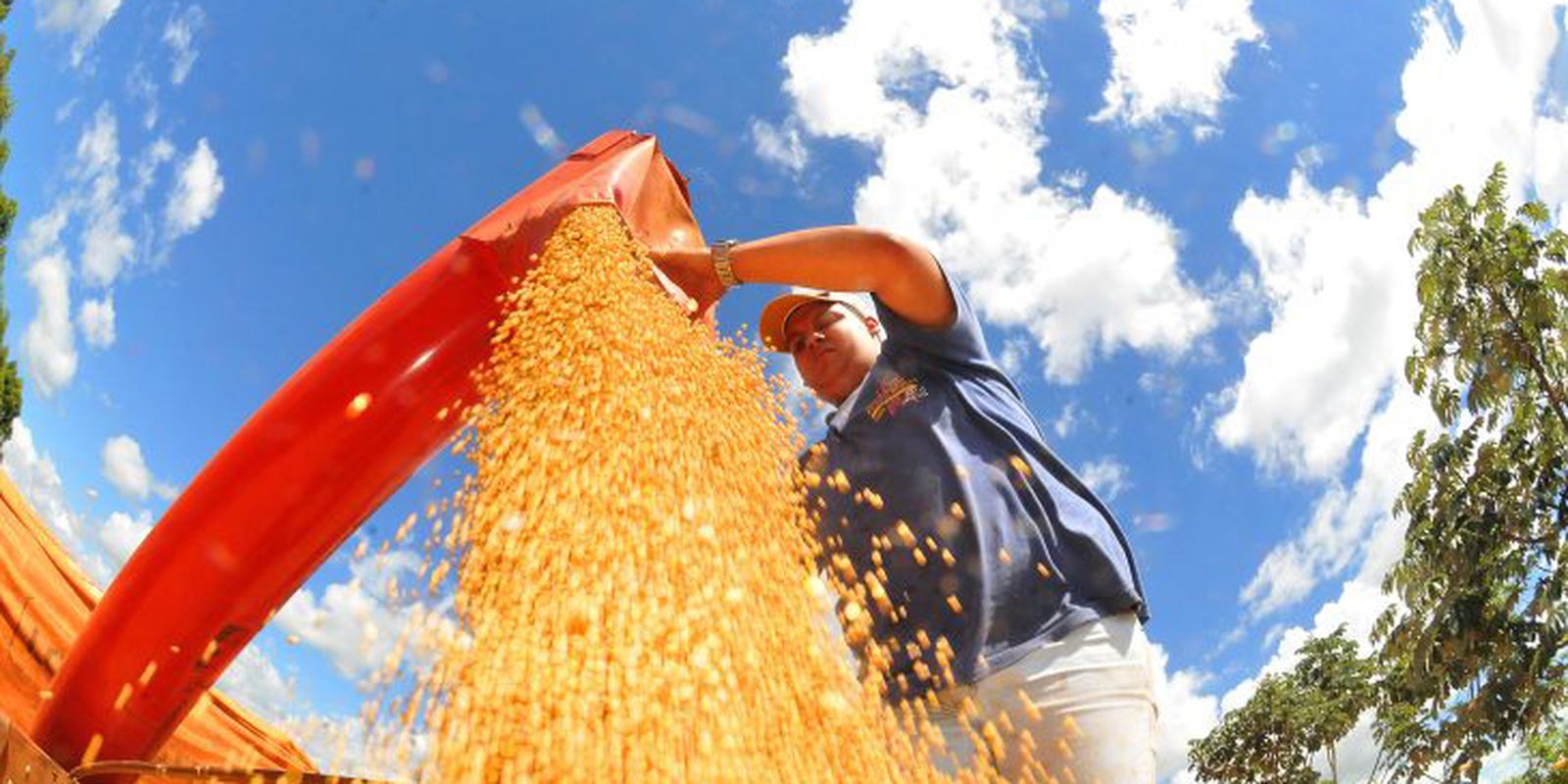
Thirteen states and the Federal District had proportional growth greater than that of the Brazilian economy in 2023. Of these, eight were driven mainly by agricultural activity: Acre, Mato Grosso do Sul, Mato Grosso, Tocantins, Goiás, Paraná, Roraima and Minas Gerais.
While Brazil saw the Gross Domestic Product (GDP, set of goods and services produced) grow 3.2% in 2023, the states driven by agribusiness showed expansion of 3.4% to 14.7%.
The information comes from the Regional Accounts System, released this Friday (14) by the Brazilian Institute of Geography and Statistics (IBGE). The study is a detail of the economic behavior of the federation units, with data until 2023. In national terms, the IBGE has already announced that the Brazil grew 3.4% in 2024marking four consecutive years of growth.
Follow EBC’s complete coverage at COP30
See the list of the 14 federation units that showed GDP expansion greater than that of Brazil in 2023:
- Acre: 14.7%
- Mato Grosso do Sul: 13.4%
- Mato Grosso: 12.9%
- Tocantins: 7.9%
- Rio de Janeiro: 5.7%
- Goiás: 4.8%
- Paraná: 4.3%
- Rio Grande do Norte: 4.2%
- Roraima: 4.2%
- Maranhão: 3.6%
- Alagoas: 3.5%
- Minas Gerais: 3.4%
- Espírito Santo: 3.4%
- Federal District: 3.3%
The four leaders in the ranking had good performance, especially in soybean cultivation. Rio de Janeiro had the contribution of the oil and gas industry. The Federal District was driven by financial activities and public administration.
Although some numbers are much higher than the country’s growth, the data does not mean that the states are the ones that most influence the national average. This happens because each federation unit has a weight in the country as a whole.
Acre, for example, represents just 0.2% of Brazilian GDP. Rio de Janeiro, 10.7%. The state with the highest participation is São Paulo, which accounts for practically a third of the national GDP (31.5%).
In 2023, the São Paulo economy grew 1.4%, the third smallest expansion, ahead only of Rio Grande do Sul and Rondônia, both with a variation of 1.3%.
Regions
When measuring economic growth by region, the Central-West stands out, with expansion more than double the national rate.
- Midwest: 7.6%
- North: 2.9%
- Northeast: 2.9%
- Southeast: 2.7%
- South: 2.6%
Economic deconcentration
IBGE also presented the behavior of state economies in the period from 2002 to 2023. Seventeen UFs had an average annual growth higher than that of Brazil in this period of time.
While the country had an average rate of 2.2% per year, Mato Grosso (5.2%), Tocantins (4.9%) and Roraima (4.5%) surpassed the 4% mark, all influenced by agriculture.
Rio de Janeiro (1.6%) and Rio Grande do Sul (1.4%) had the lowest results. Both reaped setbacks in the manufacturing industry.
The behavior of the last two decades indicates deconcentration of the Brazilian economy. Considered the country’s locomotive, São Paulo accounted for 34.9% of Brazilian GDP in 2002, rising to 31.5% in 2023.
Rio de Janeiro is the second one that has lost the most share in 21 years, going from 12.4% to 10.7%.
At the other end, Mato Grosso grew the most in the period, almost doubling its share – from 1.3% to 2.5% of Brazilian GDP. Thus, the state that had the 15% largest GDP in the country in 2002 ended 2023 as the 10th largest.