The privatization of Sabesp, the largest sanitation company in the country, was completed on July 23, 2024, Completing a long process, with requests for parliamentary commissions of inquiry (CPIs) and accusation of dismantling by workers’ representations. 
The company says it is focused on making an investment plan of about R $ 70 billion by 2029, with anticipation in four years of the universalization of water and sewage services. Since privatization, R $ 10.6 billion have been invested, according to Sabesp.
Sabesp’s privatization process began in 2021, shortly after the approval of the Sanitation Framework, with the change in the company’s contract model with the cities. The company already had shares distributed on the stock exchange, but 50.3% of the shares belonged to the state government.
In 2023, the São Paulo City Council approved the city’s adhesion to the new model. As the state capital is responsible for about 50% of the company’s business, this adherence was indispensable to make the sale of participation interesting for the private initiative.
The sale was completed with the acquisition of 32% of the company’s shares for the amount of R $ 14.7 billion, celebrated by the state government but criticized by the opposition. The amount requested for each share was $ 67, while the price of papers in the trading session was $ 87 each. This week, the action is traded around $ 110 each.
Equatorial Participações e Investimentos acquired 15% of the shares, becoming the company’s reference investor, without facing competition. The other 17% of the papers were sold at the time at the same price of the action (R $ 67), to individuals, legal entities and employees of the company.
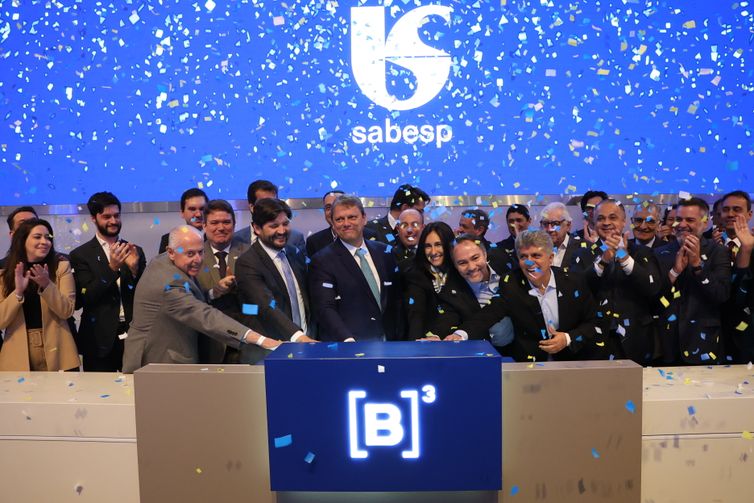
Sabesp privatization ceremony on the São Paulo Stock Exchange – B3. Photo: Rovena Rosa/Agência Brasil
Impacts on workers
Active participant in the process of public hearings that preceded the sale, The São Paulo State Water, Sewer and Environment Workers Union (Sintaema) evaluates that the loss of public control is one of the decisive factors, with less weight from the government and its secretariats in strategic decisions. According to the union, the measure should accelerate outsourcing and layoffs, reducing workers’ remuneration.
“The climate here is of apprehension. Many of the workers who joined the Voluntary Resignation Plan (POS) did so for uncertainty about the future and pressure of the bosses,” says the president of the entity, José Faggian.
According to the union, the company fired more than 2,000 employees since privatization, Being 1,000 of them in the first quarter of this year, according to a balance sheet on the Sabesp website.
Sintaema also points Risk of increased accidents by decreasing maintenance and quick response teams. The company has undergone two occurrences of leakage of large amounts of sewage on river roads, one near the Castelo Branco Highway and one at the Guarapiranga dam, one of the main water reservoirs of the metropolitan region. They also criticize the plan for universalization of care, until 2029, which, according to the entity, opens the possibility for exclusion of peripheral communities.
In January of this year, allegations of abusive charges motivated the request to open a CPI in the City Council of the capital, by parliamentarians of the Workers Party (PT). A few months after privatization began to emerge cases of residents of Greater São Paulo who had increases, some from $ 70 to $ 500 per month.
The proposal was not approved by the City Council. In Carapicuíba, Greater São Paulo, a commission was opened in May this year. Still without conclusion, investigates quality of service, increased accounts and similar situations in the city.
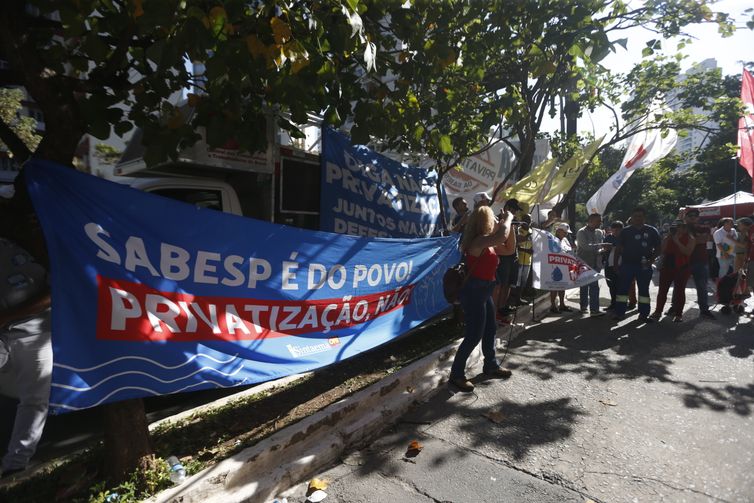
Manifestation against the privatization of Sabesp, in 2024, in the City Council of São Paulo. Photo: Paulo Pinto/Agência Brasil
New policy
The company says it goes through a process of transformation focused on efficiency, appreciation of people and preparation for the challenges of the future. “This movement is part of Sabesp’s new strategy, which is committed to universalization of sanitation with quality, innovation and sustainability.”
In this process, it has changed its human resources policy and increased hiring on outsourced fronts, with an estimated generation of 40,000 direct and indirect jobs in the next two years.
“It is important to remember that part of the reduction of the condition is due to the adhesion of professionals to the voluntary dismissal program, launched late last year. New technologies also optimize processes, as well as bring faster and more effective results, such as the location of satellite leaks and the supervision of asphalt replacement with artificial intelligence,” explains Sabesp.
Regarding the reduction of about 10% in the company’s staff, the agency said it accompanies and monitors any impacts on the provision of services based on contractual indicators.
“If inconsistencies are identified, appropriate measures will be adopted, as the required quality levels must be kept regardless of the concessionaire’s personnel structure.”
Profits and Dividends
One of the changes provided for in the privatization process involves increasing profit distribution to shareholders. According to the consultancy Instituto Água e Sanitation, the company’s dividend policy has changed. Until last year, dividend distribution was 25% of net profit. In 2026 and 2027 it will be 50%, and may reach 75% in 2028 and 2029 and 100% from 2030.
Increased profit distribution is reflected in the increase in cash flow to shareholders, demonstrated in the company’s last balance sheet. From R $ 1.18 billion, at the end of 2024, to R $ 1.95 billion at the end of the first quarter. The company’s share capital also increased from R $ 36.9 billion to R $ 38.3 billion.
The increase in revenue reflects the expansion of the customer base, growth in consumption, change in firm demand contracts, the tariff adjustment that occurred in May last year, before privatization, and structural measures.
At the same time, Sabesp reinforced its social performance. Since the end of 2024, the number of social tariff benefits has grown by more than 70%. In the company’s balance sheet, there is an increase in customer base, as well as increased tariff, which reaches 18% in industrial customers.
For universalization, the company has increased by raising external resources. In a statement, they stated that they have sought financing in the market to ensure the necessary investments, maintaining the financial balance.
“The funding helps to enable large -scale works, expand access to services and meet contractual and social goals.” One of these strategies, approved this month by the company’s board, was the issue of $ 1 billion in debentures.
Oversight
Prior to privatization, Sabesp’s surveillance was centered on environmental agencies, such as Cetesb and area secretariats. After privatization, he moved to the umbrellas of the São Paulo State Public Services Regulatory Agency (Arsesp), which operates in all state privatization processes.
According to Arsesp, to deal with Sabesp, the agency updated normatives and improved its regulatory instruments, focusing on meeting the universal sanitation goals in the State of São Paulo, as well as the quality of services provided and the effective investments.
The following measures were taken: review of supervisory procedures; Adjustments in the regulation of social tariff and the improvement of the monitoring methods of contractual indicators. The first public report on the new concession is scheduled for the end of 2025.
Social tariff
On Wednesday (23), the São Paulo government announced the beginning of the Paulista Tariff Social Tariff program, which expands access to the discount on water and sewage accounts for families in social vulnerability who live in the municipalities served by Sabesp.
The program will have three categories, with discounts ranging from 22% to 78% in tariffs.