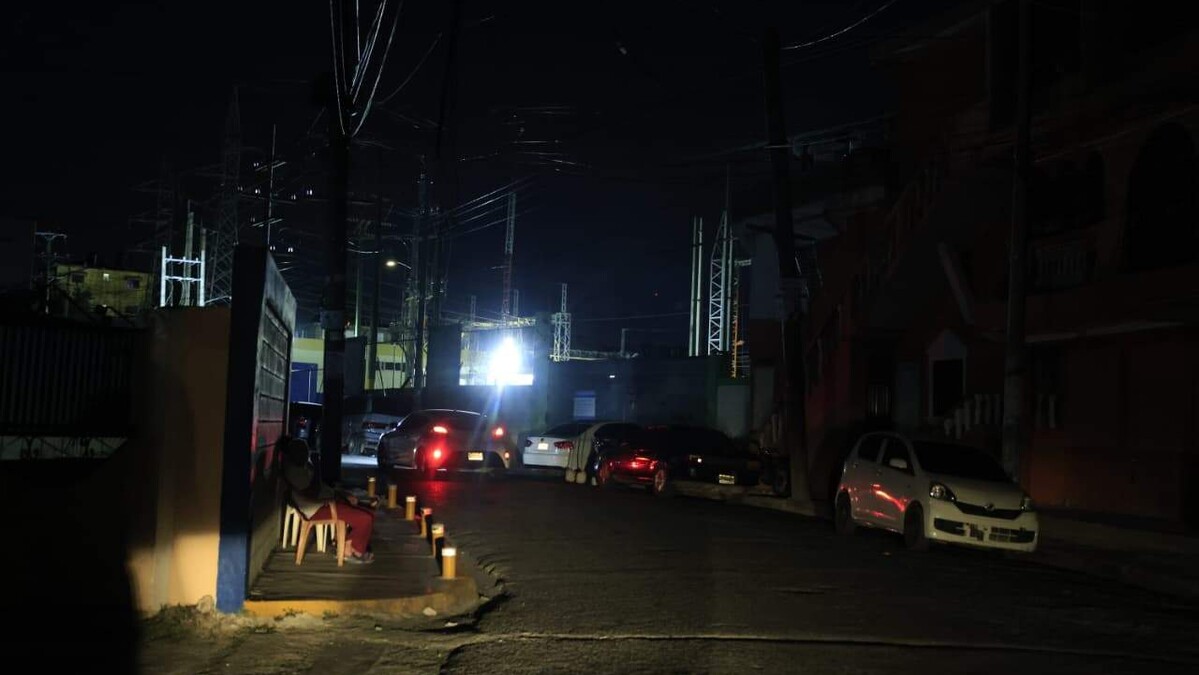
The Dominican Renewable Energy Association (ADER) issued an official statement in defense of the sector after the general blackout that affected the country on February 23, ensuring that the event was not related to the injection of clean energy, but rather to failures in the transmission and with the limited flexibility of traditional thermal plants.
For ADERa fundamental fact that separates the renewable of the incident is the time at which the failure originated.
The event occurred around 10:50 in the morning, a time when the photovoltaic generation is in a phase of gradual increase and not at its peak, which is usually reached between midday and early afternoon.
According to the association, this chronological factor rules out that the blackout was caused by a excess injection of renewable energy or due to the lack of storage in current solar projects.
On the contrary, The authorities preliminarily identified that the origin was a failure on the Hainamosa–Villa Duarte transmission line, which activated the system protections.
Thermal inflexibility and “waterfall effect“
In his statement, ADER argues that technical analysis points to the dynamics of thermal units large scale. These plants, designed for base generation, have technical minimums elevated and a limited flexibility to reduce its power quickly.
The association explains that, when a sudden reduction in demand or a failure in the transfer network, these units can generate a condition of over-generation by not being able to adjust its output with the necessary speed.
This activates additional protections that result in the abrupt output of large blocks of power, triggering an event in waterfall that affected the national territory.
Call for modernization and transparency
The union highlighted that the Coordinating Body It acts under technical mandates and cannot instantly alter the physical limitations of thermal power plants. Therefore, it considers that this blackout should be seen as an opportunity to improve the flexibility of the generation park and strengthen the transmission infrastructure.
This position of ADER comes after the president’s statements Luis Abinaderwho in his accountability speech described the failures as “unacceptable” and pointed out that the electrical system continues to be a challenge for its management.
The president also highlighted that the installed capacity of solar and wind energy has quadrupled, going from 11% to 29% of the national total in recent years.
Finally, ADER urged that the debate on storage and reserves is addressed as part of a future strengthening strategy, preserving the legal certainty of those who have invested in the modernization of the Dominican energy matrix.
It is expected that on March 11, the Failure Committee of the National Interconnected Electrical System (SENI) presents the definitive results of the investigation and the corresponding measures.