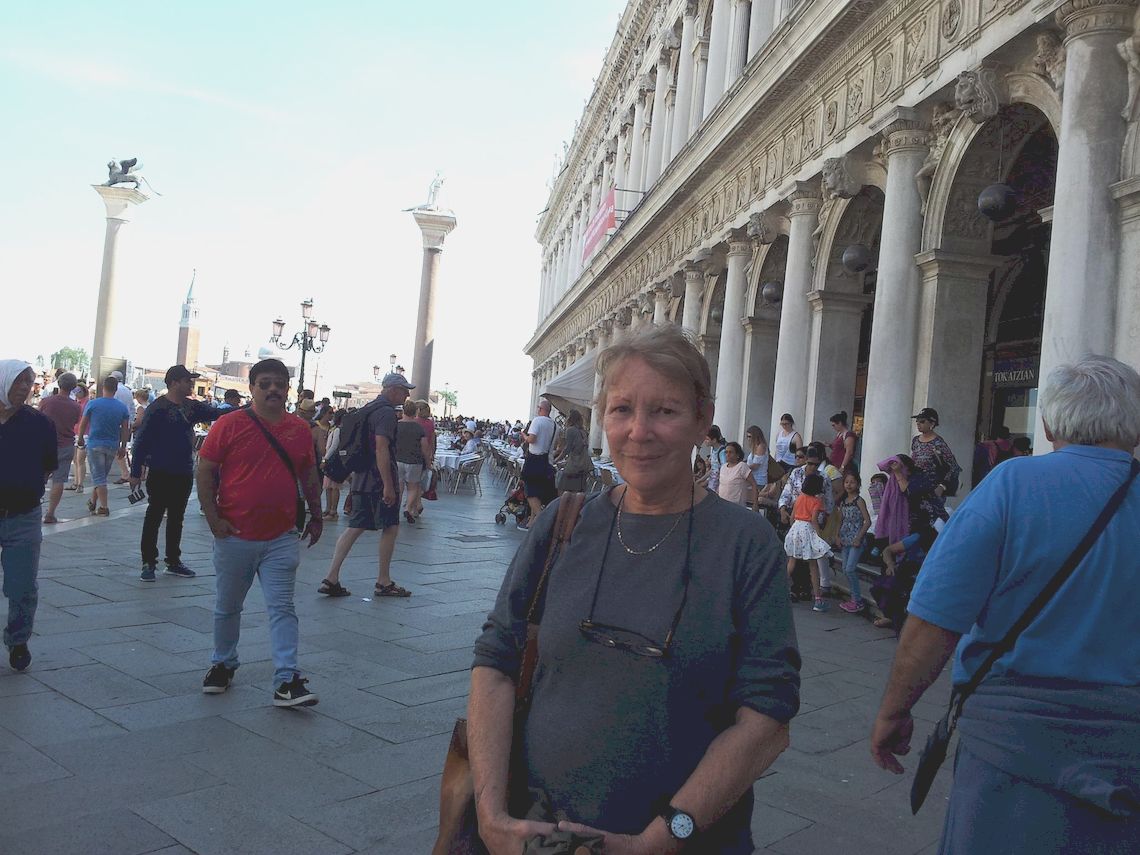
Miriam Learra, one of the best-known actresses in Cuba for her presence in theater, film, radio and television on the Island, died this Saturday in Havana at the age of 88, the playwright and critic Norge Espinosa reported on his account. Facebook.
Born in Havana in 1936, she studied with a scholarship in Prague and in 1966 she joined Teatro Estudio, where she worked with its best directors in works such as “La Ronda”, “Doña Rosita the Bachelorette”, “Blood Wedding”, “Galileo Galilei”, “The Golden Calf”, “Don Gil de las Calzas Verdes” and many more. She was a student, among others, of icons of the Cuban theater scene such as Adolfo de Luis and Vicente Revuelta.
Starting in the 90s, the actress continued her career at the Hubert de Blanck Company. On television, Learra took on characters in very popular telenovelas of the 1980s and 1990s, such as “The Seventh Family,” “Las Honadas,” “Tierra Brava,” “Without Losing Tenderness,” “The Year Next,” and “Entre Mamparas.”
Her portfolio of honors includes the award for Best Female Performance at the first Havana Theater Festival, in 1980, and the award for Best Female Performance at the Sitges Theater Festival, Barcelona, Spain, for her work in “Morir del Cuento”, by Estorino.
His teaching and institutional and theatrical leadership work also stands out, since between 1977 and 1980 he taught classes at the National School of Art; From 1982 to 1984 she was president of the Theater Section of the Performing Arts Association of the National Union of Writers and Artists of Cuba (UNEAC) and, for three years, general director of the Hubert de Blanck Group in the 1990s.
In cinema he participated in the feature films Un día deNovember (1972, Humberto Solás), El brigadista (1977, Octavio Cortázar), Aquella long night (1979, Enrique Pineda Barnet) and Mambí (1997, Teodoro Río and Santiago Ríos).
A very versatile actress, says Norge Espinosa
“Among the notable and recognizable actresses in the team of actors who joined Teatro Estudio from the 60s onwards, there is undoubtedly Miriam Learra,” estimated Norge Espinosa in exclusive statements to On Cuba.
“There she works with directors like Raquel and Vicente Revuelta, Abelardo Estorino, Armando Suárez del Villar, and especially with Berta Martínez, who I believe was the director from whom she learned the most and a creator who trusted a lot in the versatility of an actress like Miriam Learra,” added the critic and researcher.
According to the author of “Scenarios that burn. Complicit glances at contemporary Cuban theater” (2012), Learra “could go on to play a comedy character in the Golden Calfto another with more dramatic overtones in blood wedding…and thanks precisely to that versatility, he was able to be on stage for many years, always with a jovial image, always with an image loaded with a certain optimism, and playing such important roles as Luz Marina, cold air or those he played in Dying from the story either It looks white, both from Estorino, who was a director who also appealed to her on numerous occasions. ”
Espinosa remembers that the last long conversation he had with the actress happened in 2021, on the occasion of a tribute table to Berta Martínez at the festival dedicated to that great actress and director.
“I think the image with which I prefer to say goodbye to her is that, next to me and Roberto Gacio, also now deceased, talking about everything that she learned together with that great woman of Cuban theater who was Berta Martínez,” concluded the playwright and writer.
An optometrist who made it big on the scene
In one interview published in 2021 by the portal CubasceneLearra said that her ancestors were Basque and Catalan, but her parents were Cuban.
“My father owned an optician and I graduated as an optometrist, although I always liked acting. My family did not accept my vocation due to the prejudices that existed. When I married Octavio Cortázar, when he was a young filmmaker, I told him that I wanted to do theater and I started with the director Julio Mata in the Las Máscaras theater together with Isabel Moreno and other young people who were starting out. Later I worked with Rubén Vigón in the Harlequín room. It was a favorable start. Thanks to the ICAIC, Octavio and I went to Czechoslovakia, Octavio to study film and I theater,” he said then.
Likewise, he recalled his musical experience with the composer and singer Marta Valdés, then musical advisor for Teatro Estudio.
When Teatro Estudio split and the Hubert de Blanck company emerged from such action in 1991, Miriam Learra did not hesitate to join the new group, because Berta Martínez and Abelardo Estorino remained in it. “But neither of them wanted to take over the management of the company, so Ana Viñas did it first and then me. I never enjoyed making administrative decisions, I always preferred to act,” he admitted to Cubascene.