Different social movements participated in a public event this Sunday (21) to end violence against women, LGBTQIA+ people and vulnerable minorities who are targets of murders and attacks across the country.
The rally was scheduled to start at 2pm, but the sun and heat at the beginning of summer led to the parade starting well after the scheduled time.
The event was called and organized by CasaNem, a reception center located in the city of Rio de Janeiro that houses LGBTQIA+ people in situations of social vulnerability, the majority of whom are transsexuals and transvestites. The institution develops programs and activities focused on the autonomy and culture of its residents, in addition to providing services and offering workshops and courses.
Brutal attacks
The founder of Casa NEM, Indianarae Siqueira, told Brazil Agency that the call for this Sunday’s demonstration was made after the occurrence of two cases that shocked the country this year, with a focus on the trans population.
The first case was that of a 13-year-old trans teenager who is hospitalized in serious condition after being brutally attacked and burned on a public street, in Guarapari, Espírito Santo. The young woman was found lying on the ground, with extensive burns on her body and face. She is admitted to the Vitória Children’s Hospital, with no expected discharge. The case is being investigated by the Child and Adolescent Protection Department.
The other case was that of Fernando Vilaça, 17 years old, resident of Manaus, who dreamed of becoming a veterinarian but was beaten to death due to LGBTphobia.
Indianarae stated that The death of these young people reinforces the need to create public policies in the country that protect LBGTQIA+ youth and establish that the fight against prejudice must be taught from the beginning of children’s literacy process.
Education
For Indianarae, violence against women and the LGBTQIA+ population did not increase, but gained more visibility with the creation of new laws and the advancement of reporting mechanisms.
“What we didn’t see before, we had no idea about, people started reporting more,” he said. “When LGBTphobia also became a crime, people started reporting more. We don’t want it to be like that but, unfortunately, criminalizing, sometimes, is a pedagogical way for the next generations to understand that this can no longer be possible and cannot be acceptable in a society.”
Indianarae reinforced that, in reality, it is necessary to understand that the source of oppression against vulnerable communities comes from machismo, patriarchy, and that the fight is not against cisgender men, nor against people.
“It’s against the oppressive system. It’s different. But we need, somehow, to find a way, through education, to end violence. We need to educate people at the grassroots, in schools, at home. The same happens in relation to the issue of ecology, climate change. Everything is education. Because those who learn at school will be the parents of the next generations who will now educate their children at home, so that the new generations are increasingly educated. It’s a constant cycle of education that cannot be broken”
Life changing
Participating in the event, trans woman Laisa, aged 30, defends the equal rights of people to be as they are and believes that the movement promoted by CasaNem goes in that direction. “It’s to talk about love, respect, equality, bringing people together, regardless of whether they are part of this flag or not.”
MC Raica says that she participated in the event singing funk, as a way of repaying the support she has received from CasaNem.
She sang at this year’s Rio de Janeiro LGBTI+ Pride Parade, in Copacabana, and also at Queimados, in Baixada Fluminense.
“Little by little, things are happening. There’s a taste of accomplishment for me and inspiration for others. We only saw each other on the corner or in beauty salons. Nowadays, we can be whatever we want.”
Raica said that the main motivation for the act in Arcos da Lapa is to fight against violence and for the rights “that we all deserve”.
“We are all equal, we deserve the same rights, decent work. Today, I am working with a formal contract and gradually leaving prostitution. I am living in another reality. We cannot give up. We always have to fight”, he said, highlighting the support he has received from CasaNem and the Trans Maré Institute. “If it weren’t for them, I wouldn’t be here today. They have supported me a lot. And I think it has to be like this: supporting each other, because, in the end, we are for ourselves, while the system tries to punish us all the time.”
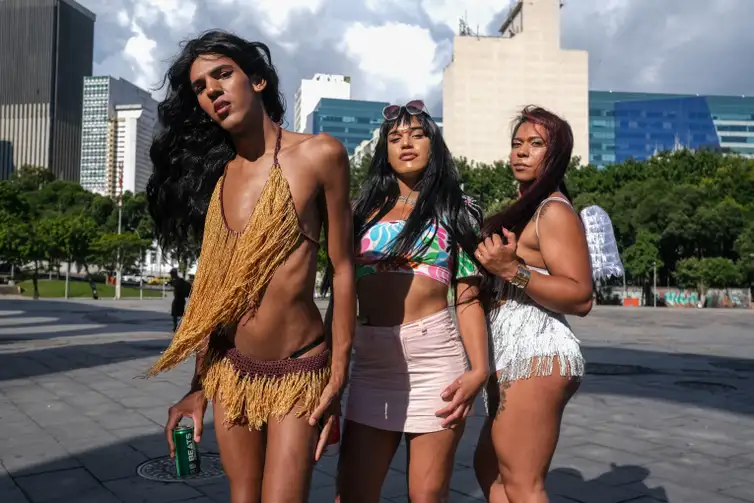
Talita Aires, Laísa and MC Raica Devassa participate in the Lapa LGBTQIAPN+ Parade. Photo: Fernando Frazão/Agência Brasil
Founder of the Trans Maré Institute, Lohana Carla spoke with Brazil Agency about the work of welcoming trans and transvestite women in the community, carried out since the covid-19 pandemic, to provide psychological and legal assistance, in addition to support for food and housing, offering employability.
Lohana regretted that more and more women are being seen suffering attacks in the country. “But we, trans people, also suffer attacks”, he highlighted. “We want to open society’s eyes to all the areas that suffer violence. They talk a lot about rights, but, for us, it’s just good makeup. Trans people suffer transphobia, prejudice. We need to fight against this.”
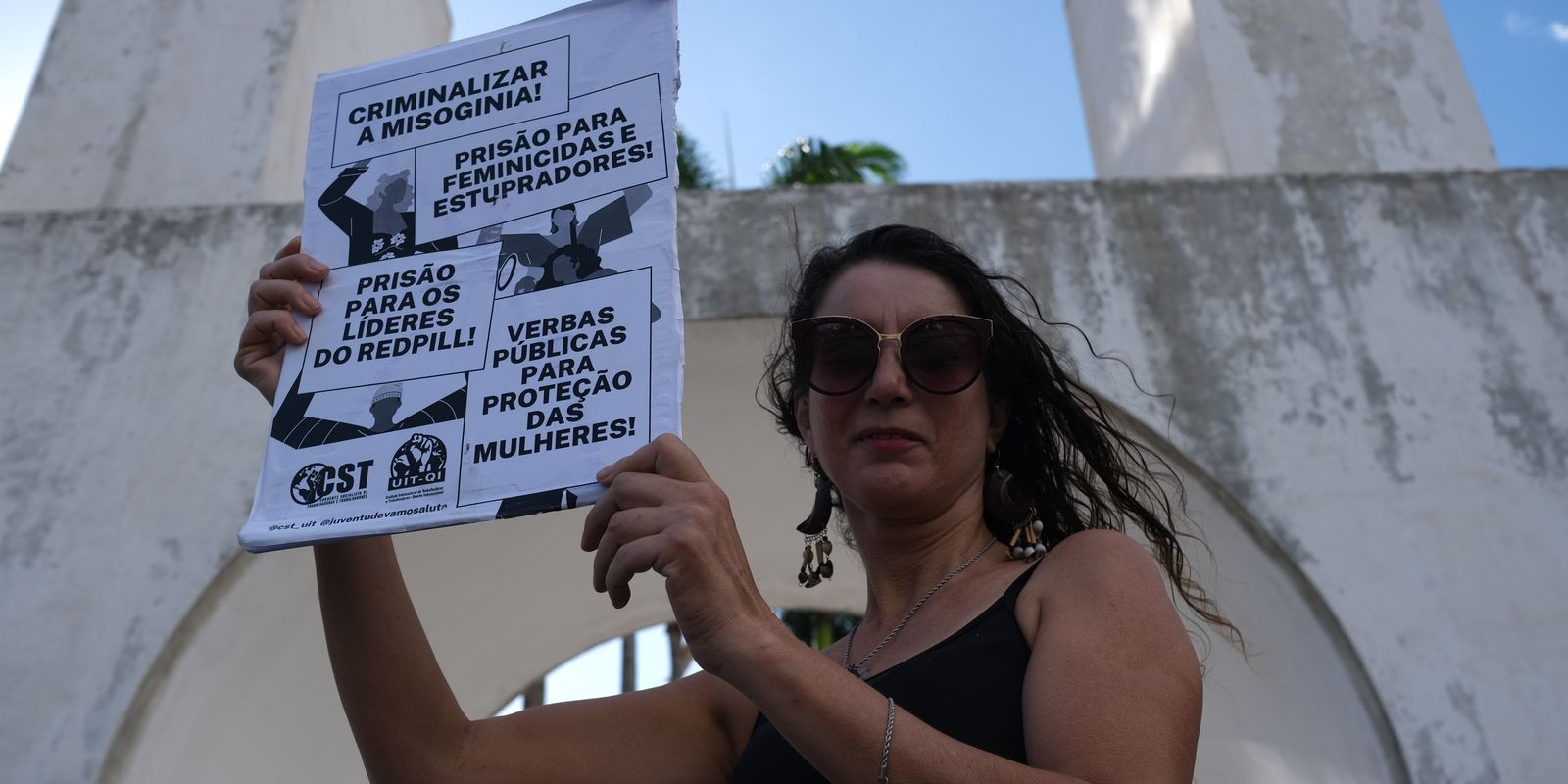
Eliane Linhares attended representing the Corrente Socialista de Trabalhadores e Trabalhadores (CST) and also the group Jocanas Arariê, which preaches equality against violence and protection for indigenous women. In a poster, Eliane showed that the fight is for the criminalization of misogyny, for prison for feminicides and rapists and for public funds to protect women.
Numbers
Numbers prove the seriousness of the situation that affects both women and the LGBTQIA+ population. From January to September this year, more than 2,700 women suffered attempted femicides. Another 1,075 died as a result of this crime.
Furthermore, Brazil continues to be the country with the highest recorded number of murders of trans and transvestite people in the world, for the 17th consecutive year.
In 2024, the Bahia Gay Group recorded 291 violent deaths of LGBTQIA+ people, which represents one death every 30 hours. The Dossier of the National Association of Transvestites and Transsexuals (ANTRA Dossier) recorded 122 murders of trans people last year, with 82% of the victims being black and brown people.
According to the Violence Atlas 2025, attacks against the LGBTQIA+ population grew by 1,227% in ten years. In the specific case of transvestites, records jumped from 27 cases in 2014 to 659 in 2023 ─ an increase of 2,340%. The Atlas highlights that, in the last ten years, the number of cases of violence against trans women rose from 291 (2014) to 3,524 (2023), an increase of 1,110%. Against trans men, the increase was even greater: 1,607%, going from 78 to 1,332.