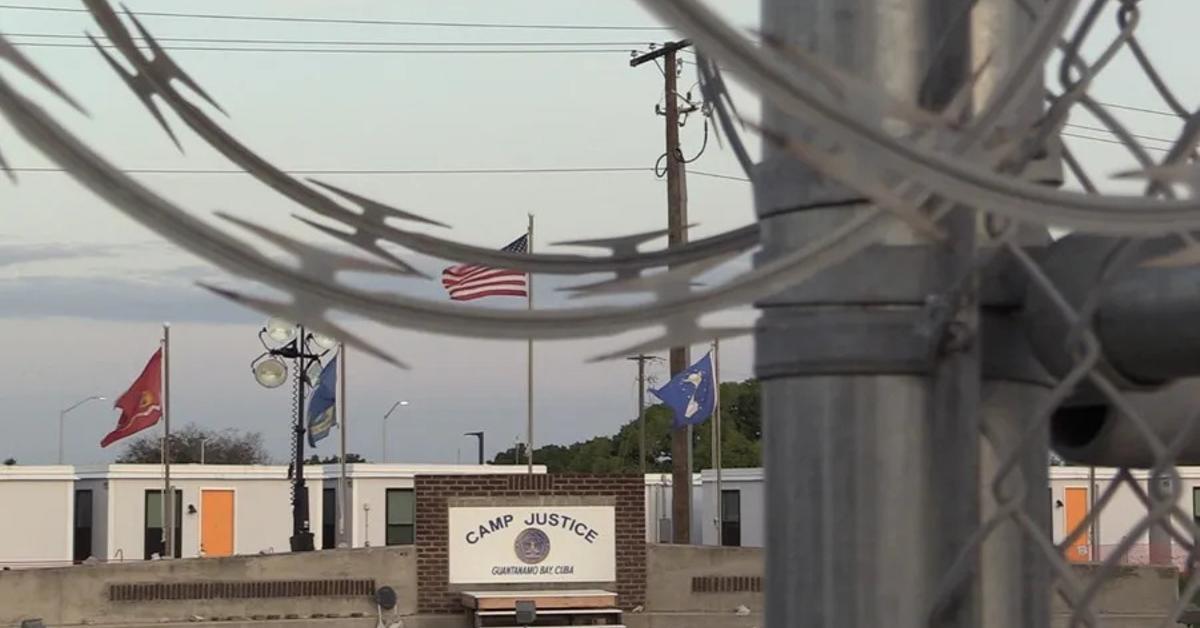
Havana/Dozens of Cuban migrants detained in the United States have been stranded at the Guantanamo naval base for weeks. The story was revealed this Thursday by The New York Times (NYT) in a report signed by journalist Carol Rosenberg, the newspaper’s correspondent in Guantánamo for more than twenty years and one of the reporters who best knows the internal workings of the base.
According to the american newspaperaround 50 Cuban men, ages 20 to 50, were transferred to Guantánamo in December and January as part of an Immigration and Customs Enforcement (ICE) operation. Many of them had been detained in the United States for months, some with work permits and asylum requests still unresolved. Faced with uncertainty, several agreed to return to Cuba. But they never imagined that the flight would end at the naval base.
Since then, they have remained confined in military facilities, first in former barracks and, more recently, in Camp 6, a prison that housed jihadists for years. The transfer took place, according to sources cited by the Timesdue to technical problems in other buildings on the base.
The main obstacle is not in Washington, but in Havana. Cuba maintains severe restrictions on flights from the base to the rest of the country. For one of these men to reach Cuban soil, they would first have to fly to an American city and from there board another plane to Cuba. That operation, which US officials claim to have considered, was never carried out.
Cuba is among the countries most reluctant to accept the return of its own deported citizens
There have been no official statements from the Cuban Government, nor communications, nor public explanations about the situation of these citizens. Nor visible efforts to accelerate his return. The only known policy is the acceptance of a single monthly flight of deportees from the United States, a number that Washington has asked to increase without success, according to diplomatic sources cited by the newspaper. In fact, the one corresponding to January should have been chartered yesterday – they always leave on the last Thursday of each month, unless it coincides with a holiday in the US – and it has not materialized.
The lack of efforts by Havana occurs at a time of special tension with the Donald Trump Administration, which after the capture of Nicolás Maduro on January 3, maintains harsh pressure on the Island, which has declared as an “unusual and extraordinary threat” to its national security and foreign policy. According to a person familiar with the matter who spoke on condition of anonymity to the Timesthe regime has maintained its refusal to expand the frequency of repatriation flights.
For Refugees International, Cuba is among the countries most reluctant to accept the return of its own deported citizens. “The Cuban government does not want to receive them back,” said Yael Schacher, an analyst with the organization, quoted by the NYTpointing out that the current economic crisis – marked by blackouts, food shortages and lack of fuel – reinforces that position.
The result is a limbo in which Cubans are trapped between two governments, without clear rights or defined deadlines. Some have managed to call relatives in the United States, who in turn have informed relatives on the island. On social networks, wives and mothers have created support groups where rumors of liberation, messages of faith and fragments of phone calls from the base circulate.
An order signed by President Trump in January 2025 instructed to prepare the base to receive up to 30,000 deportees
The immigration operation that took them to Guantanamo was born from an order signed by President Trump in January 2025, which instructed preparing the base to receive up to 30,000 deportees. A year later, the actual figure is far from that goal. According to himself New York Timessome 780 people have passed through the base under this scheme, without the US Government having demonstrated that the majority had a criminal record.
The cost of the operation is also not transparent. The Pentagon acknowledged before Congress that the first month involved spending $40 million. Since then, no official figures have been published. Democratic Senator Gary Peters, chairman of the Senate Homeland Security Committee, estimated that the cost of the operation could rise to about $100,000 a day for each migrant held at the base.
Tom Cartwright, an activist and defender of migrant rights who has been monitoring ICE flights for years, questioned whether Guantánamo was necessary as a way station for these deportations. In his opinion, the use of the base does not respond to a real logistical need, but rather to a political decision.
Cartwright considers that the Cubans held in Guantánamo function as an instrument of pressure on Havana, in an attempt to force the Cuban Government to accept more than one monthly repatriation flight, a demand that has so far been rejected.
Neither ICE nor the Department of Homeland Security have responded to questions from the Times about why these men are still there or when they will be moved. Neither has the regime in Havana.