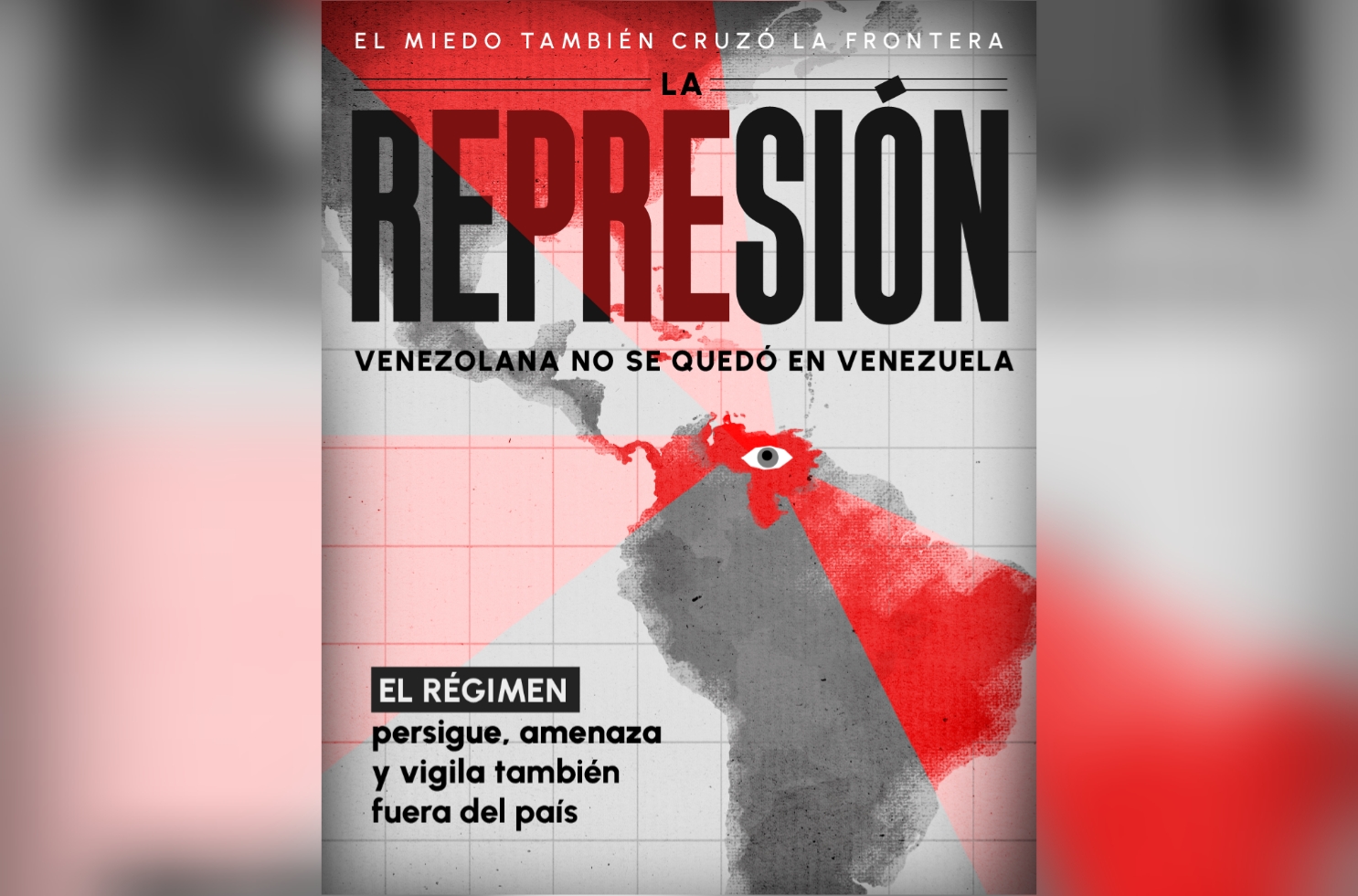
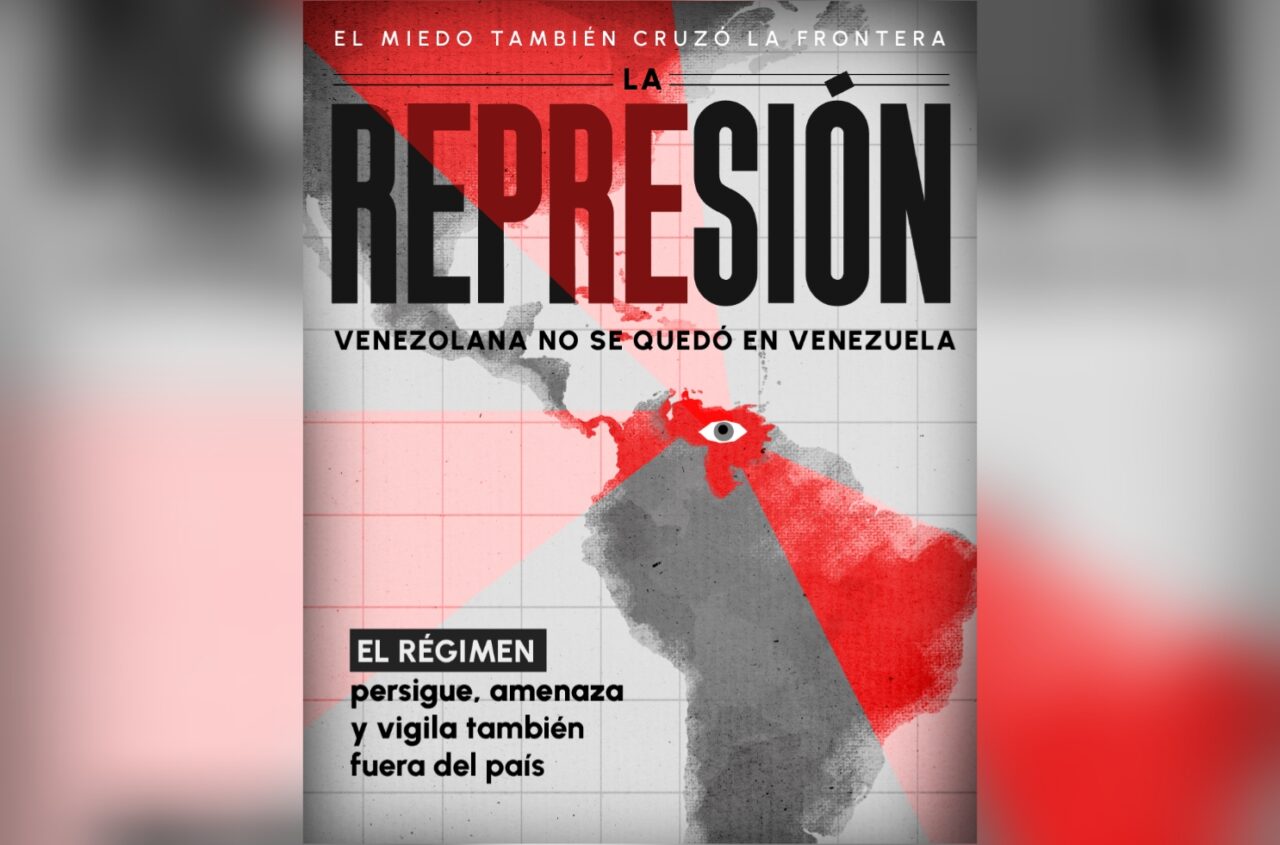
The NGO Un Mundo Sin Mordaza released its most recent report in which it explains how Venezuelan citizens abroad They continue to be subject to surveillance, pressure and reprisals, even after leaving the country.
The investigation focuses on verified cases that show practices of monitoring, intimidation and collection of personal information directed at Venezuelans residing outside the national territory. Activists, journalists, human rights defenders and relatives of opponents are among the main victims, according to the analysis.
The document holds that these actions do not occur in isolation, but rather respond to repeated patterns over time. These include digital surveillance, harassment campaigns, threats and indirect pressure through family members who remain in Venezuela. The objective, the study warns, would be to limit public participation and discourage international denunciation.
Testimonies and records collected in the investigation show how persecution materializes beyond borders. People interviewed report constant monitoring, attempts at intimidation and actions aimed at silencing their activism or their presence in international spaces. The report emphasizes that this is systematic behavior.
“The Venezuelan State has developed mechanisms that allow political persecution to extend beyond its territory, affecting fundamental rights of citizens who are under the jurisdiction of other States,” the report states.
For the organization, this phenomenon reflects a transformation in the forms of repression. “The documentation collected demonstrates that repression does not end at the border: it is adapted and projected onto the diaspora as a form of extraterritorial control and punishment,” said a spokesperson for the organization.
Venezuela extends persecution beyond its borders
The report is framed in a prolonged scenario of institutional weakening and restrictions on freedoms in Venezuela. For years, international organizations have warned about political persecution, criminalization of dissent and use of the state apparatus to silence critical voices.
In addition, the document also explains the concept of transnational repression as a set of actions aimed at monitoring, intimidating or punishing citizens outside the national territory. Unlike other forms of external pressure, these practices focus on individuals identified by their activism or their ability to influence international public opinion.
The report warns about the legal and diplomatic implications of these behaviors. Persecution carried out beyond borders could affect the sovereignty of host countries and conflict with international commitments linked to the protection of human rights, refuge and civil liberties.
At the center of the analysis is the impact about the Venezuelan diaspora. The fear of reprisals, even from a distance, influences the daily life and public participation of thousands of migrants who left the country in search of safety and new opportunities.
The document also states that transnational repression has become a growing challenge for human rights protection mechanisms in the region. Urges recipient states and international bodies to recognize and confront this phenomenon as an extension of the Venezuelan crisis beyond their borders.
With information from a press release.