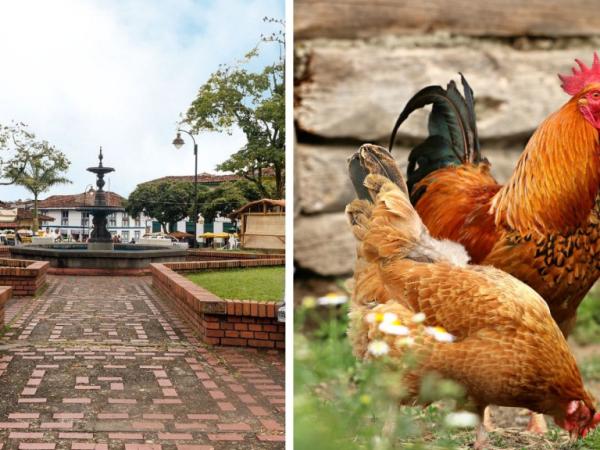
Cuba travels this September 27, World Tourism Day, embedded in depressed statistics, when the X Ibero -American Event of Rural Tourism and Agrotourism is waiting for this Monday, which will take place until October 5 and attended by delegates from several countries, according to the agency Latin press (Pl).
The event is another of the promotional operations of the sector to mitigate the lean visitors figures, given that During the first half of this year He only caught A total of 981 thousand 856 international visitors, which represents 25 % less than in the same period of 2024.
According to data published by the National Office of Statistics and Information (Onei), It will be very difficult that The Government fulfills its goal of 2.6 million tourists by 2025.
Likewise, official numbers suggest that The country is aimed at deterioration of its 2024 tourist brand, the worst in 17 years without counting the years of the Covid-19 pandemic.
The ephemeris
World Tourism Day is an annual celebration that has taken place on September 27 since 1980, established by the United Nations World Tourism Organization (WTO) in that same year, currently UN Tourism, recalled Pl.
The date was proclaimed in September 1979 during a meeting in Torremolinos, Spain, World Visitors’ First Market, With the purpose to value Tourism as a global economic sector, its impact on employment and its ability to promote cultural understanding and conservation.
In your period 70 Of sessions of 2015, the United Nations General Assembly appointed 2017 the International Year of Sustainable Development Tourism.
The celebration activities and events focus on highlighting the numerous contributions of tourism to economic and social development, as well as promoting sustainable practices in the sector.
During these events, investment in education and training in the tourism sector, the construction of sustainable infrastructure and innovation to promote entrepreneurship, especially between women and young people, is promoted, especially between women and young people, PL highlighted.
https://www.youtube.com/watch?v=zd6hnzna0me
Expert criteria
Cuba faces a difficult recovery in its tourism sector after the pandemic, fighting much more than other Caribbean countries to return to international visitors prior to COVID-19, which in 2018 reached the record of 4.71 million, according to official data (Onei 2019).
According to Paolo Spadoni, professor at the University United States From Augusta, this crisis not only responds to the pandemic, but also to restrictive measures of the United States that have limited the access of tourists, particularly American, already multiple internal structural problems.
Although the Caribbean in general has exceeded its tourist volume prior to the COVID, Cuba has only been able to recover just over half of its visitors.
The rise of Cuban tourism between 2014 and 2017 was mainly driven by the expansion of travel from the United States during the Obama administration, when lAs visits of citizens of non -Cuban origin increased significantly.
However, the policies adopted by Donald Trump, such as the prohibition of educational trips person to person and the suspension of cruise ships from the United States, caused an important setback in 2018 and 2019, with a notable reduction in income from tourism and the number of tourists who spent the night on the island.
In addition to US sanctions, Cuba drags deep and long -standing problems in its tourist model, considered The academic.
The national economy in crisis with frequent cuts of electricity, shortage of supplies, deterioration in the quality of the services and migration of the sector personnel have caused a strong deterioration in the visitor’s experience.
Tourism is still in decline, with Russia and Canada with the greatest falls until April – Oncubavews
Some foreign tour operators, such as Canadian Sunwing, have reduced their operations due to complaints about quality reduction.
In contrast to other Caribbean destinations that have shown strong recoveries and great growth, the island was lagging behind and faces little encouraging perspectives by 2025.
To reverse this situation, Spadoni highlights the urgent need for deep structural reforms and an update of the tourist model that allows greater efficiency, regional integration and better adaptation to international trends.
Only then can Cuba recover its competitiveness and ensure that tourism remains a sustainable economic engine in the coming years, the expert estimated.
Paolo Spadoni is an associated professor in the Department of Political Sciences of the University of Augusta, forks a recognized expert in the economy and international relations of Cuba, with special emphasis on the tourism sector, foreign investment and the relationship between Washington and Havana.