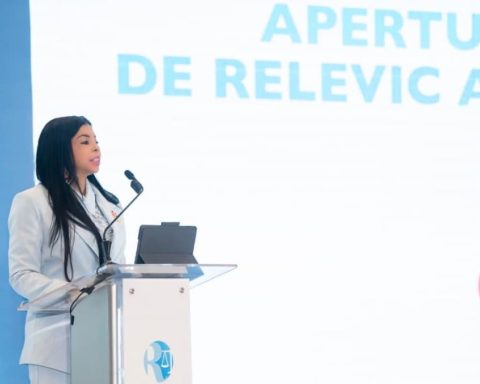
After the success achieved with the implementation of the digital access project which has transformed the justice system with the incorporation of 98% of users, despite the initial resistance, the Judicial Power of the Dominican Republic focuses its efforts now on the promotion of the alternative conflict resolution method (sea) as a mechanism to reach agreements without going to trial.
This mechanism not only allows to impart justice more quickly, in an efficient, sensitive and inclusive way, but also avoids the prison overpopulation that currently is around 25,000 inmates, and its consequent overcrowding rate that according to the National Office to support penitentiary reform sometimes reaches 63%.
According to data from the Judiciary and the National Directorate of the Public Defender, Only 13% of criminal cases in the country are resolved with an agreement prior to judicialization, while 87% “drastically saturate the criminal justice system, limiting the response capacity of all actors and with it, the universal access to which it is aspired”, according to the words of the president of the PJ, Luis Henry Molina.
Statistics of the Attorney General’s Office indicate, equally, that the agreements signed by the persecution body after the case has been prosecuted average barely 9%, but that it works to raise it to 79%, “which is how it should be” given all the advantages they represent for the criminal justice system.
You can read. Ministry would organize Dominican Justice System
Comparative advantages
Although they are very different legal systems, the Dominican Republic justice system and that of Puerto Rico have similarities especially in civil matters, and some in criminal matters, according to the head of the Prosecutor’s Office of the District of Bayamón, Gabriel Arredondo, to a delegation of the Judiciary that included several journalists and communicators, and who was invited to share good practices and experiences on the issue of agreements in criminal matters.
In this regard Arredondo indicated that in PR 95% of criminal cases are negotiatedsince they are an integral part of the process and are regulated by rule 72 of criminal procedure, with the same purpose as in the country: accelerate the processes and make the judicial system more efficient.
The main actors are the Public Ministry and the defense.
When to negotiate?
The prosecutor points out that they “buy risk” in the cases they understand are good for them because it will be a judge who will decide, and not a jury to which the accused has an option, and thus avoid some kind of circumstance that may occur.
Arredondo said that the lawyer also when he understands that going to trial does not suit him, he prefers to opt for negotiating.
“For us, rule 72 is very practical and safe, there is no possibility that somewhere is ready, that there is a possibility that takes the kid (win or get money) because it is there so sure that when the negotiation process begins, the complaint must always have presented …”, explained the prosecutor.
“The journalist cannot control the process of the prosecutor, the judge or the lawyer; a journalist is an intermediary, and it is more important to have family members and injured who agree because they want to close a chapter of their life …”.
It is inconceivable not to negotiate
The administrator judge of the Judicial Region of Bayamón, Carmen Otero, is surprised that in the Dominican Republic with a criminal procedural code more than 20 years ago, the “pre-accused allegation or negotiations” in criminal matters, are so few.
“For us in Puerto Rico it is almost inconceivable, because I studied in a way that the cases were attended by negotiating, that is, the laws of law do not teach you to negotiate, give a mediation class, but even so, it is our right, even if they do not teach you the art of negotiation, it is part of what we are going to find in court,” he said.
He said that the actors in the process have to prepare to know how far they arrive, because “when you begin to see that things are not like you thought they should be, we began to think about the early negotiation”, because to the extent that the one who has the best part tells you: “If you let me reach such a stage you do not ask me for an agreement because you already made me work all this, you know that this balance begins between what things are I going to negotiate. enter their merits, ”said the judge.
Types of negotiations
Judge Elis Colón indicated that although their participation is important in the pre-closed legation, it is not the protagonist in the negotiation.
It is negotiated in cases of less serious crimes that carry sorrows of 6 months or less, or fines of USD $ 500 to USD $ 5,000, the recidivities, which increase up to 25% of the fines, can be eliminated, and the cases are archived.
Sometimes as part of the agreement a combination is used in which recidivism is eliminated and crime is reduced.
Other issues dealt with the publicity of audiences and the balance between public law to know and the rights of the defendants, importance of clear language in judicial decisions and the learning process to use it and comparisons were made regarding preventive detention and probation.
During the visit to courts of the neighboring island, which included the observation of public views in which agreements between the parties were confirmed, the Dominican delegation received explanations from other judicial officials, as well as the press managers.
Dominican delegation
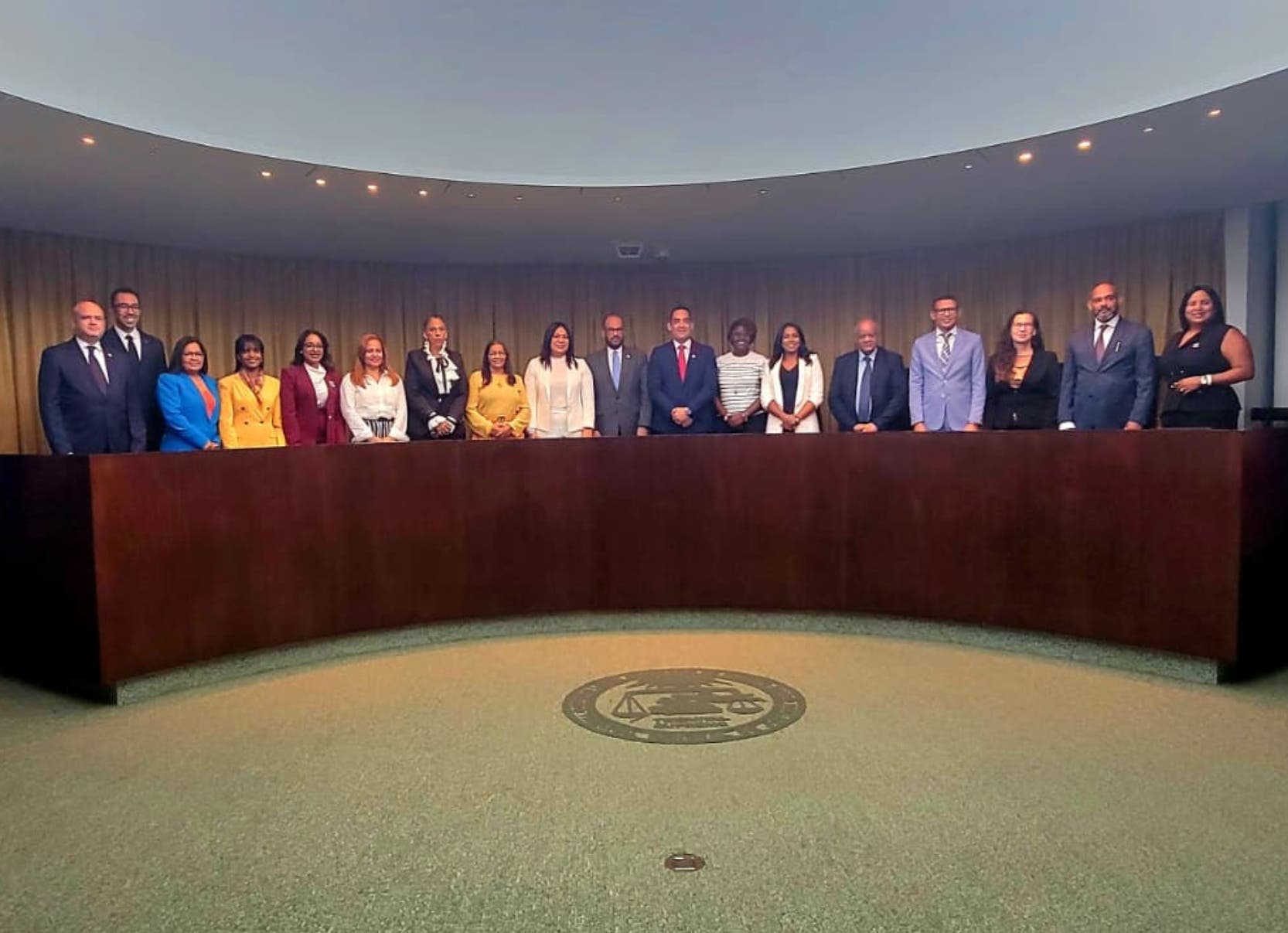
The Judiciary was represented by magistrates Giselle Méndez, and Rubén Rodríguez; Ellys Coronado, of the National School of Judicial (ENJ), Fatima de la Rosa and Justo Maracallo, of press and communications. The journalists Ramón Benzán, Marisol Aquino, Domingo Beriguete, Raysa Alvarez, Teresa Casado, Hogla Enecia Pérez, Rafael Zapata, Aris Beltré, Millizen Uribe, the lawyer and communicator Susana Gautreau, Rafael Zapata and Loyda Peña.