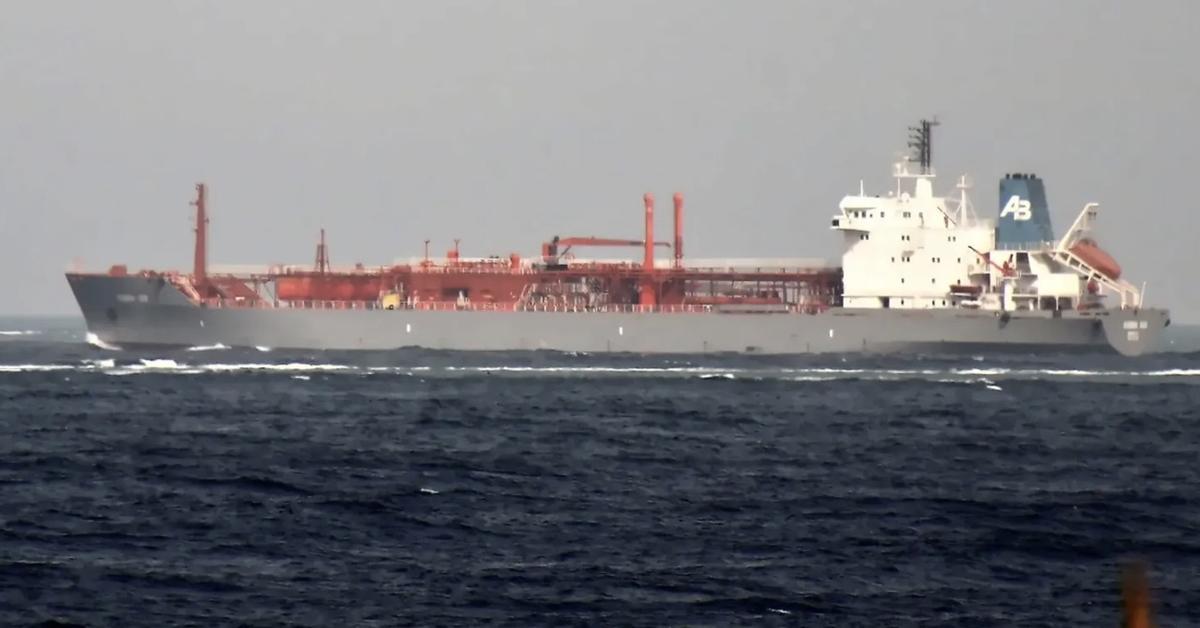
Madrid/After two months floundering around the Caribbean in its search for liquefied petroleum gas (LPG), used for cooking in Cuba, the tanker Eugenia Gas It is finally loading in the Venezuelan port of Jose. The ship, which sails under the Belize flag, is part of the Cuban cabotage fleet and its attempt to obtain fuel was frustrated. in Kingston (Jamaica) three weeks ago.
“Until the shipping manifest is made public, we will not know who the shipper, consignee and transporter are who are requesting authorization for the resale of oil of Venezuelan origin for use in Cuba in compliance with recent United States sanctions,” he tells 14ymedio the expert from the University of Texas, Jorge Piñón.
The specialist, after confirming that the ship is finally being loaded, puts on the table the three fundamental doubts regarding what will be the first shipment from the state-owned PDVSA since the capture of Nicolás Maduro by the United States.
The sale may have been made by the Venezuelan oil company, but also by Vitol or Trafigura, the two large raw materials trading firms that, according to the international press, obtained licenses for the resale of crude oil from PDVSA and that have already exported to the United States and several European countries.
The sale may have been carried out by the Venezuelan oil company, but also by Vitol or Trafigura, the two large raw materials trading firms that, according to the international press, obtained licenses for resale
They may also be the buyers and transporters, but Piñón does not rule out CubaMetales itself, although Washington’s sanctions do not contemplate the possibility that the fuel passes through the hands of the State.
Finally, a fundamental question remains to be known: how much LPG has cost and who pays for it. Just a week after Maduro’s capture, US President Donald Trump stated on his social network: “Cuba lived, for many years, off large amounts of oil and money from Venezuela. In exchange, Cuba provided ‘security services’ to the last two Venezuelan dictators. But not anymore! “There will be no more oil or money for Cuba! Zero!”.
At the end of January, it took one more measure: the imposition of tariffs on countries that delivered fuel to the Island. Although these levies were annulled by the decision of the Supreme Court – by relying on a rule that the magistrates considered inappropriate for this purpose – Washington still had mechanisms to sanction States that insisted on helping Havana. The situation has not only forced the Cuban regime to take radical savings measures that impact the daily lives of Cubans, but are also suffocating private MSMEs that were beginning to make their way on the Island.
“I have suppliers who tell me: ‘I’m going to lose 100 containers of chicken, because it’s in the port, there’s no fuel to go get it and it’s going to spoil,’” lamented Cuban-American businessman Hugo Cancio a few days ago. Just last week, the consulting firm Auge released two reports that revealed the dimension of the crisis. In one of them, it was concluded that 78% of 63 companies interviewed reported declines in sales since Trump threatened tariffs on oil supplies. In the other, even harder, that more than 96% of private enterprises “They face an impact that ranges from severe to catastrophic due to fuel shortages.”
The Trump Administration decided to make a change in recent days, according to some sources, because the idea is to make clear to the regime its dependence on the decisions of the White House and that an understanding through good will be beneficial for everyone.
The Trump Administration decided to make a change in recent days, according to some sources because the idea is to make clear to the regime its dependence on the decisions of the White House and that an understanding through good will be beneficial for everyone. Thus, last week Washington authorized the sale of crude oil to the private sector, although for the moment it is in small quantities. This LPG shipment will be the first Venezuelan shipment to arrive on the Island since December 8, when the Neptune 6from the ghost fleet, arrived in Matanzas from Jose with about 598,000 barrels of Merey 16 crude oil.
Later he arrived jasperwith the Cameroon flag and 330,000 barrels of Russian crude oil, on December 23. The United States did not put any impediment to the arrival of this ship in Matanzas and Santiago de Cuba, despite being sanctioned by the European Union. Now, the route of the seahorseflying the Hong Kong flag and supposedly loaded with some 200,000 barrels of Russian fuel for Cuba. Moscow denied the information last week, although the tanker continues a slow path westward in the Atlantic, and was located this Sunday about 1,463 nautical miles from the northern coast of Cuba, at a minimum speed of 0.8 knots.
The United States currently has several vessels to try to stop an oil tanker of these characteristics, including ships Vincent Danz, John Patterson, Spencer, Richard Dixon, Stone, SAR 26227 and SAR 20313. All of them are less than 36 hours away from Cuba.