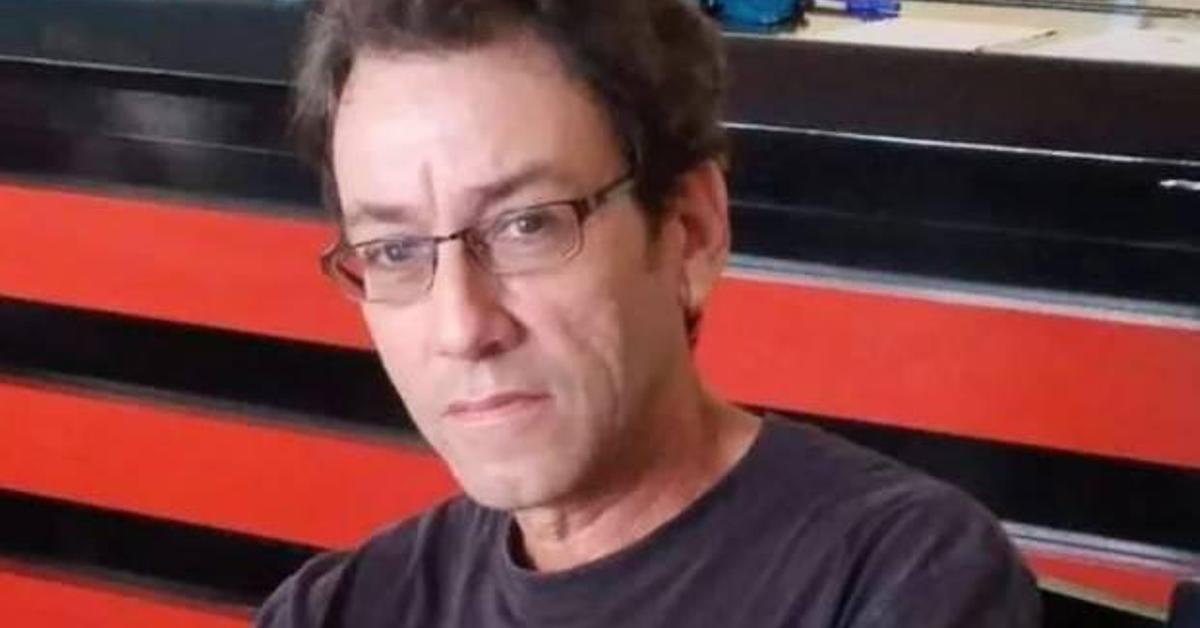
Madrid/Four months after the holding of the oral trialthe Provincial Court of Villa Clara has handed down a sentence for the intellectual and independent journalist José Gabriel Barrenechea. The court has confirmed the six years in prison that the Prosecutor’s Office requested for the 14ymedio collaborator, whom it considers guilty of the crimes of public disorder for his participation in a peaceful protest against the blackouts in November 2024 in the town of Encrucijada, Villa Clara.
In the sentence, dated January 15 and to which this newspaper had access, Yandri Torres Quintana was also sentenced to eight years in prison – the highest penalty –, Rafael Javier Camacho Herrera, to seven; Rodel Bárbaro Rodríguez Espinosa and Marcos Daniel Díaz Rodríguez, to five: and Yuniesky Lorences Domínguez, to three. All of them, like Barrenechea, for the same single crime of public disorder, and with the usual additional sanctions of loss of voting rights and leaving the national territory, mainly.
The court, from the crimes against state security chamber, considers it proven that the five defendants took to the streets on November 7, 2024 in Encrucijada during a blackout that “extended to almost all the provinces of the country given the serious energy situation that the country was going through, a product not only of the economic blockade that the United States has imposed on us, but also due to the damage caused after the passage of Hurricane Rafael.”
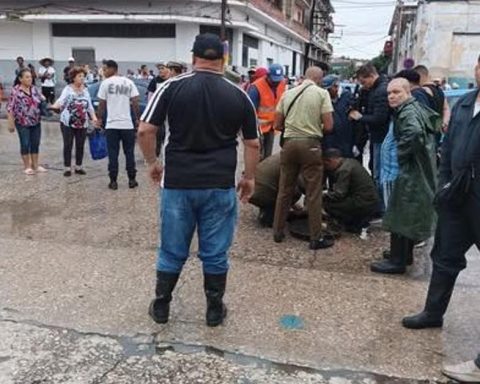
The text concludes that all the accused arrived at the protest site “each on their own,” joining a group of about 300 people who “began shouting that they wanted power.”
The text concludes that all the accused arrived at the place of the protest – which took place in front of the headquarters of the Party and the Municipal Assembly of People’s Power – “each on their own”, joining a group of about 300 people who “began shouting that they wanted power.” Barrenechea is specifically singled out because “he encouraged other people to join the march, not leave the place and continue demanding their rights.”
The accused began – as reflected in the account of the events – to touch “cauldrons and other objects “of the same type but made of stainless steel material, which they incessantly hit with great force against other metal objects such as spoons and pieces of steel, thereby producing great noise and hubbub.” According to the court, this “disturbed the town’s tranquility”, to which is added as an aggravating factor that the accused impeded traffic by walking in the center of the road.
The document continues stating that despite the fact that the highest authorities in the municipality were trying to communicate the situation in which the national electro-energy system was located and that the electrical service was already being restored”, several of the accused continued to “disturb with the touch of the devices” and preventing the population from listening to the information that the officials provided by voice. The court considers that “the intention to destabilize civic order and insecurity among the population” prevailed in them. and that such facts deserve the long prison sentences finally imposed.
As usual, the ruling also makes considerations about the conduct or relationships of the accused, considering particularly Barrenechea that “he interacted with people of bad morality and social conduct” and “had no recognized employment relationship,” since the writer and journalist worked independently.
It also points out the personal relationships of Rodel Bárbaro Rodríguez Espinosa, whom it also accuses of ingesting “alcoholic beverages with great frequency”, positively evaluates one of the accused for participating “in activities called by mass organizations” and reserves the lowest sentence for the accused who “worked 15 uninterrupted years in the Ministry of the Interior”, where he stood out, receiving “distinctions and recognitions”.
The sentence is not final and may be appealed to the Supreme Court, although the relatives have not said what they plan to do in the face of such a gloomy outlook.
The sentence is not final and may be appealed to the Supreme Court, although the relatives have not advanced what they plan to do in the face of such a gloomy outlook.
For the moment, almost five years in prison await José Gabriel Barrenechea, discounting the year and two months he has been in provisional prison. There he has suffered the usual poor conditions of Cuban prisons, including limitations on visits, obstacles to receiving medicine and food, and isolation that has had repercussions on his health.
Furthermore, the journalist had to suffer a particularly painful event during his stay in the La Pendiente penitentiary center: the loss of his mother –which died of cancer in May 2025 – without being allowed say goodbye her. The Cuban Observatory for Human Rights, based in Madrid, described the decision of the prison authorities as part of a pattern of “systematic psychological pressure” with which the authorities seek to break the accused and send a warning message to other intellectuals and activists. The organization had requested on several occasions that Barrenechea and his colleagues in the file be acquitted: “It is a political case from beginning to end.”
Amnesty International researcher for Cuba, Johanna Cilano, had spoken in a similar sense, saying about this case: “Protest is a right, no one should be imprisoned just for exercising their human rights.”
This Thursday, Prisoners Defenders – also based in Madrid – put the total number of prisoners for political reasons in Cuba at the end of 2025 at 1,197, five more than in November. The organization added ten names to its list of prisoners for political reasons, while another five were released after “fully completing their sentences.”
In the whole of 2025, its registry added a total of 134 new prisoners, with an average of more than 11 each month.