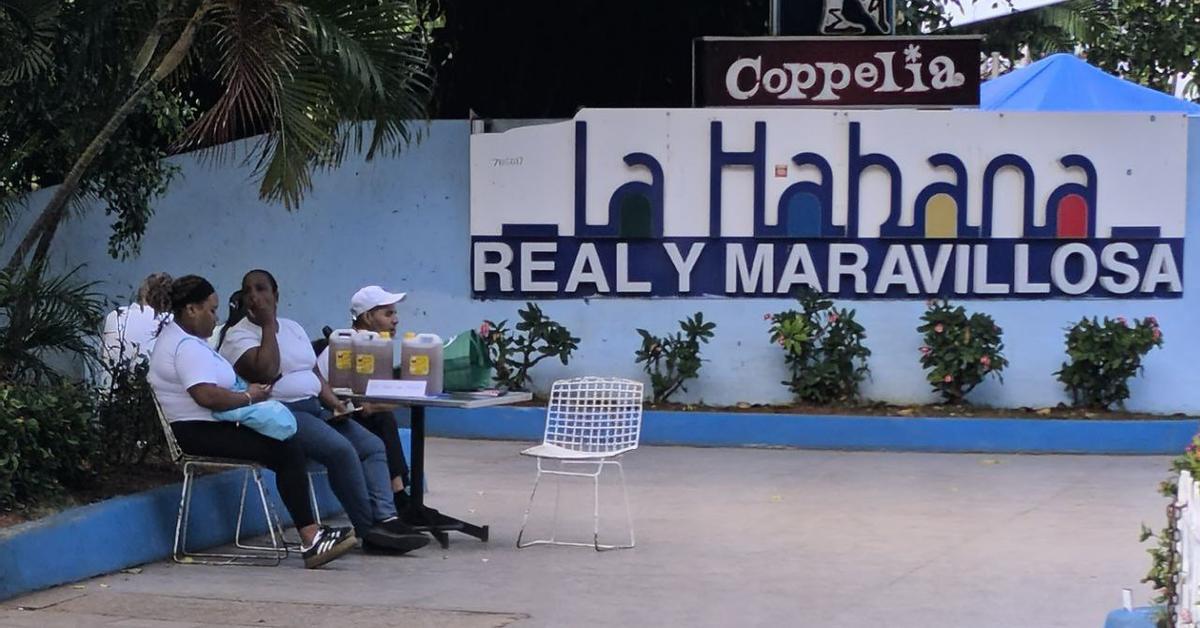
Havana/On the corner of 23rd and L, where for decades Havana waited in line to enjoy a five-scoop salad, this Tuesday the only possible taste was the bitter aftertaste of frustration. The Coppelia ice cream parlorin El Vedado, once called the “ice cream cathedral”, is closed. Not for repair, not for inventory, not for those usual breaks to paint your walls or rearrange your areas. The famous cafeteria is without ice cream and without a reopening date.
At the main entrance, under the sign proclaiming “The real and wonderful Havana,” five employees kill time sitting around a table. On the surface, instead of glasses, syrups and spoons, there are several knobs of dry wine for cooking. The product, amber in color and with a dull label, seems like an unlikely substitute for the strawberry, chocolate or almond that made Cuba’s largest ice cream parlor famous.
The woman tries to entice the disenchanted consumer to carry a gallon of dry wine
A client approaches with hope intact. “Is there ice cream?” he asks. One of the workers, without looking up, responds that they are closed and that “it is not known” when they will reopen. The woman tries to entice the disenchanted consumer to carry a gallon of dry wine, that ingredient that usually ends up in yellow rice or a hash with more imagination than meat. But the man does not compromise.
For the next few minutes the scene repeats itself. Even though the city is almost paralyzed due to lack of fuel, Havana residents come with the hope of eating a Tres Gracias or enjoying a Turquino. They do it because even in the worst years of the special period, when the balls were reduced and the flavors were repeated, there was always something to put in your mouth in the central location. The ice cream could be watery or scarce, but it existed. Now, not even that.