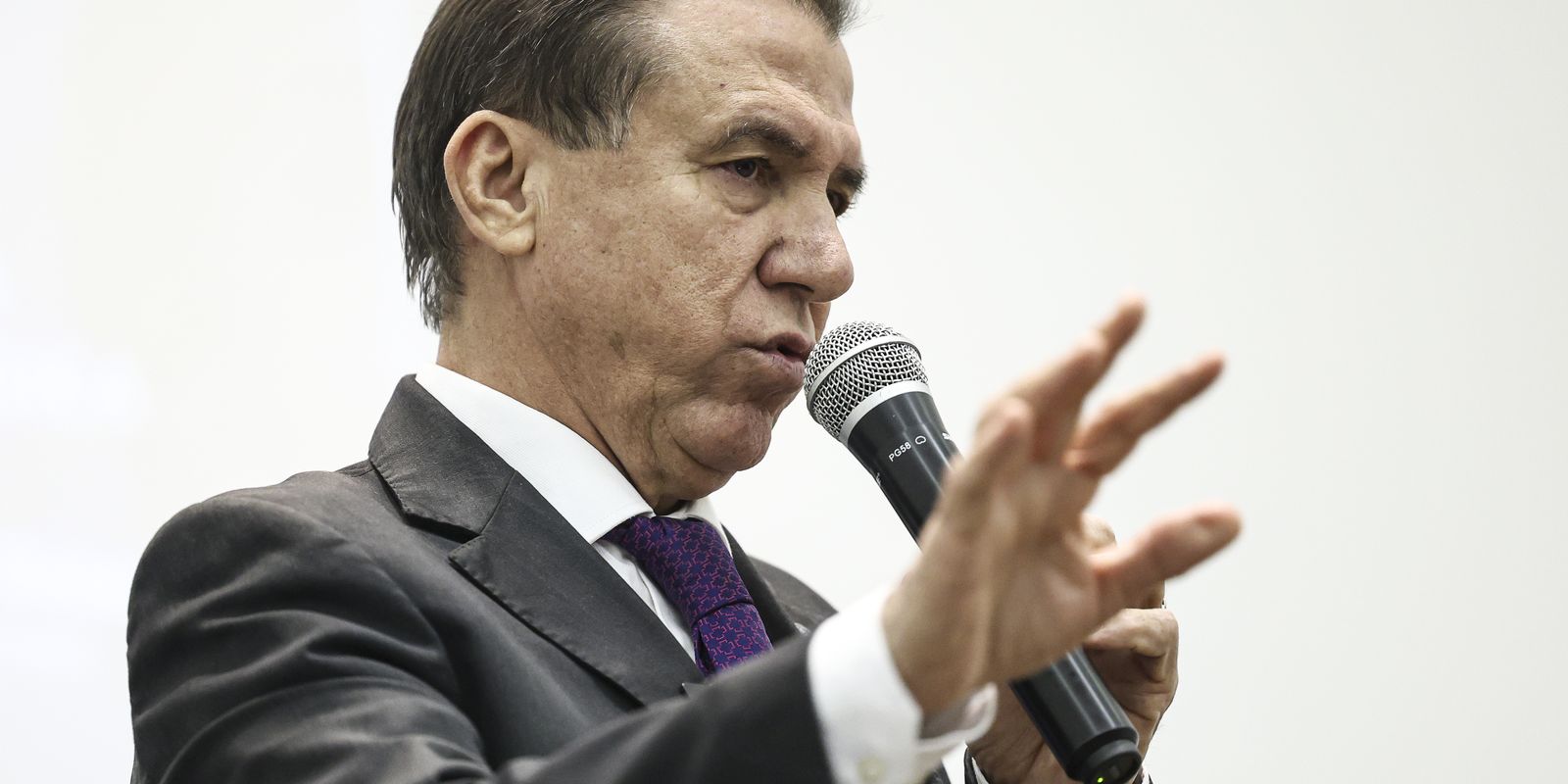
The Minister of Labor and Employment, Luiz Marinho, said today (3), in São Paulo, that the government could urgently send a bill to the National Congress, if the discussions that deal with working hours, such as the end of the 6×1 scale and the reduction of weekly hours, do not proceed at the “desired speed”.
The urgency requires that both the Chamber of Deputies and the Senate have 45 days to deliberate on the issue, otherwise the agenda will be blocked.
“There is an important debate with the leadership of both Houses [Câmara e Senado]. The president [da Câmara] Hugo Motta took over with us to run both things: the PECs [Proposta de Emenda à Constituição] that were there and also the bills [PL] in force that are being processed in the House. Evidently, the PL can have a higher speed than the PEC. But the government does not rule out, depending on the conversation between President Hugo Mota and President Lula, sending a bill urgently. If things do not move at the desired speed, we can urgently forward a bill that, I believe, would allow it to evolve”, said the minister, during a press conference in which he announced the data of the General Register of Employed and Unemployed Persons (Caged), of the Ministry of Labor and Employment.
One of the PECs currently being processed in Congress increases the minimum weekly rest period from one to two days — preferably on Saturdays and Sundays — and reduces the maximum weekly working time from 44 to 36 hours, not counting overtime. Currently, the Constitution establishes that the workload will be up to eight hours a day and up to 44 hours a week.
During an interview with journalists, Marinho said he considers the end of the 6×1 journey to be viable, but highlighted that the government’s priority is the reduction of working hours which, in his view, should have already occurred.
“At this stage, I sincerely believe that it is fully possible to reduce the maximum working hours from 44 to 40 hours a week. And, therefore, this could lead to the end of the 6×1 scale, which is the great dream of millions of workers, particularly in commerce and services.”
He also reiterated that there is currently no discussion in the government about tax compensation for companies as a counterpart to the change. For him, “the prerequisite for compensation is increased productivity”.
“It doesn’t make sense, in my opinion, to think about tax incentives for the issue [da redução] part-time”, said the minister.
“It is necessary for the business world, workers and their representatives to collaborate in order to improve the working environment. If you avoided accidents, prevented illnesses, you will increase productivity. If you invest in technology, you will guarantee an increase in productivity. And Brazil needs to improve productivity”, he stated.
Caged
In January, Brazil had a positive balance of 112,334 thousand new jobs with a formal contract, according to Caged. The result was obtained with the admission of 2,208,030 people and 2,095,696 dismissals.
Despite the positive balance, this was the worst January since 2024, with a balance of 173,127 new jobs. According to the minister, the drop that has been observed is due to high interest rates (Selic), currently set at 15% per year.
“We have been singing this ball since 2004. The rhythm of the interest practiced [em patamar elevado] would lead to a decrease in speed [da criação de novos empregos]. So, what happened was a decrease in speed”, he explained.
According to Caged, four sectors had a positive performance in January, with emphasis on industry, which had a positive balance of 54,991 jobs. Construction comes next, with a balance of 50,545; services (40,525) and agriculture (23,073). The commerce sector had a negative performance, with a balance of -56,800 jobs.
In the accumulated twelve months (between February 2025 and January 2026), the balance of new CLT contracts was 1,228,483.
Wage
Caged also pointed out that the real average salary for admission in January this year was R$2,289.78, which represented a positive variation of R$77.02 compared to December last year.