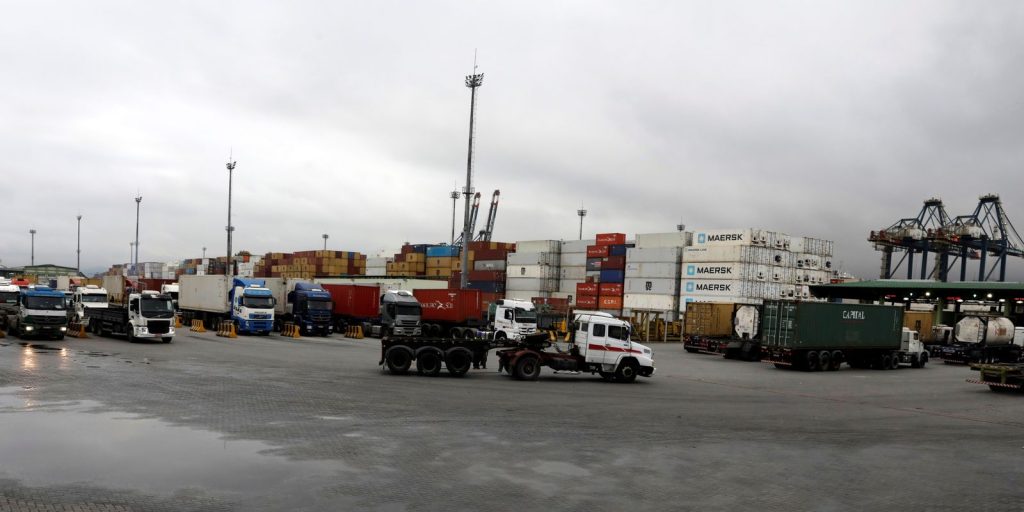
The Government of Brazil This week it will send a shipment of food and inputs for agricultural production in Cuba, reported the Minister of Agrarian Development and Family Agriculture, Paulo Teixeirawithin the framework of a bilateral cooperation program.
The owner specified that the supplies will be acquired in Brazilian territory and made available to the Caribbean island.
“We will also send food to Cuba,” he stated when responding to a question of Latin Press during the 39th Regional Conference of the Food and Agriculture Organization of the United Nations (FAO) for Latin America and the Caribbean, which is held in Brasilia, according to their statements to the press.
The aid is part of a program coordinated by the Brazilian Cooperation Agencyattached to the Ministry of Foreign Affairs of Brazil, which includes initiatives announced during the president’s visit Luiz Inácio Lula da Silva to Havana on the occasion of the G77+China Summit.
According to previous information disclosed by the media Fato’s Brazilthe Brazilian Executive was evaluating the sending of humanitarian assistance focused on medicines and basic foods.
In September 2025, during a high-level meeting on public policies for food sovereignty held in the Cuban capital, both countries identified opportunities for bilateral, trilateral and multilateral cooperation.
The announcement comes in a context of economic tensions for the island, following the signing of an executive order by the US president in January. donald trump that contemplates tariffs on those who supply oil to Cuba.
In this scenario, Lula recently expressed Brazil’s solidarity with the Cuban people and called for finding support mechanisms.
Brazil and cooperation with Cuba
At the end of last year, the Brazilian Government delivered a donation of ten tons of food to Cuba dehydrated, 50 water purifiers and medication kits, as assistance to those affected by the Hurricane Melissawhich caused severe damage in the east of the island in October.
The aid was intended for more than 5,500 people affected in the provinces of Santiago de Cuba, Granma, Holguín, Guantánamo and Las Tunas, territories impacted by the hurricane, which made landfall with category 3 on the Saffir-Simpson scale.
The Brazilian ambassador in Havana, Christian Vargas, then pointed out that cooperation between both countries is not an isolated event and recalled that, since his arrival in Cuba in 2023, more than ten technical cooperation projects have been relaunched in areas such as health, education and agricultural production.
The diplomat also highlighted previous donations of medications for the treatment of tuberculosis, viral hepatitis and dialysis, as well as pediatric vaccines, antibiotics and the recent delivery of 300 solar panel systems.
The energy crisis and agricultural production
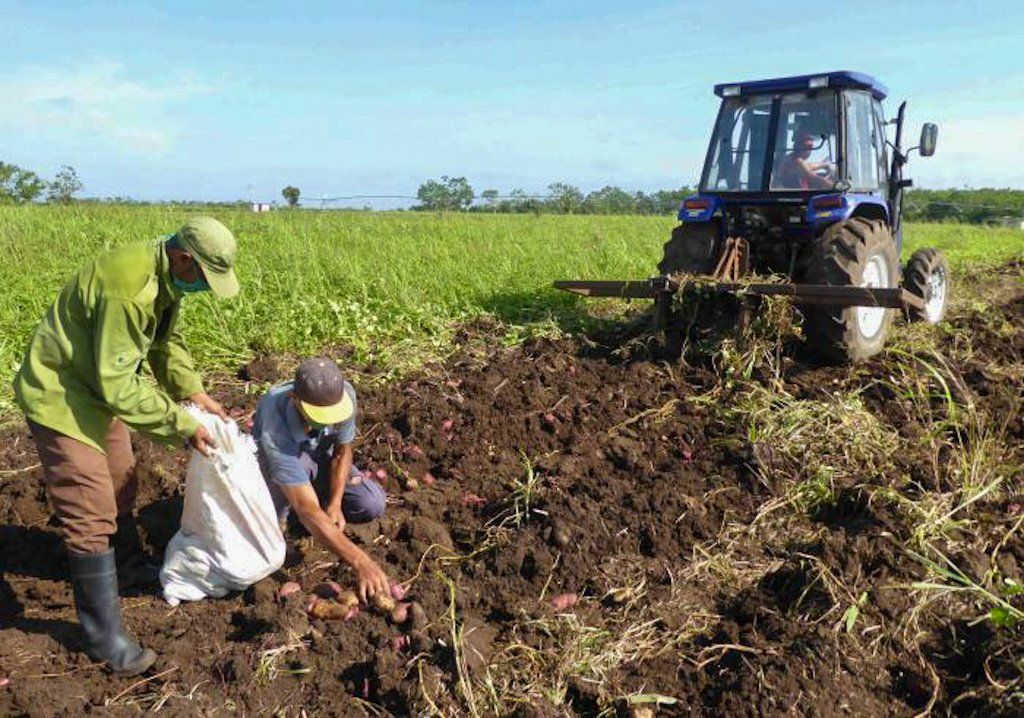
The fuel crisis In Cuba it already has a “severe” impact on the agricultural sector and compromises the harvesting of crops, warned the regional representative of the Food and Agriculture Organization of the United Nations (FAO), René Orellana.
In interview with EFEthe official explained that the lack of fuel “is limiting” the use of agricultural machinery necessary for the harvest, which puts several crops at risk of not being harvested properly.
FAO warns of the “serious” effect of Cuba’s fuel crisis on agriculture
“Several crops are at risk of not being harvested properly,” warned Orellana, who added that, as a consequence, the population “will not be able to access these foods.” The energy shortage affects both work in the field and the transportation of products to markets.
The regional representative attributed the crisis to the actions taken by the Government of the American president donald trumpwhich has threatened to impose tariffs on countries that supply oil to Cuba. In this context, Venezuela, the main supplier of hydrocarbons, and Mexico suspended crude oil shipments to the island.
Faced with this situation, FAO and other UN agencies are promoting a transition towards renewable energy sources to reduce dependence on hydrocarbons, with alternatives including new irrigation systems and the installation of small-scale photovoltaic and hydroelectric plants.
“They are accessible energy sources that must be worked on to support small family production,” said Orellana.
The shortage forced Cuban authorities to apply extreme fuel rationing measures, which has also restricted the distribution of agricultural products.