By Elianeth Hernández and Lewis Pereira
Today marks two months since the unprecedented foreign aggression against Venezuela, a turning point in our contemporary history, a day of bombings and technological siege that tested the nation’s capacity for resistance. What began on January 3 as an armed incursion against strategic centers and densely populated areas such as Fuerte Tiuna, has led in sixty days to a complex political reconfiguration under the command of Delcy Rodríguez as acting president. While the country demands the return of President Nicolás Maduro and Cilia Flores and dialogue emerges as the main tool to defend the peace and tranquility of the country.
To address this issue Últimas Noticias contacted several inhabitants of the Simón Rodríguez sector, in the Ciudad Tiuna housing complex, popularly known as Los Rusos, who offered us their testimonies.
In this sense, the spokesperson for Simón Rodríguez, Ezequiel Zamora and Carlos Raúl Villanueva urban planning, Evelyn Lujano, remembers the moment when the preparation bore fruit. “The time has come,” he thought when he heard the first explosion. For her and the more than 17,000 inhabitants of these 28 towers, the threat became a harsh reality.
Lujano’s calculation is terrifyingly simple: about 700 families live in each tower. A single accurate impact on one of these 15-story, 151-apartment structures would have taken the lives of at least 1,500 people instantly. “If there had been no preparation, the chaos would have been internal, in each community,” explains the leader.
Evacuation plans allowed thousands of people to descend the stairs in an orderly manner, providing mutual aid to reach safe areas. President Nicolás Maduro’s vision of prioritizing civil-military training became, at the critical moment, the shield that prevented a massacre in the heart of Caracas, Lujano assured.
Although massive bloodshed was avoided, the assault left deep scars. The kidnapping of President Maduro marked a turning point in the conflict. Lujano recognizes with dignity that, faced with the power of a power like the United States, he responded with dignity, even if the immediate outcome was not what was expected.
“We did not emerge unscathed,” he says with a broken voice when remembering the fallen: soldiers, Venezuelan civilians and Cuban companions who gave their lives in the first hours of the attack. For the inhabitants of Fuerte Tiuna, these names are not low statistics, but martyrs who fulfilled Hugo Chávez’s maxim and Maduro’s commitment: to do everything humanly possible to avoid a greater tragedy.
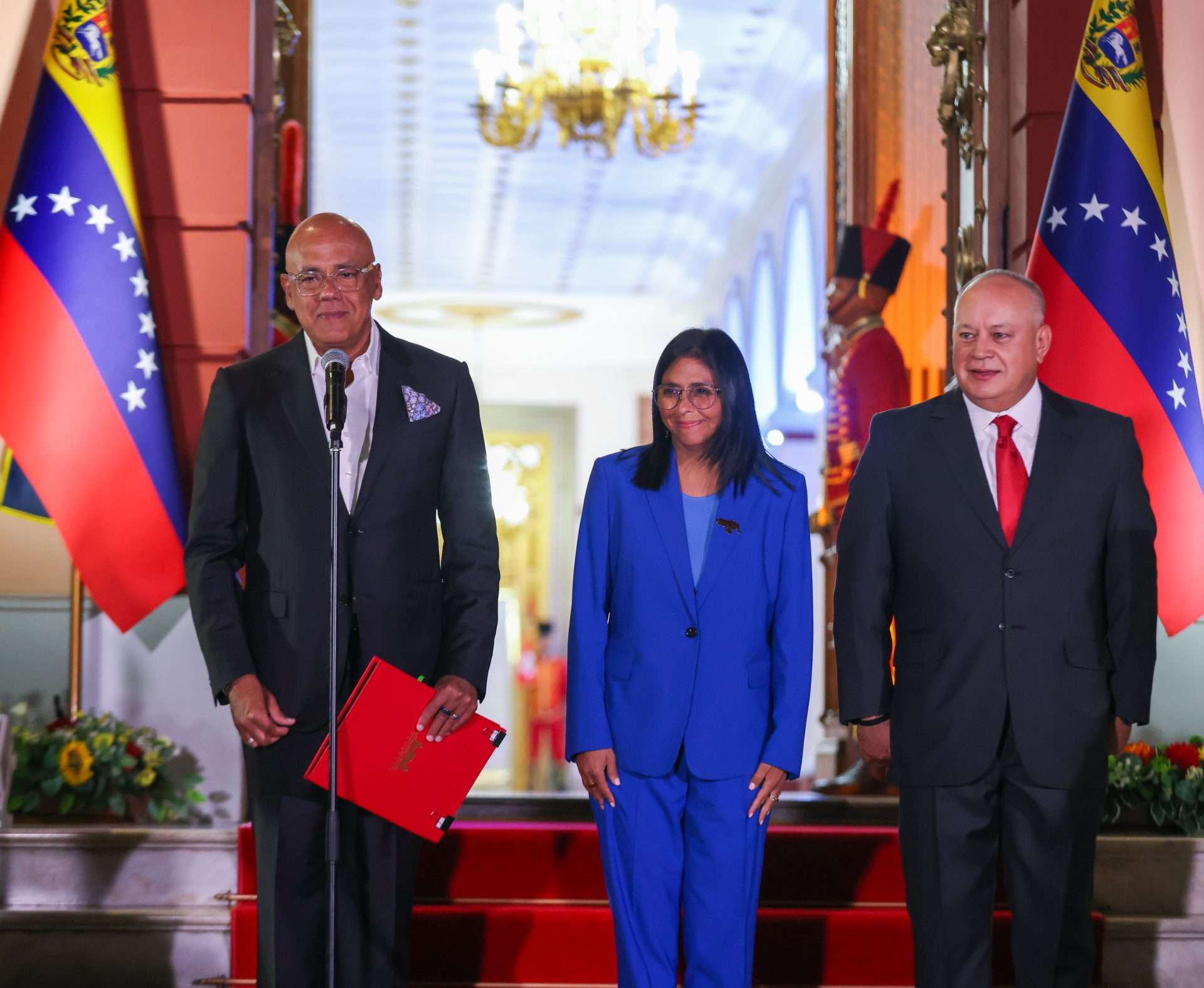
In these two months, the figure of Delcy Rodríguez as acting president emerges as the pillar of institutional continuity. For the popular bases of Fuerte Tiuna, his designation was not fortuitous; It responded to an economic and government plan that President Maduro had already been weaving in anticipation of the siege.
Likewise, the diplomatic relations and dialogue that are maintained today with the United States are seen by Lujano as a step of courage and pragmatism. “Delcy has demonstrated immense capacity. It is the first country to reach this negotiating stage after an aggression of this type,” he points out. The inclusion of opposition figures to manage international representation is viewed with caution, but with hope: it is the space where all Venezuelans, “those who believe and those who do not,” must recognize themselves to defend the territory.
Likewise, faith continues to be the driving force in the urban planning of Fuerte Tiuna that awaits the return of President Maduro. The comparison with regional leaders such as Lula da Silva or Cristina Kirchner is recurrent in the grassroots discourse: leaders who are persecuted, imprisoned or falsely accused, but who eventually return due to the clamor of their people.

“They are going to continue trying to break our President with false accusations, but we are going to have him back as the man who fought for us,” says Lujano. Meanwhile, in the 28 towers of Simón Rodríguez, the organization does not rest.
Testimony of a mother
For Falve Jiménez, also a resident of this urban development, time stopped at two in the morning on January 3. What at first seemed like the residual roar of the holiday season soon revealed itself to be the harshest nightmare that the Los Rusos community has ever faced. “We thought they were fireworks, but it was a bombardment,” says Falve, his voice marked by the intensity of the memory. When he looked out his window, the image was devastating: military helicopters flew over the neighboring buildings while shouts from the street raised the alarm: “Get out, the gringos have arrived!”
Falve’s situation was doubly critical. At the moment the first bombing broke out, his daughter, who lives with a disability, began to suffer a seizure. Amid the smoke and the sound of explosions, Falve had no time for fear. With the help of his neighbors, he managed to place the young woman in her wheelchair to begin a desperate descent down the stairs of one of the towers that houses thousands of people. “People came down desperate, some naked, without shirts. It was a horrible experience that I wouldn’t wish on anyone,” he says. The chaos in the building, inhabited by more than 1,000 people, became a wave of humans seeking refuge in the darkness of the early morning, trying to get away from the epicenter of the attacks.
Under the gaze of drones
Jiménez’s escape did not end when he left the housing complex. The journey to checkpoint 4 of Ciudad Tiuna and later to the La Mariposa sector became a technological hunt. Falve relates that the sky was “mined by drones” that chased and illuminated civilians as they walked through the streets.
“They shined light on us and we said: ‘they’re going to kill us here’. We felt like they were chasing us,” he explains. At that point, surrounded by a group of 28 people, faith was the only support. They stopped to pray in the middle of the road, surrendering to the divine will while trying to get the injured and the most vulnerable to safety. It was the intervention of community leaders, such as the head of the Ubch named Prisca, that allowed 18 of them to find safe refuge in a nearby home at 4 in the morning.
Jiménez does not hide his sadness about the situation of President Nicolás Maduro and First Lady Cilia Flores. However, that sadness is transformed into a firm political conviction that he shares with his neighbors in the Simón Rodríguez sector. “While he fights there for his freedom, we fight here for sovereignty,” he says with determination.
Today, while the wounds of the aggression try to heal, Jiménez maintains a collective promise: the hope that, sooner or later, the community will descend en masse towards La Guaira to welcome back President Maduro and highlights that the figure of Delcy Rodríguez as acting president represents the necessary continuity, describing her as an admirable leader who has known how to stay ahead in the most difficult moments.
The helicopter siege
It was only ten minutes before two in the morning on January 3 when the sleep of Germán Montilla, a resident of tower 3 of the Simón Rodríguez urban development, was interrupted by an explosion that shook the foundations of his home. “The walls moved, I thought the glass was going to fall,” Germán remembers. In an instant, the light was extinguished, leaving thousands of families in the dark facing what he immediately identified: a bombing.
As smoke began to surround the structures of Ciudad Tiuna, Germán made a quick decision. After securing his elderly mother in the safety of her apartment, he went down the stairs, due to the lack of elevators, to find the commotion on the ground floor. Barefoot neighbors, people in sleeping clothes and the crying of lost children marked the beginning of one of the darkest days in the capital.
From the ground floor, Germán witnessed firsthand the precision of the attack. The helicopters didn’t just fly overhead; They carried out circular maneuvers on the urban planning, near the Tazón descent. “They made a complete turn and bombed. In less than five minutes, they made the second turn and fired again,” he says.
Through the lens of his phone, Germán managed to capture the proximity of the aircraft, which were flying so low that the projectiles hitting the mountain and neighboring buildings could be clearly seen. Indignation overcame fear: “They are bombing the town!” he shouted towards the sky, while he saw how the detonations burst the windows of several buildings.
Germán reflects on the institutional order that allowed the crisis to be stabilized. For him, the appearance of Delcy Rodríguez assuming leadership of the State provided the necessary tranquility to a population that felt adrift. “The expectations regarding his mandate are very good, we are on the right track,” he states, recognizing the importance of the current dialogue, but with a non-negotiable condition: not losing the essence of a free and sovereign country.
Montilla, like many others, maintains hope for the return of the legitimate president of Venezuela.
Two months after the attack, the lesson is clear: peace was not a gift, it was a victory built floor by floor, trial after trial, by a people who refused to be just another figure in the history of imperial interventions.

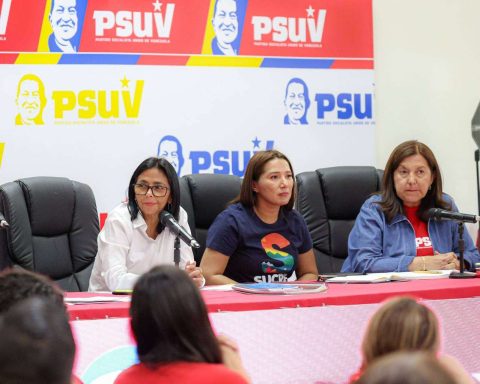
Government assisted those affected by US aggression against the country
Since January 17, the acting president Delcy Rodríguez instructed comprehensive care for all those affected by the gringo military attack on January 3 of this year.
In this sense, in the Carlos Raúl Villanueva urban development of Ciudad Tiuna, in Caracas, an area directly impacted by the United States military attack on January 3, a special operation was carried out as a response from the Venezuelan State to assist the families and children affected by this military action.
The intervention included a wide spectrum of public services aimed at the community. Mobile warehouses were installed and medical consultations in dentistry and clinical laboratories were provided; Orthopedic materials, canes and glasses were also distributed.
A key component of the day was specialized psychological care for the children, with the aim of helping them process the traumatic events experienced during the attack.
As part of a comprehensive wellness approach, free veterinary care was offered for pets of affected families. In parallel, recreational and cultural activities, such as face painting and games, were organized for children in the sector.
“The feeling that our people have is one of unity, of rejection of any form of aggression,” Rodríguez stated from that work day in Ciudad Tiuna.
Likewise, at the Tía Margoth residences in La Boyera, teams from the Ministry of Public Works and the National Corporation Together Everything is Possible went to the town to provide answers to the neighbors regarding the different damages suffered by their properties. The corporation’s staff focused on the situation of broken glass due to the shock wave, while the ministry dedicated itself to repairing the structures, mainly in the homes most affected by the explosion of a missile that fell a few meters from its location on the street.
Likewise, in La Guaira, the Government rehabilitated the buildings affected by the aggression. In an operation integrated by the Ministry of Housing, the Government of La Guaira, the Great Mission Barrio Nuevo Barrio Tricolor and public service institutions, more than 500 workers were deployed in the Rómulo Gallegos urbanization, La Soublette sector, with the aim of rehabilitating the habitat. The building had been devastated as a result of the US military intervention that occurred at the beginning of the year.