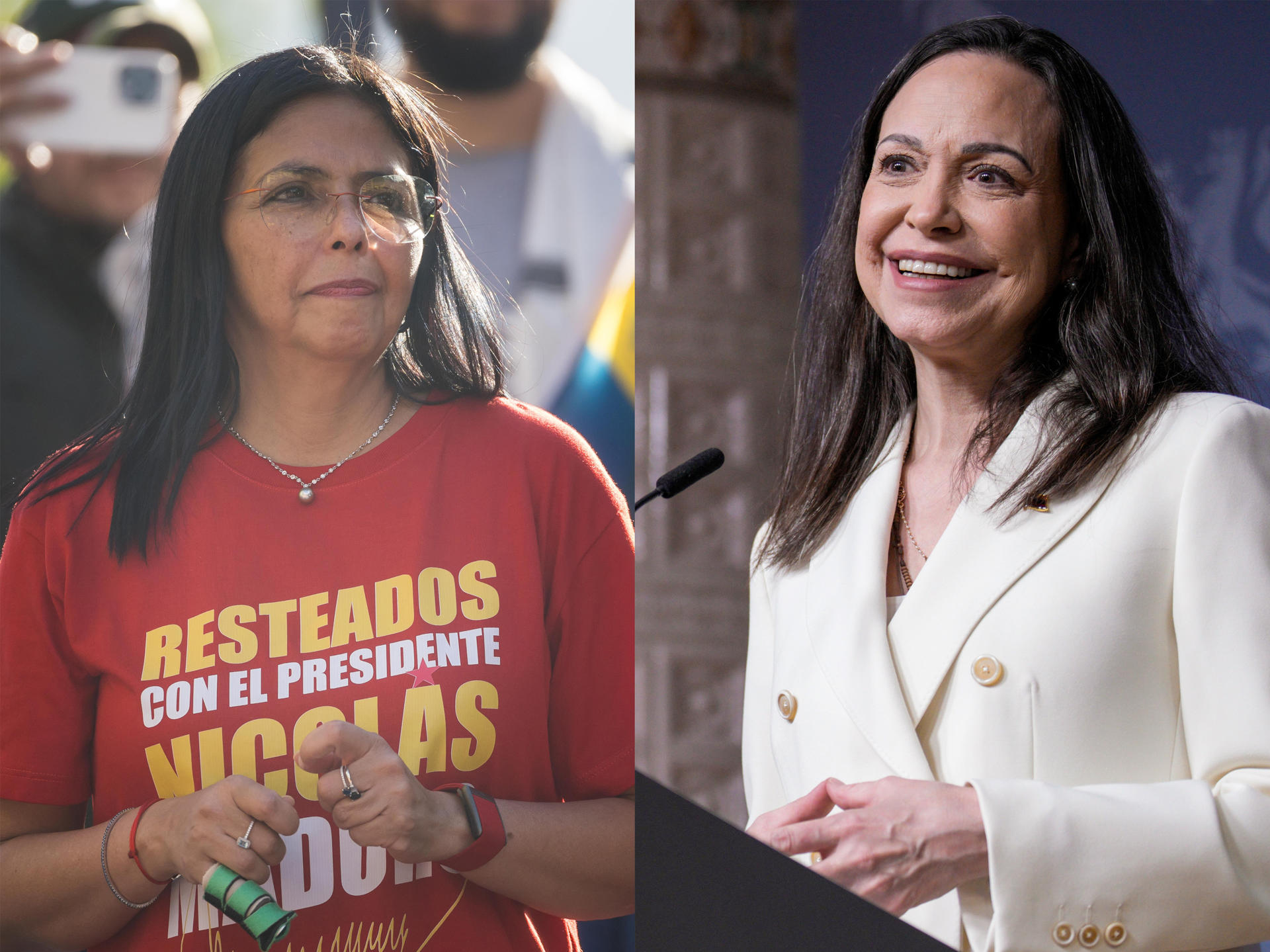
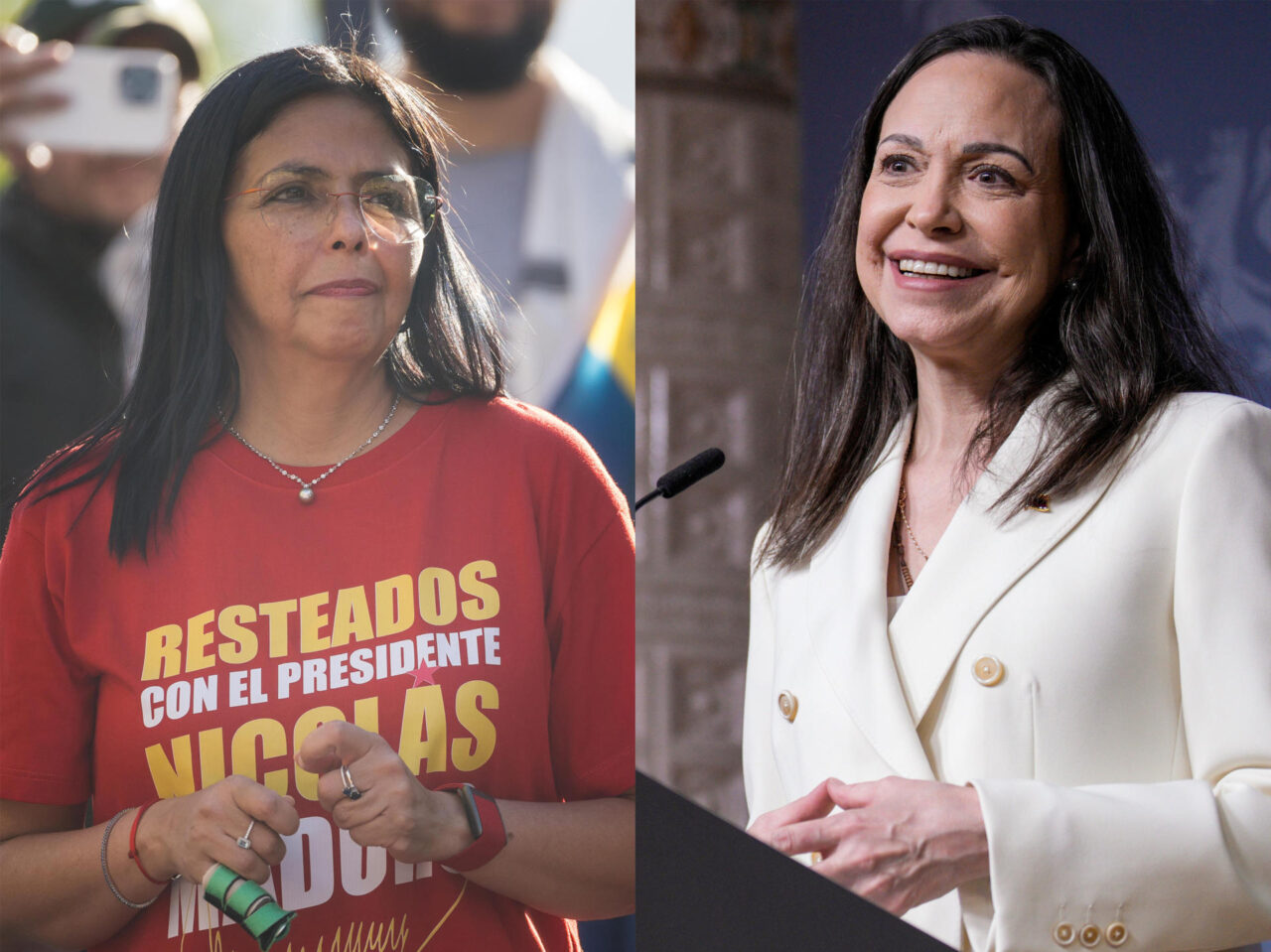
The Venezuelan transition has entered a defining phase. Not because power has changed hands, but because time is no longer neutral. The conflict is not only between the ruling party and the opposition. It is between three forces: the accumulated democratic legitimacy of María Corina Machado, the institutional control of the State of Delcy Rodríguez and the strategic calculation of Washington.
María Corina Machado represents the overwhelming legitimacy expressed in primary elections and in sustained social mobilization. Delcy Rodríguez embodies the operational control of the state apparatus. Washington manages the environment in which that confrontation must be resolved.
But the critical point is no longer the coexistence of these forces. It is the sequence of its resolution.
Washington tries to manage the transition
The recent invitation of opposition leader Enrique Márquez to the US Capitol sent an unmistakable signal: Washington does not want to depend on a single opposition leadership. Or very likely the overwhelming popular dominance of María Corina worries Trump, so inclined to always be the protagonist of every scenario.
The recent invitation to Enrique Márquez to the Capitol was not an innocuous protocol gesture. It was a political signal. The diversification of interlocutors is usually a diplomatic mechanism. But in transition contexts it can also function as an instrument of fragmentation and delay. Keeping multiple channels open weakens the concentration of legitimacy and distributes its symbolic power.
When that happens, the transition loses definition and begins to be managed as a process. Washington faces a classic foreign policy dilemma: prioritize democratic coherence or privilege the strategic stability of its interests.
History shows that when external powers try to “manage” transition processes instead of clearly supporting majority legitimacy, they end up generating greater instability in the medium term.
Legitimacy does not disappear when it is diluted. It radicalizes or accelerates.
The warning about the sequence
The economist’s reflections Ricardo Hausmann in the international press point directly to the core of the problem: if economic stabilization precedes the political transition, the effective participation of the majority is subordinated to the strategic design.
The sequence matters. Democratizing after stabilizing is not the same as stabilizing after democratizing.
If the implicit message is that a “manageable” environment must first be built before a full political redefinition is allowed, the result is the indefinite postponement of the majority mandate.
And that postponement erodes legitimacy.
The return as a break
In this context María Corina Machado’s announcement to return to the country in a few weeks It is not a symbolic gesture. It is a timely strategic break.
If the diversification of interlocutors introduces fragmentation, the physical return reconcentrates leadership. If the transition runs the risk of being delayed under negotiated balances or external interests, the territorial presence of María Corina Machado forces definitions. Then legitimacy stops being abstract and becomes a tangible political fact within the space controlled by the state apparatus.
This move by Machado alters all of Washington’s calculations and forces Delcy Rodríguez to decide between repression, negotiation or an implicit recognition of María Corina Machado’s legitimacy; forces Washington to define whether it unequivocally supports majority legitimacy or continues to manage balances; Machado’s presence forces the opposition to align or definitively fragment. Ramos Allup understood this perfectly and advanced his support for María Corina Machado.
It cannot be ruled out that Washington’s movement with Enrique Márquez has accelerated the decision. If the perception was that the transition was beginning to move towards a scheme of multiple dialogue and extended times, María Corina Machado’s rational response is to prevent legitimacy from being diluted.
The turning point
Delcy Rodríguez should understand that no political system achieves lasting stability based solely on institutional control of the State without legitimacy. Nor is legitimacy imposed if you agree to remain on indefinite wait.
The Venezuelan transition no longer revolves solely around who has power, but rather how long this separation between legitimacy and the state apparatus can be sustained.
With the return of María Corina Machado, time speeds up. And when time speeds up, carefully designed strategic balances begin to break down.
The question is no longer whether there will be a transition. The question is whether it will be administered slowly under Washington’s geopolitical calculations or whether it will be precipitated by direct pressure from the majority legitimacy that María Corina represents.
María Corina Machado does not guarantee the outcome. But it results in something more important: it prevents the outcome from being postponed indefinitely due to Washington’s geopolitical interest.