Matanzas/The Viaduct is no longer what it was. From the railing you can still see the Matanzas Bay spread out like a blue mirror, but on the sidewalk the landscape has changed. Where before it was enough to raise your hand for a Transtur bus from Varadero to make an informal stop heading to Havana, today backpacks, water bottles and tense faces accumulate under the sun.
“I’ve been here since 5:00 in the morning and neither trucks nor buses have passed. It’s almost 11:00 and I had to be in Boyeros for a while,” says Olga Lidia, checking the time on her phone while listening to the proclamation of “pizza, soda, cold water!” launched by various street vendors. The woman assures that not even in the hardest years of Special Period I had seen something similar. “Before something always appeared. Now the road is empty.”
The energy crisis that Cuba is going through has aggravated an already fragile situation. With the drop in tourism and the reduction in fuel, the air-conditioned buses that connected Varadero with the capital are no longer an option for the people of Matanzas. The closure of the interprovincial terminal also eliminated the Transmetros that picked up passengers at strategic points. What remains is a mix of private minibuses, improvised trucks and private cars that set rates based on necessity.
“Private cars are charging whatever they want and at the Havana terminal they are asking for 10,000 or 15,000 pesos”
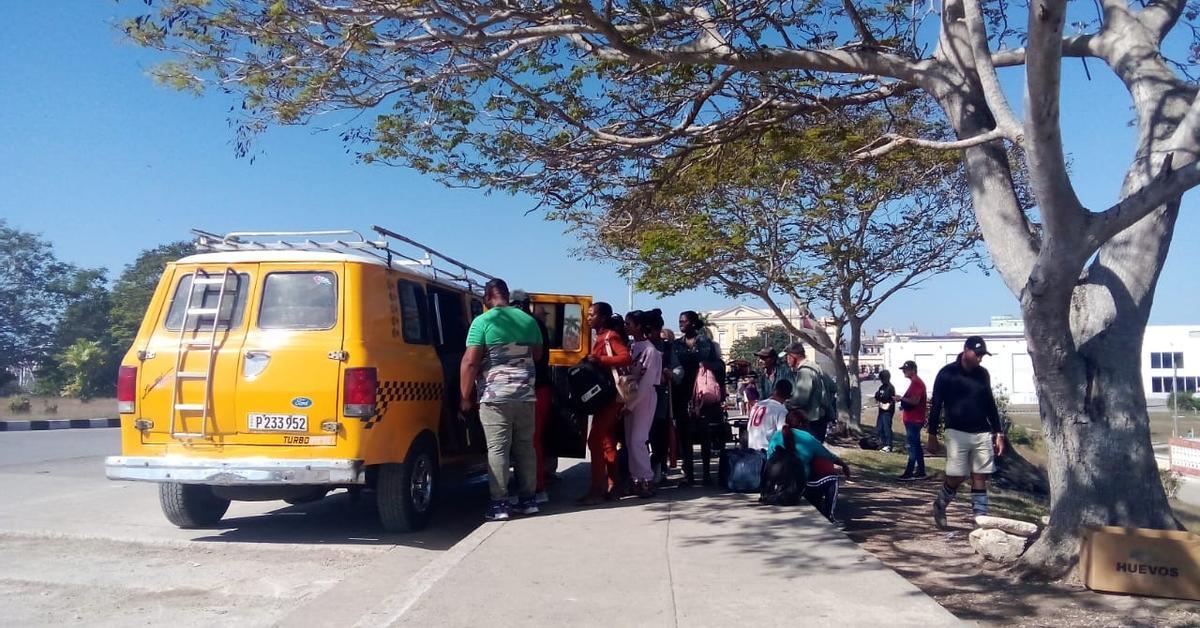
A yellow vehicle waits to fill its 17 seats before embarking on the Vía Blanca. The driver started asking for 4,000 pesos per seat and, after almost an hour without filling, he dropped to 3,000. Even so, several travelers remain motionless, calculating. “Private cars are charging whatever they want and at the Havana terminal they are asking for 10,000 or 15,000 pesos, depending on the schedule,” complains Michel, who is traveling with his wife and a small child. “First you have to get a lot of sun and then pay a lot for being cramped.”
Under a tree with a wide crown, a group distributes the minimum shade. Some sit on the edge of the sidewalk; others, on their own backpacks. Duniesky is not going to Havana but to Santa Cruz del Norte. “The bus that covered that route disappeared. Now you have to ride whatever happens, and many times they don’t accept payment in sections. You have to give the full money even if you get off halfway,” he explains. He says he is “obliged” to climb onto a truck if one appears. While waiting, he buys a small bottle of water for 200 pesos.
The state vehicles turn after the bridge and continue on, without even stopping on the train line. “The inspectors are placed on the other side of the road, heading towards Peñas Altas, Cárdenas and Varadero. On this side we are at the mercy of luck or the money we have,” laments Michel. No one knows how long the next transport will take or if there will be one.
/ 14ymedio
A liter of gasoline in the informal market is already close to 5,000 pesos in Matanzas. The official option in dollars, through the Ticket application, is slow and unstable. “You can spend more than a week waiting and nothing, you can’t trust that digital queue,” responds a driver to travelers’ complaints about the high prices of the ticket to the Cuban capital.
Inside an adapted truck – when one finally appears – the atmosphere is different. Wooden benches, bodies stuck together, backpacks at their feet. A woman with red glasses looks back as she tries to get comfortable. The engine roars and the heat concentrates under the metal roof. Each brake forces you to hold on tightly.
The scene repeats itself throughout the week. “Before the bad days were Sundays. Now every day is hard,” Duniesky says, squinting in the glare. Transportation between Matanzas and Havana, a vital route for those who work, study or have medical appointments in the capital, has become a test of endurance.
“Before the bad days were Sundays. Now every day is hard”
On the nearby esplanade, some vendors have diversified their offering: in addition to soft drinks and pizzas, they offer coffee and even eggs in an improvised box. Waiting generates small businesses. For most passengers, lost time is not made up. Every hour under the sun is a salary that is not collected, a consultation that is delayed, a procedure that is postponed.
“Up, we’re leaving now. In two and a half hours we’ll be in Havana, God willing,” the minibus driver finally announces when he manages to fill the seats. Some hurry; Others watch as the vehicle drives away, raising dust on the asphalt.
The Viaduct continues to be a reference point, but it no longer guarantees mobility. The fuel crisis and blackouts have not only darkened entire neighborhoods: they have also left Matanzas further from Havana than ever. For those who remain on the sidewalk, with their eyes fixed on the road, the journey is not measured in kilometers but in patience, money and luck.