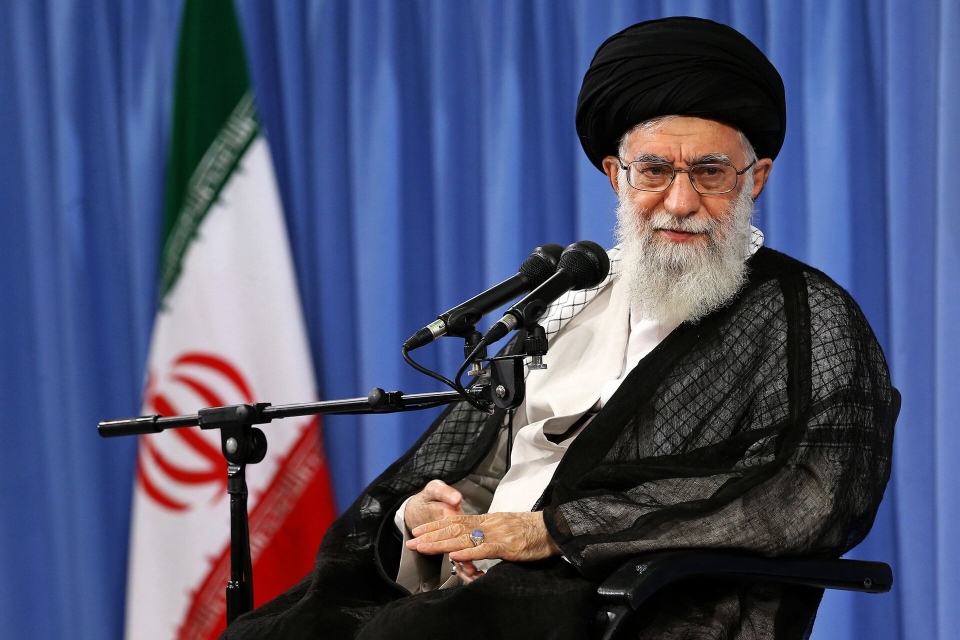
Israeli Prime Minister Benjamin Netanyahu said Saturday that there are “many indications” that Iranian Supreme Leader Ali Khamenei was killed in attacks by Israel and the United States. “As far as I know,” Ayatollah Khamenei is alive and “all high-ranking officials are alive,” Iranian Foreign Minister Abbas Araqchi told NBC, calling for “a de-escalation.”
Israeli Prime Minister Benjamin Netanyahu said this Saturday that there are “many indications” that Iranian Supreme Leader Ali Khamenei was killed in attacks by Israel and the United States against that country, which responded with salvos of missiles towards several Gulf monarchies.
“This morning we destroyed, in a surprise attack, the compound of the tyrant Khamenei in the heart of Tehran” and “there are many indications that this tyrant is no longer alive,” Netanyahu declared in a speech broadcast on television.
Throughout the day, Israeli media claimed that Khamenei and Iranian President Massoud Pezeshkian were among the targets of the attack.
“To my knowledge” Ayatollah Khamenei is alive and “all high-ranking officials are alive,” he told the network. NBC the Iranian Foreign Minister, Abbas Araqchi, who advocated “a de-escalation.”
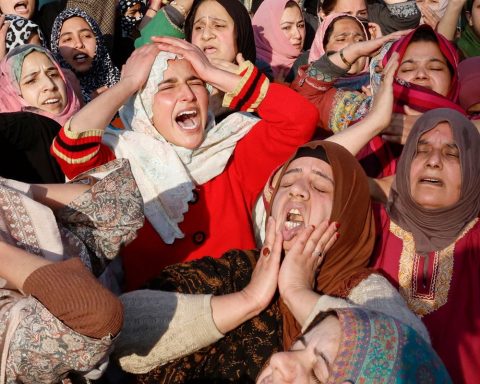
Hundreds of residents in Tehran loudly celebrated the supposed death of Iran’s supreme leader. “Khameneí is dead”, “Khameneí is dead”, numerous people shouted from the windows of their houses in the north of the Iranian capital, which were mixed with whistles, applause and the sounds of horns and trumpets.
*Read also: Venezuela changes tone and asks to resume negotiations after military escalation in Iran
Shouts of “Yavid shah” (Long live the shah) also sounded, in a reference to the monarchy overthrown in the Islamic Revolution of 1979. The effusive shouts that resonated for about 20 minutes are a sign of the discontent of part of the population with the political system established by Ayatollah Ruhollah Khomeini.
The Iranian Red Crescent has recorded at least 201 dead and 747 wounded in the attacks this Saturday. Iranian authorities called on Tehran’s 10 million residents to evacuate the capital and reported 85 dead in an attack on a girls’ school in the south of the country.
According to Netanyahu, the operation “will continue as long as necessary.” Hours before, he said that it is directed against the “existential threat posed by the terrorist regime in Iran.”
The Israeli Army announced the death of seven senior officials of the Iranian regime, including Defense Minister Aziz Nasirzadeh and Revolutionary Guard commander Mohamed Pakpur.
In a video appearance, Army spokesman Defrie Effin stated that the Secretary of the Defense Council, Ali Shamjani, and two figures close to the Iranian Supreme Leader, Ali Khamenei, have also died in this Saturday’s attacks: his advisor for Security Affairs, Ali Shamjani, and the head of his Office, Mohamed Shirazi.
The head of Intelligence of the Khatem Alanbieh Command, Salah Asadi, and two officials from the defense innovation organization SPND, Reza Mozafari and Hossein Jabal Amelian, were also killed in the attacks.
The joint attack by Israel and the United States gave hope to Reza Pahlavi, son of the last sah of Iran, overthrown in 1979 by the Islamic revolution. Now he awaits the “final victory” against the ayatollah regime to “rebuild Iran.”
“Take power” in Iran
“When we are done, take power, it will be your turn,” President Donald Trump told the Iranians.
Netanyahu echoed the message, telling Iranians that the time has come to “free themselves from the yoke of tyranny.”
In January, after the repression of anti-government protests in Iran that left thousands dead according to several NGOs, Trump had promised “help” to the Iranians.
Trump warned Iranian security forces that if they lay down their weapons they will enjoy “total immunity” but that otherwise they will face “certain death.”
Beyond Tehran, there were also explosions in the cities of Isfahan, Qom, Karaj, Kermanshah, Minab, Lorestan and Tabriz, in different parts of the country, according to Iranian media.
In the evening, the Israeli army asked residents of an industrial area in Isfahan, central Iran, to evacuate the area due to imminent attacks.
Iran strikes back
In Israel, explosions were heard in Jerusalem and in several regions of the country, but Iran was not limited to that country, but launched volleys of projectiles against the countries of the Persian Gulf where the United States has military bases.
In Qatar, people fled in panic when a missile crashed into a residential neighborhood, creating a fireball.
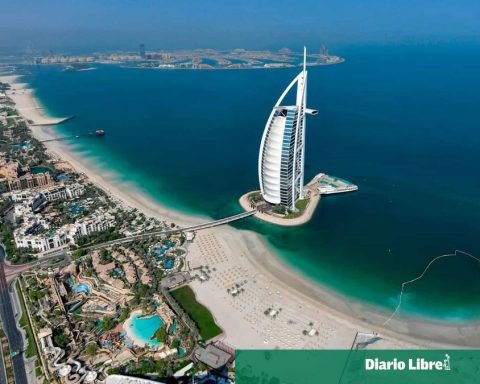
In Abu Dhabi, golfers were stunned to see dozens of projectiles flying overhead. In Dubai, there was a fire on the iconic artificial island The Palm.
In Manama, the capital of Bahrain, residents were evacuated from the district where the US Navy’s Fifth Fleet is located.
“When we heard the noise, we screamed in fear,” said Jana Hassan, a 15-year-old student who was in the area.
Many countries in the region have closed their airspace, while the United States advised against commercial ships approaching the region.
With information from AFP and EFE agency
*Journalism in Venezuela is carried out in a hostile environment for the press with dozens of legal instruments in place to punish the word, especially the laws “against hate”, “against fascism” and “against the blockade.” This content was written taking into consideration the threats and limits that, consequently, have been imposed on the dissemination of information from within the country.
Post Views: 281