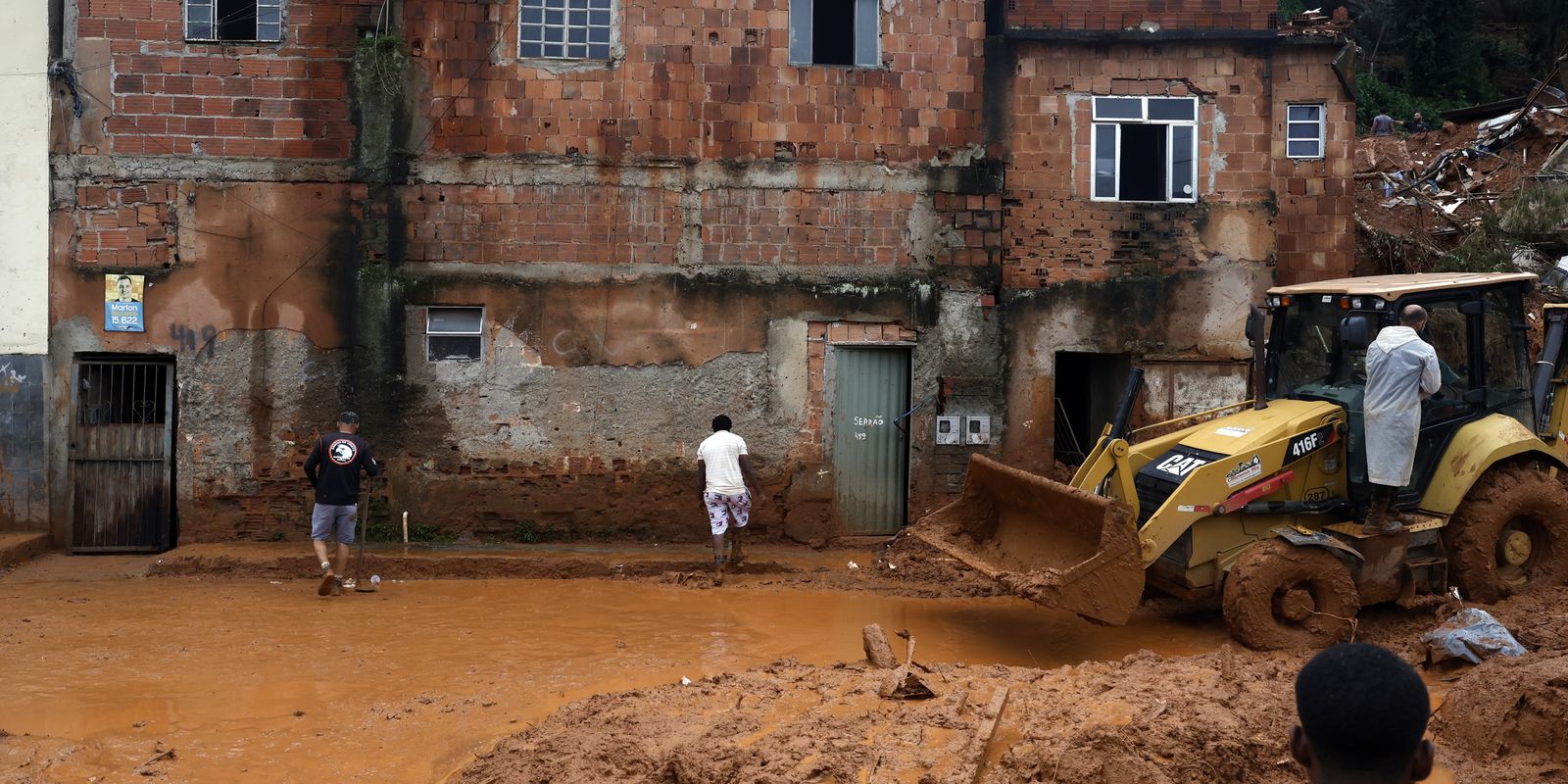
A study by the Brazilian Development Association (ABDE), prepared in partnership with Finance Estudos e Pesquisa and Finanças Análise Consultoria Econômica, revealed that the Brazilian potential to invest in drainage, slope containment and urban infrastructure is approximately R$27 billion in new financing aimed at preventive actions.
The research was divided into two blocks of measures: one aimed at the general expansion of credit to subnational entities and the other aimed specifically at the National Climate Change Policy (PNMC).
The study Sustainable Cities: Construction of a New Reality for Municipalities within the Scope of Sustainability and the National Climate Change Program was released in the week in which Brazil witnessed the recent tragedy caused by intense rains in Juiz de Fora, Minas Gerais.
The proposal presents solutions to the fiscal and regulatory obstacles that limit the access of states and municipalities to credit for strategic investments in urban drainage, slope containment, sanitation and resilient infrastructure. One suggests that the global annual amount authorized for new operations is equivalent to the value of the debt due in the year, as a proportion of the Gross Domestic Product (GDP). The other is to review the exposure limit of development financial institutions to the public sector, currently set at 45% of Reference Equity (PR) by Resolution No. 4,995/2023.
“This would allow replenishing the stock without putting pressure on the fiscal balance. Another measure foresees disregarding, when calculating the global limit, the operations of entities with Payment Capacity A, as they do not represent a relevant macroeconomic risk”, says the study.
>> Follow the channel Brazil Agency on WhatsApp
“The study proposes to differentiate the percentages according to the profile of the institution: up to 70% of the PR for Development Agencies, 60% for Development Banks and 50% – with the possibility of temporary extrapolation up to 55% – for other development financial institutions”.
It is also suggested that the capital allocation rule be modified, going from the 1:1 ratio to 1:3 in operations guaranteed by a share of Tax on the Circulation of Goods and Services (ICMS), that is, allowing for every R$1 of capital allocated by the institution to be able to grant up to R$3 in credit.
“The study also proposes a review of the maximum effective cost limit in operations guaranteed by the State Participation Fund (FPE) and Municipal Participation Fund (FPM) – constitutional transfers from the Union to states and municipalities that can be used as loan guarantees, as they are regular and predictable revenues”.
Another solution suggested is the improvement of the Capag (Payment Capacity) methodology, an indicator from the National Treasury Secretariat that assesses the fiscal health of states and municipalities based on criteria such as debt, savings and liquidity.
Among the suggestions are the adjustment of the debt indicator, with the inclusion of the weighted average life of the debt, and the expansion of fiscal space for entities classified as A+ (20% increase) and B+ (10% increase) – categories that identify states and municipalities with better fiscal performance and greater capacity to honor financial commitments.
The report also suggests the creation of a Project Bank, with certification under federal management, and the recognition of Regional Projects validated by Development Agencies, which would also not be counted in the global debt limits.
According to estimates, each measure can generate a global annual amount of credit of R$15 billion; in increasing the 45% limit of PR, 18 billion; in the change in the capital allocation rule (1:1 to 1:3), R$7.1 billion; in the review of the FPM rate/guarantee limit, R$2 billion; in Capag A+ outside the limits, R$ 1 billion (193 municipalities); in Capag “C” with PNMC credit, R$5 billion (benefiting more than 2,200 municipalities); in regional projects, R$1 billion and in the project bank, R$1 billion.
“ABDE’s study shows that it is possible to reconcile fiscal responsibility with increased public investment, especially when it comes to urban adaptation to climate change. It is essential to have mechanisms that prioritize certified, structured projects aligned with the National Climate Change Policy. In addition to reducing future costs, we are saving lives and making Brazil a more resilient and sustainable country”, stated ABDE’s executive director, André Godoy.