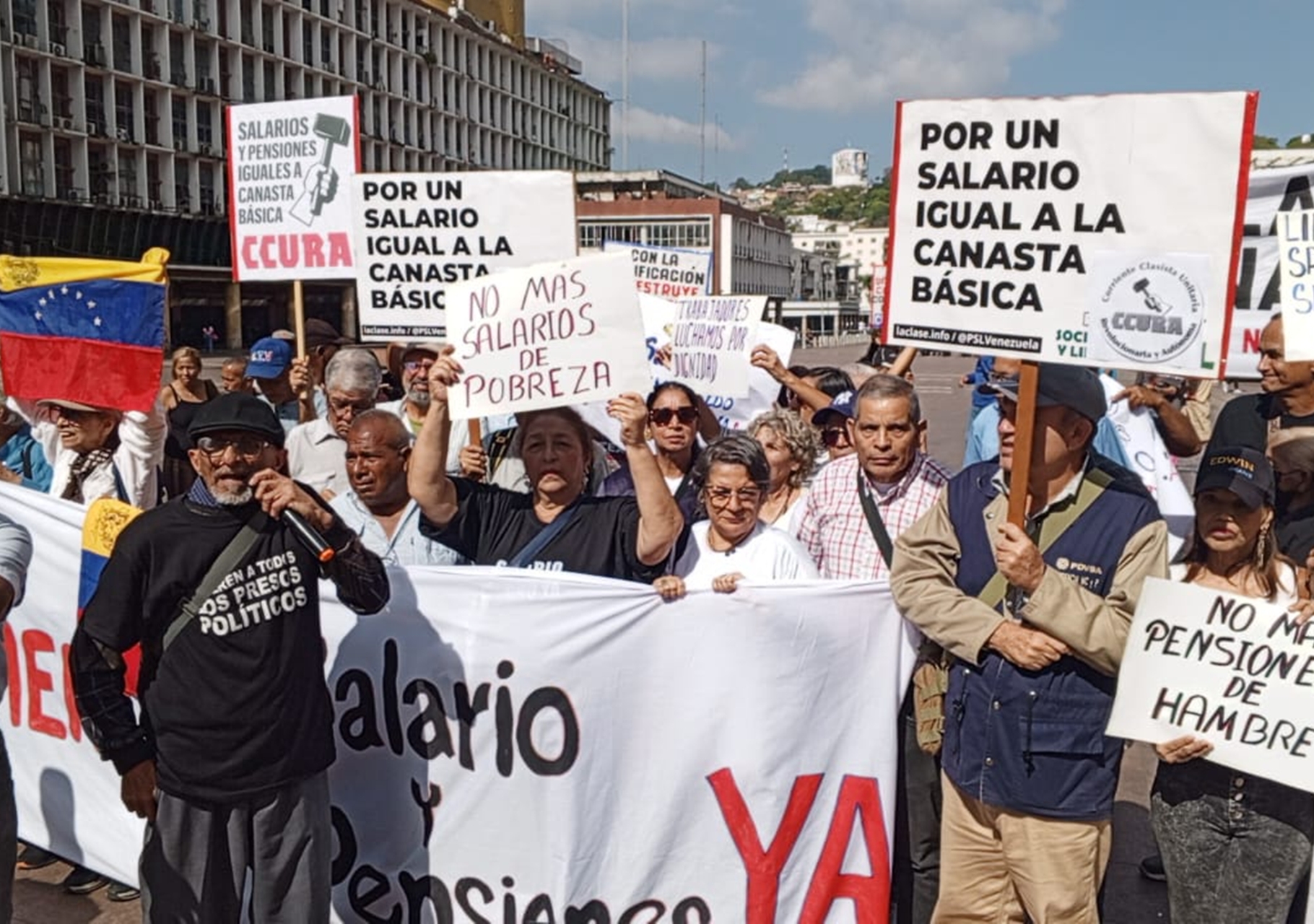
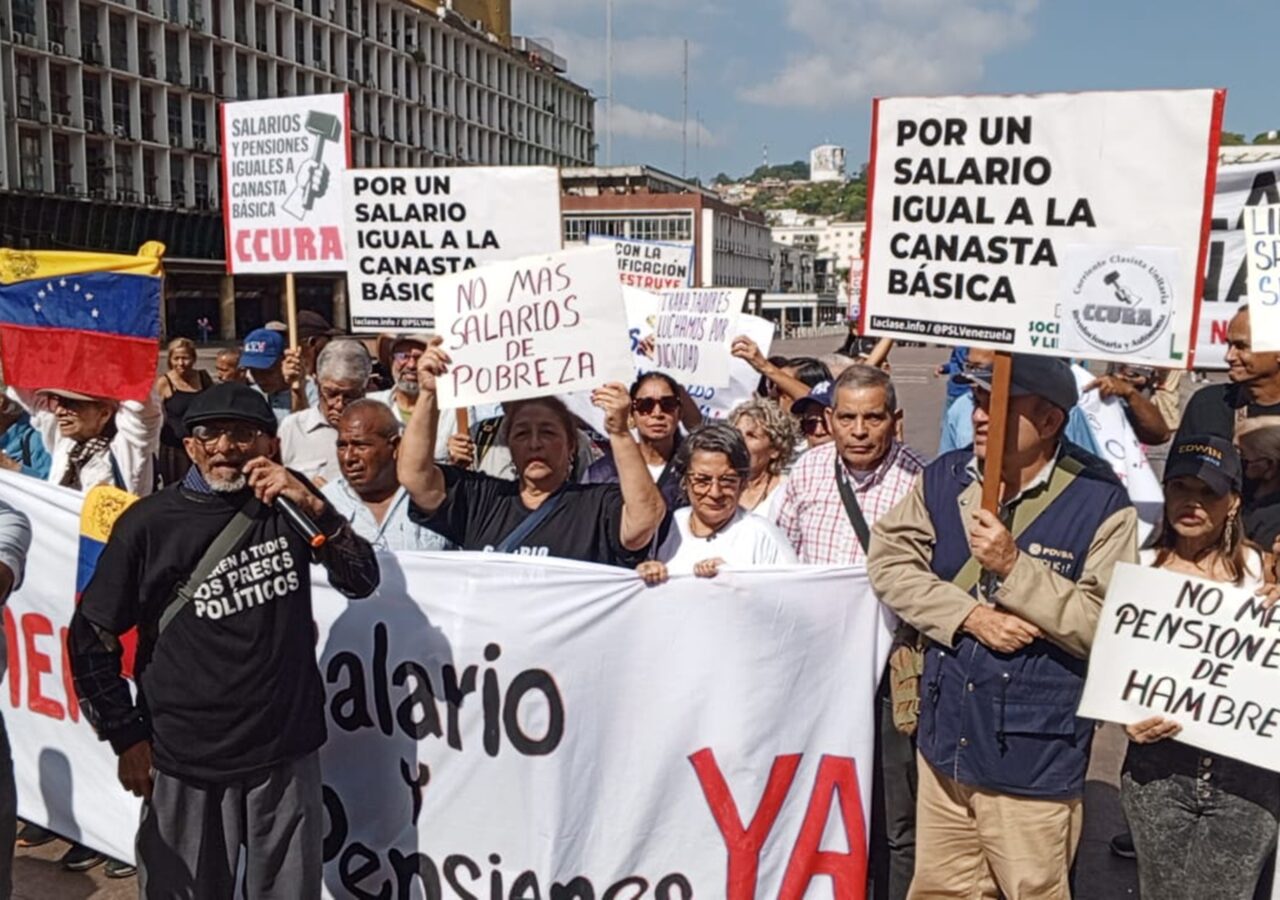
At least 22 protests were registered on Thursday in 15 states of Venezuela, according to a balance released by the Social Conflict Observatory.
The demonstrations took place in Aragua, Barinas, Bolívar, Carabobo, Capital District, Falcón, Guárico, Lara, Mérida, Miranda, Sucre, Táchira, La Guaira, Yaracuy and Zulia, the organization detailed in its report.
The main demands focused on the release of all political prisoners and in labor claims.
Among the latter, the NGO highlighted the request for a salary adjustment in line with the cost of living, the elimination of the instructions of the National Budget Office, compliance with the provisions of the Constitution and the payment of pensions that cover basic needs.
In the state of Aragua, workers submitted a list of demands to the Labor Inspectorate of Maracay in which They reiterated the demand for salary adjustment.
Protests increased after Maduro’s capture
Social conflict in Venezuela registered a strong rebound in January, after the capture in Caracas of Nicolás Maduro and his wife Cilia Flores by US military forces. According to the Venezuelan Observatory of Social Conflict, during the month 622 protests were documented, which represents an increase of 53% compared to January 2025 and an average of 21 daily demonstrations.
According to the OVCS, the United States operation generated an accelerated rearrangement of forces and opened space for sectors to return to the streets with demands for freedom, justice and political participation.
Of the total number of demonstrations registered that month, 550 were related to the defense of civil and political rights, which represents 88% of the cases. The main demand was the right to political participation, present in 502 protests.
They were followed by demands related to the right to justice (232), the right to peaceful demonstration (148) and the rights of detained persons (58).
The report indicates that 214 protests focused on demanding the full freedom of political prisoners.
“The complaints made by the protesters point to systematic violations of human rights, including torture, cruel treatment, short-term forced disappearances and arbitrary detentions, many executed without a court order or sufficient evidence,” indicated the OVCS.
The vigils in front of detention centers were consolidated as one of the most visible expressions of peaceful protest. Mothers, wives, daughters and human rights organizations led rallies to demand respect for fundamental guarantees.
Although to a lesser extent, demands for economic, social, cultural and environmental rights represented 12% of the total, with 72 protests. Among the most frequent complaints were decent salaries and pensions, the discussion of collective agreements and the timely payment of labor benefits.
They also registered 25 protests linked to failures in basic services and housing, with complaints of problems in the supply of drinking water, electricity, transportation and sanitation, as well as deterioration of infrastructure and accumulation of waste.
More protests in Caracas
Regarding geographical distribution, The Capital District topped the list with 89 protests, followed by Miranda (84), Mérida (47), Bolívar (45) and Anzoátegui (44). The states with the lowest number of demonstrations were Guárico (1), Amazonas (6) and La Guaira (8).
The concentrations They represented 58% of the registered shares, followed by vigils (105), marches (71) and banners (25). Furthermore, 42% of the protests combined political, labor and social demands.
During January they documented eight protests repressed in five states and four demonstrations directed against security and intelligence bodies for alleged abuses and excessive use of force.
The OVCS highlighted that international pressure and surveillance contributed to containing higher levels of repression.
“The centrality of the protests for political prisoners, the massive and constant presence of family members, university students and social organizations reflect the depth of the damage accumulated by years of criminalization of dissent”, points out the organization.