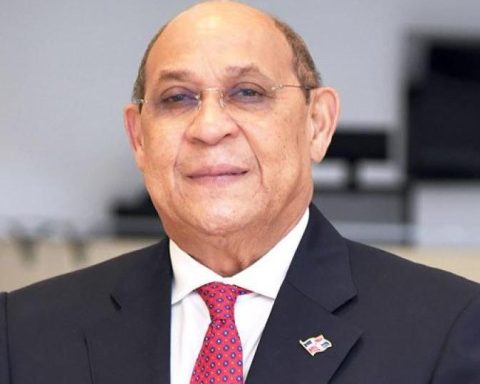
The Minister of Energy and Mines, Joel Santospraised the progress presented by the president Luis Abinader on energy matters during his accountability speech before the National Assembly, describing them as “the result of rigorous technical planning, investor confidence and a clear vision of energy transition.”
Santos highlighted that the incorporation of 1,138 megawatts (MW) of new generation capacity in 2025, through 16 strategic projects with a private investment of more than 1.5 billion dollars, represents a milestone for the security and stability of the National Interconnected Electrical System (SENI).
“These results reflect the consolidation of a State energy policy, aimed at guaranteeing reliable supply, attracting productive capital and moving towards a cleaner and diversified matrix,” said the official.
The minister stressed that 58% of the new installed capacity corresponds to renewable energy, mainly solar and wind, which allowed the country to reach the goal established in Law 57-07, achieving that 25% of electricity demand comes from renewable sources, with instantaneous peaks close to 48%.
Likewise, he highlighted that the growth in installed capacity, which went from 4,921 MW in 2020 to 7,120 MW in 2025, shows an expansion of close to 45%, strengthening the reliability of the system and maintaining a responsible balance with efficient thermal generation using natural gas.
In the field of transmission, Santos assessed as strategic the entry into operation of the 345 kV Montecristi–Santiago Line and the modernization of the Ocoa–Ocoa Crossing Line, as well as the integration of Pedernales into the national electrical system, works that, according to him, reduce risks of congestion, improve regional stability and enable new productive investments.
He detailed that, in 2026, the first stage of Energía 2000 will be incorporated, in Montecristi, which will contribute 290 megawatts to the system at the end of March. The plant is already in its final phase, it recently performed its first power-up and began injecting 30 megawatts as part of operational tests. It will initially operate in open cycle and, by the summer of this year, it will complete its total capacity of 414 megawatts.
The expansion schedule continues with the entry of Generadora San Felipe I, with 460 megawatts, scheduled for May 2027; Manzanillo I, with 416 megawatts, scheduled for December 2027; and Manzanillo II, which will add an additional 426 megawatts in April 2028.
In addition, 138 MW of AES will enter the battery by the summer of 2026 and about 300 MW of energy storage batteries are in the process of being awarded in the coming days and will be ready in approximately 18 months, which will significantly help stabilize the electrical system.
This year, the first hydropumping project in the country will begin, in Sabaneta, San Juan province, with a capacity of 250 megawatts. This project will allow the growing renewable generation to be managed more efficiently and strengthen the reliability of the national supply.
Likewise, this year the Guayubín dam will be completed, we are advancing in the construction of the Guaigüí dam and we will begin the La Gina dam in Baní, expanding our water, energy and productive capacity.
He indicated that, in addition to the expansion in generation, investments of more than US$450 million are being made in transmission, which include the construction of a new ring in the south of the country at 345 kilovolts (kV), a fundamental project to guarantee redundancy and greater stability of the system.
Added to this are more than US$300 million in distribution, destined for the repowering of networks, construction of new substations, separation of circuits and installation of smart meters, with the aim of reducing technical and non-technical losses, as well as strengthening the regulatory framework of the sector.
The minister also highlighted the social impact of the Carrying Light Program, which has electrified nearly 9,000 homes since 2020, benefiting more than 30 thousand people. In 2025 alone, 51 rural electrification projects were carried out.
“Energy is not just infrastructure; it is social inclusion, territorial development and opportunities for thousands of Dominican families,” he stated.
Santos maintained that the results presented by President Abinader position the Dominican Republic as a regional benchmark in relative growth of renewable energies and in attracting energy investment, consolidating a more robust, resilient and sustainable system.
In addition, he highlighted that it has been a constant, in the president’s management, to promote the comprehensive development of the country and give special importance to the exercise of accountability.
He stressed that, as a convinced democrat, the president gives this act its rightful place as a fundamental pillar of democracy, in coherence with the advances and results that today strengthen the nation’s position in terms of energy growth and sustainability.