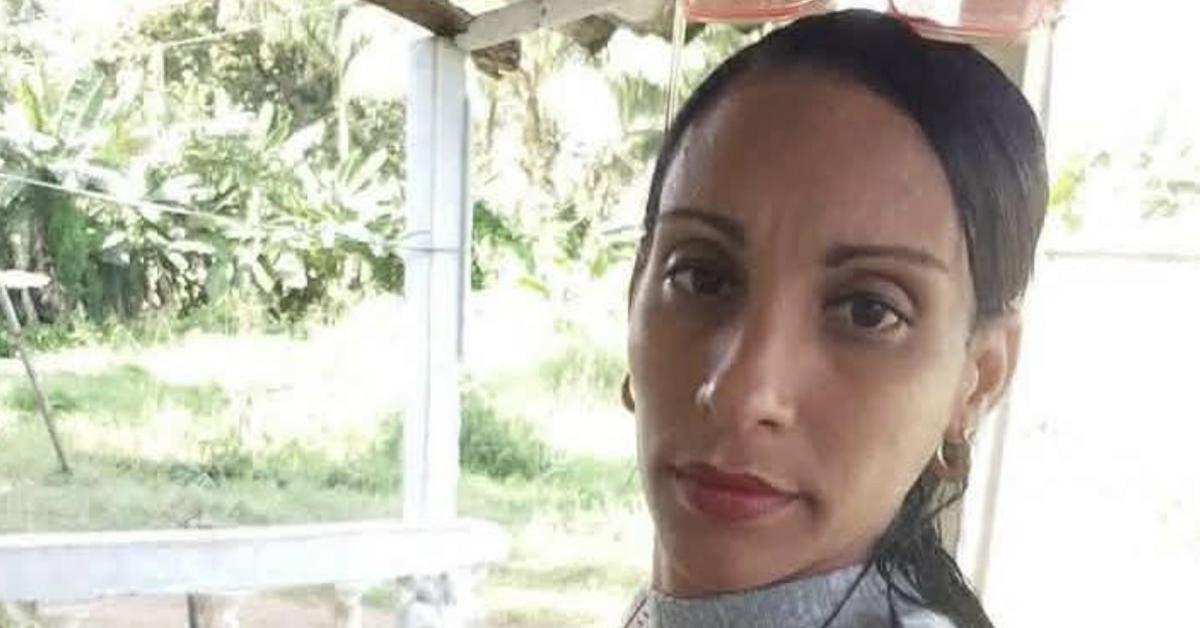
Havana/The independent platform Alas Tensas confirmed this Thursday the femicide of Yaimeé Carranza Herrera, 32, murdered on February 24 in Santa Clara while walking with his 14-year-old son.
According to details provided by testimonials on social networksCarranza was heading towards her workplace when, on the stretch of the ring road between the highway and the road to Camajuaní, she was stabbed multiple times by a man, of whom, despite some photographs having been made public, it has not been specified whether he had any type of relationship with the victim. This tragedy, these sources say, has left two minors motherless.
This is the eighth sexist murder on the Island so far in 2026, according to the registry. 14ymedioafter the brutal murder in Guantánamo by Yaneisi Quiala Miranda –also a mother of two children–, confirmed on February 2.
Carranza was heading to work when she was stabbed multiple times by a man.
The independent observatories Alas Tensas and Yo Sí Te Creo in Cuba have been demanding that the government draft a “comprehensive law on gender violence” for some time that articulates a strategy based on prevention, protection, care and reparation for victims. Feminist organizations have also advocated for a “state of emergency due to gender violence” to be declared on the Island.
Various studies currently place Cuba among the countries with the highest rates of feminicide in Latin America, with 1.4 murders per 100,000 women.
An office to advise victims of sexist violence was recently inaugurated in Havana, created by the National Organization of Collective Law Firms with the support of the Canadian Embassy and the United Nations Population Fund. A national registration and monitoring system was also approved and an official campaign aimed at prevention was announced. However, activists and relatives of victims consider that these measures remain insufficient in the face of the sustained increase in cases.
Last year closed with a total of 42 cases of feminicide, of which, according to a preliminary report by Alas Tensas, 90% were committed by people close to the victim, mainly by those who had romantic relationships with them.