Madrid/The major American media, beyond those based in Florida, have focused on Cuba since Washington has increased pressure on the Island. Among the numerous articles published this Friday, highlights an analysis of the New York Times signed by Michael Crowley, a reporter who usually accompanies the Secretary of State, Marco Rubio, on his trips. The journalist has also spoken with several experts and experts on the situation who put on the table the doubts and options that the White House is considering to change things in Havana.
Most analysts consider that Trump and Rubio advocate a gradual opening of the regime towards economic and political freedoms, more in the style of the Venezuelan option after the capture of Nicolás Maduro, although there is a voice that is out of tune. It is that of Jason Marczak, an expert on Latin America at the Atlantic Council in Washington, who believes that both could be more willing to assume the risk of a chaotic transition on the Island than in Venezuela.
The key is, he believes, in oil and the little relevance of the Island. Faced with the need for stability that the Venezuelan oil industry demanded, Cuba has nothing beyond an isolated economy with hardly any goods to export. “Unrest there would have little economic impact beyond its shores,” he maintains. As for Washington’s other great fear, a wave of migration, it could be alleviated with the same humanitarian aid that has already begun to be sent with the cooperation of the Catholic Church through Cáritas, adds Marczak. In his opinion, the option Delcyhas no signs of prospering. “The majority of Cubans have never lived under any regime other than the communist one,” he said.
In his opinion, the Delcy option has no signs of succeeding. “The majority of Cubans have never lived under any regime other than the communist one”
Ryan Berg, director of the Americas Program at the Center for Strategic and International Studies, has a different opinion, who believes that the statements that Rubio has made in recent weeks invite us to think that he will not break into the Island and, on the contrary, that “a slow transition” towards democracy is preferred. “They are not looking for a regime change overnight,” he considers.
Crowley reviews how events have developed in recent weeks and makes it clear that it is unpredictable whether this Wednesday’s failed incursion – in which four of the ten Cubans who participated died – will have any influence on Washington’s decisions.
The reporter reviews some statements by Florida politicians, more belligerent in substance and form, and believes that it is not the tone that Rubio has adopted, after years of fiery rhetoric against a regime that now appears more measured.
“Cuba has to change. It doesn’t have to change suddenly. It doesn’t have to change from one day to the next. Here everyone is mature and realistic,” he said this Wednesday within the framework of the Caricom summit of Caribbean countries. On the margins of that meeting it would have taken place, according to the Miami press – and that the NYT considered fait accompli – a meeting between the advisors of the Secretary of State and Raúl Castro’s grandson, Raúl Guillermo Rodríguez Castro, The Crab.
“Trump does not want a sudden power vacuum in Havana,” declared a senior government official and a Rubio collaborator. The note cites another series of statements made by the Republican in public. “As for the collateral effects, they are no more worried than we are,” he said, referring to Caribbean countries. “We are 90 miles away, and the United States has experienced mass migration from Cuba in the past.”
Furthermore, Rubio insisted that the priority nature of the reforms is economic: “If they want to carry out those drastic reforms that open the space for economic – and, over time, political – freedom for the people of Cuba, obviously the United States would love to see it,” he stated.
El Cangrejo’s role as a suitable interlocutor remains to be seen, although it is most likely that he is a simple messenger for Raúl Castro. The head of US business in Cuba, Mike Hammer, said in an interview with the Spanish newspaper ABC that “within the Cuban system there are individuals who realize that the project is already ending and that perhaps they are interested in making a change that they see is necessary.”
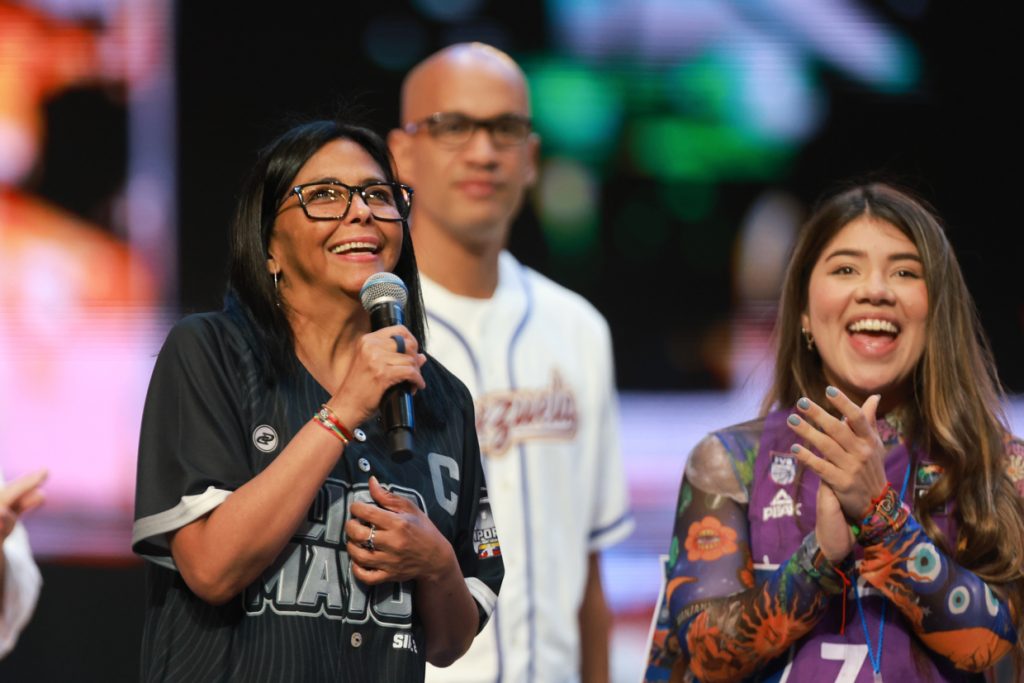
However, other analysts consider that it is impossible to find within the regime someone who breaks party discipline. “The search for a Cuban Delcy Rodríguez is nonsense,” he tells NYT William LeoGrande, professor at American University specialized in Latin America. “If there is going to be an agreement, it will have to be between the United States and the current Cuban Government, not with a branch of the current Government.”
“If there is going to be an agreement, it will have to be between the United States and the current Cuban Government, not with a branch of the current Government”
María José Espinosa, of Cuban origin and member of the Center for International Politics, also does not see a way out in the opposition. “Everyone is in prison or in exile,” he considers. Still, the memo says, “some Trump officials believe that Cuban leaders will be forced to make concessions to Trump,” because the alternative “—an economic collapse and possible violent uprising—would be worse for them.”
A declassified document warned that “American interests would be threatened in complex and possibly unprecedented ways” as it could lead to “substantial and possibly prolonged instability,” including violent retaliation, “large-scale emigration to the United States,” and “demands for American involvement.”
The cited report also said that there was “more likelihood that Fidel Castro’s government will fall in the coming years.” The most bitter part is that the document was prepared 33 years ago, in 1993. The leader has long died and nearly three million Cubans have left the Island since then.