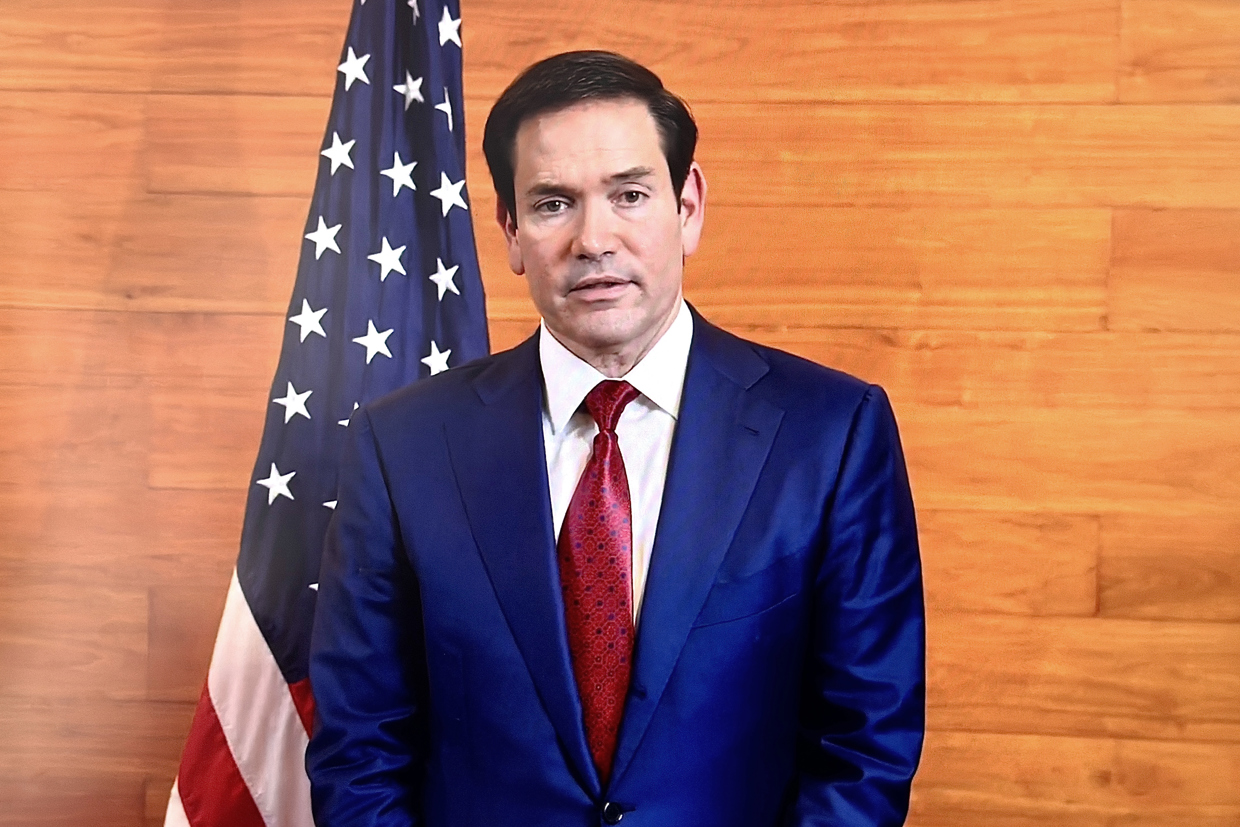
While US Secretary of State Marco Rubio posed for photos with Caribbean heads of government at the Marriott resort in Basseterre, a very different scene was unfolding a few meters away: officials from his team were discreetly meeting with Raúl Guillermo Rodríguez Castro, the 41-year-old grandson of retired General Raúl Castro, at a hotel near the headquarters of the 50th Regular Meeting of the Conference of Heads of Government of the Caribbean Community (CARICOM).
This was reported this Wednesday by the Miami Herald, citing multiple sources with knowledge of the meeting who requested anonymity due to the sensitivity of the conversations. The information confirms and expands what Axios had brought forward February 18: that Rubio and his team have been maintaining confidential contacts for weeks with Rodríguez Castro, known in Cuba as “El Cangrejo”, a nickname that alludes to a deformity in one of his fingers.
It is unclear whether Rubio himself participated in Wednesday’s meeting. What the Secretary of State did confirm to the press, without denying the reports, was his willingness to dialogue: “I will not comment on any conversation we have had. Suffice it to say that the United States is always prepared to speak with officials of any government who have information to share with us,” Rubio declared according to the transcript released by the State Department.
Caribbean leaders see Marco Rubio’s message about greater cooperation as positive
Raúl Guillermo Rodríguez Castro does not hold any visible position in the Cuban government or in the Communist Party. However, his actual position within the power structure makes him one of the most influential actors on the island. Lieutenant colonel of the Ministry of the Interior (Minint), for years he has been the caretaker and assistant of his 94-year-old grandfather, who is treated by the unofficial nomenclature as “leader of the Revolution.”
Rodríguez Castro is the son of Débora Castro Espín, eldest daughter of Raúl Castro, and the late Major General Luis Alberto Rodríguez López-Calleja, who for years directed the Group of Business Administration SA (GAESA), a military conglomerate that controls between 70% and 90% of Cuban retail trade and contributes between 30% and 40% of the national economy.
A senior Trump administration official thus summarized the logic of these contacts to Axios: These are not formal negotiations, but “discussions about the future,” and the talks are “surprisingly” friendly, without “political diatribes about the past.”
Sanctions in exchange for “month by month” reforms
According to sources cited by the Herald, The central point of Wednesday’s meeting in San Cristóbal was the possibility of gradually relaxing US sanctions in exchange for Cuban leaders implementing changes on the island in a phased manner, “month by month.”
A Caribbean diplomat with knowledge of the conversations between Rubio and the leaders of the region revealed to the Herald that the Secretary of State made it clear to them privately that “the talks with the Cuban government were very advanced” and asked them not to give “false hope to Cuba,” because Washington was “very close to getting the Cubans to change their system.” “He seemed pretty sure they were close to an agreement,” the diplomat added.
Before the press, Rubio was more cautious but no less direct: “Cuba needs to change. And it doesn’t have to change all at once. It doesn’t have to change overnight. We are all mature and realistic here,” he said, drawing a parallel with Venezuela, whose political situation he defined as an ongoing process.
The Secretary of State also highlighted the role of the Cuban private sector as the axis of the American vision. Hours before the meeting, the Treasury and Commerce departments had issued clarifications that allow private Cuban companies to import Venezuelan fuel —a symbolic but significant flexibility, tied to the condition that the fuel does not reach the government or GAESA.
Infiltration attempt and four deaths
Wednesday’s “discreet diplomacy” was overshadowed by a very different incident: while Rubio was meeting with Caribbean leaders, it was learned that Cuban border guards had killed four people and injured six others aboard a boat with Florida registration that entered Cuban waters off Cayo Falcones, in Villa Clara.
According to the Cuban Ministry of the Interior, the ten crew members—all Cuban citizens residing in the United States— They opened fire on a patrol boat when they were asked for identification, and were repelled. A Minint statement He points them out as a “terrorist infiltration group” carrying assault rifles, grenades and bulletproof vests..
Rubio described the episode as “extremely unusual” and announced that the United States would conduct its own independent investigation, without speculating on the facts. Vice President JD Vance acknowledged that the White House was monitoring the situation with concern.
The incident took on additional historical resonance: it occurred one day after the 30th anniversary of the downing, on February 24, 1996, of two small planes belonging to the Brothers to the Rescue organization by Cuban fighter jets, an action that led the Clinton administration to tighten the embargo and turn it into law. In 1996, as now, Washington and Havana were holding unofficial talks at the time of the demolition.
Experts on Cuban affairs consulted by the Herald They warned that the deaths of four people could be used in both Miami and Havana to try to derail the ongoing talks. The question hanging over Caribbean diplomacy is whether history is about to repeat itself, or whether this time the incentives on both sides are strong enough to weather the storm.