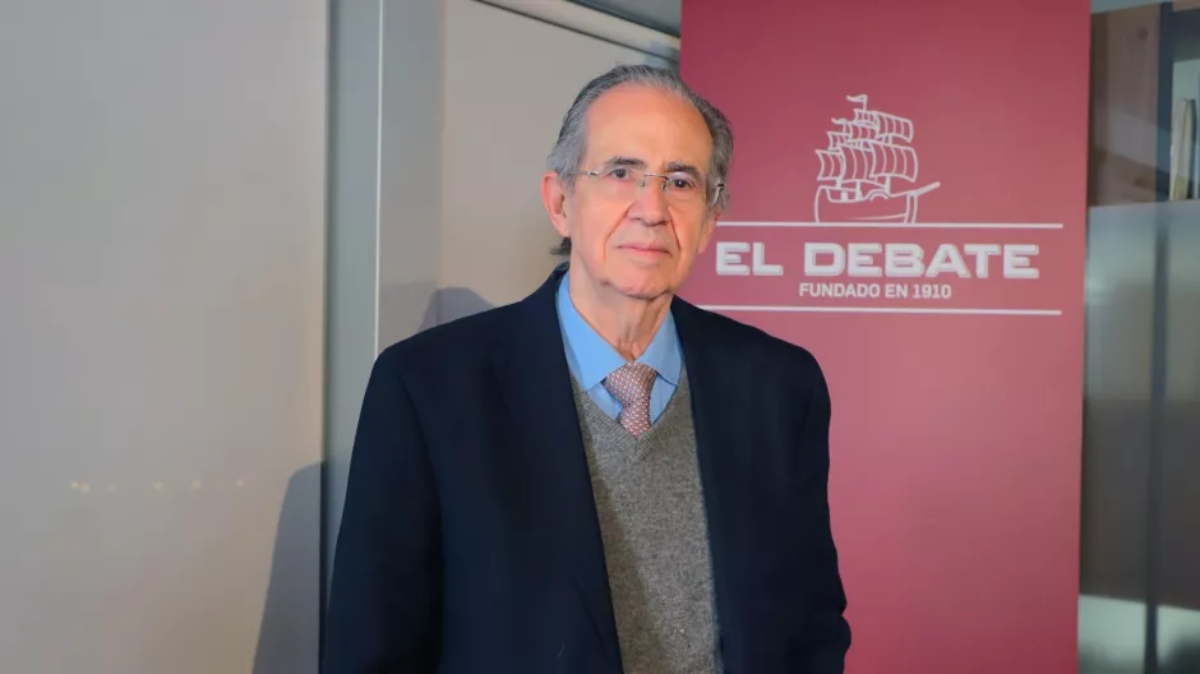
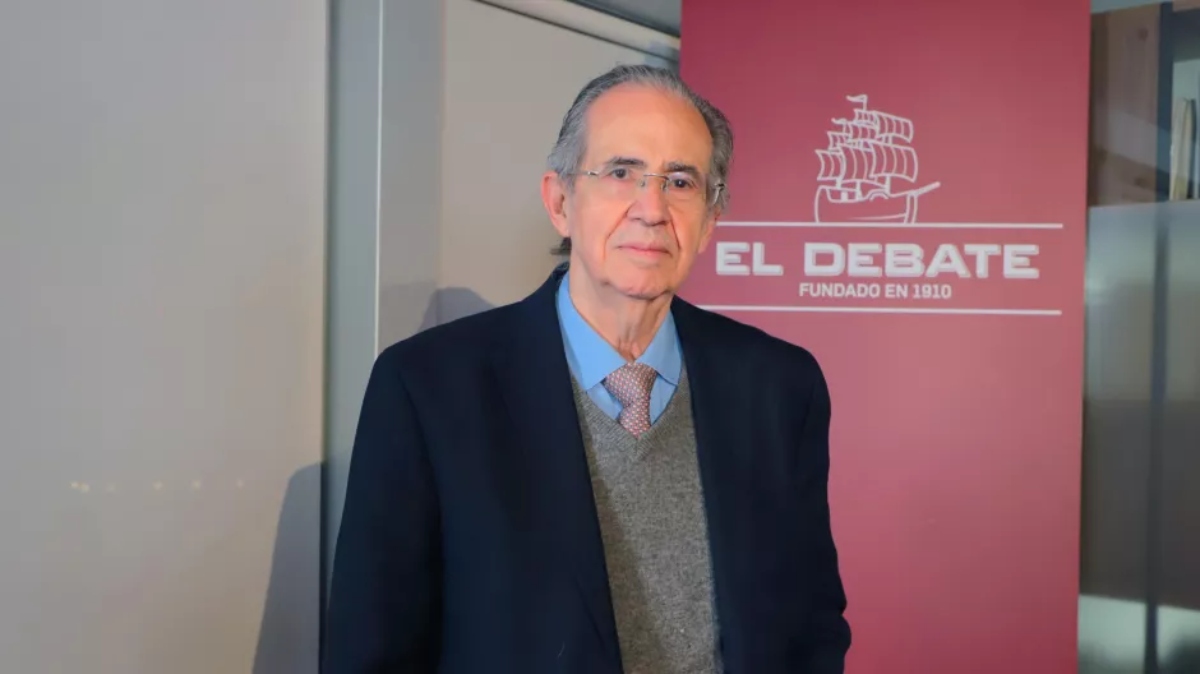
Miguel Henrique Oteropresident editor of the newspaper The Nationalvictim of the repression against the media led by Diosdado Hairconsiders that “there cannot be a transition in Venezuela without there being free media.
Knoll suffered the confiscation of its newspaper facilities following a defamation suit brought by Hair against The National. That is why he points out in an interview with The Debate that “much more is missing than amnesty law» because «in Venezuela “The judges are an appendix of the Executive” and the blocking of independent media signals persists in the country with the help of internet provider companies.
The media entrepreneur, exiled in Spainpoints out that USA “He has designed a process that requires a balance that is truly difficult to achieve, but that has the risk of institutionalizing the dictatorship.”
—What is your assessment of the amnesty approved in Venezuela?
—This is a very complicated process, with many obstacles to overcome. This is a transition supervised by the Americans, but executed by the regime. So, of course, there are a lot of conflicting forces there. There is Delcy, who is the acting president, supported by the Americans, and there is Diosdado Cabello, who is the radical party that opposes and is the main obstacle to that path.
It is a complicated route and the amnesty law has many problems, it does not free everyone. It benefits 5,000 people, but it has 100,000 or 200,000 who have other problems such as pending trials, who have arrest warrants or even who cannot obtain a passport to return to Venezuela because Saime, which is the body in charge of issuing it, does not give them one or places impediments on them.
The amnesty covers part, but it does not cover everything so that we really reach a society where there are no people affected by the regime’s excesses. Much more is missing than the amnesty law.
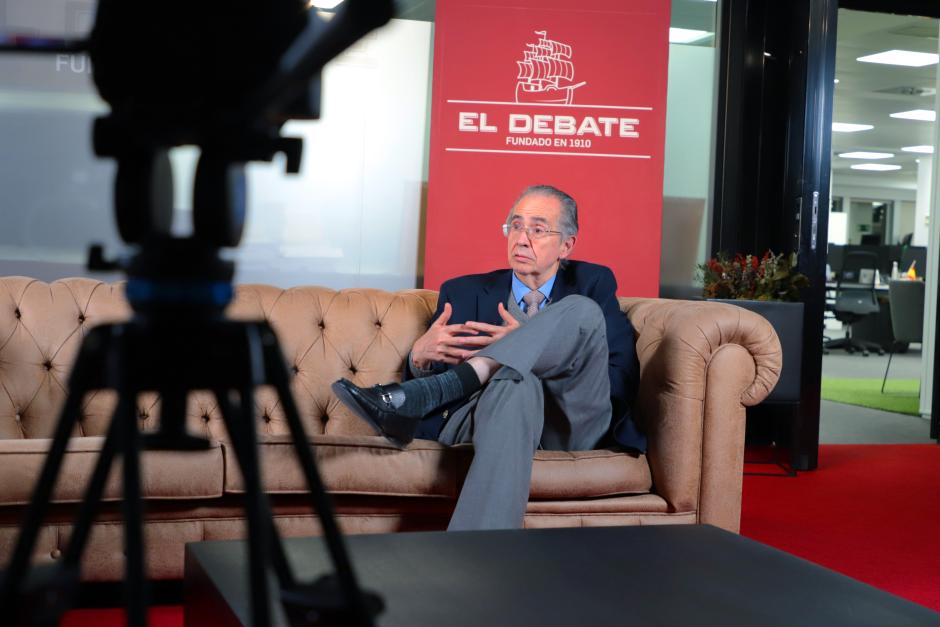
—As a person persecuted by the regime and director of a media outlet, don’t you feel benefited or protected by the amnesty?
—No, of course not. The amnesty did not take into account freedom of expression and freedom of expression is a fundamental human right. There can be no transition without free media. An election that is the end of the transition process cannot be reached without free media.
In Venezuela there is currently nothing but government-controlled media, and independent media like us, and like many others, are blocked. The government orders to block telephone companies, which are internet providers. Telefónica is one of those that blocks, orders the media to be blocked so that people cannot see them inside Venezuela.
They took away our facilities from us, but there are radio stations that took everything away from them. It has been a terrible process of repression against the media, where they have been left with nothing and what remains is either completely self-censored or simply does not exist as independent media.
—What would be the first step to recover press freedom in Venezuela?
—The first step, the easiest, is to unblock the media through the internet so that independent media can be seen within Venezuela. The second thing has to be guarantees for journalists, a guarantee that they can return to the country, that they can do their work, that they are not repressed on the street, that they have access to sources. The third is that they return to all those media all those things that they have confiscated, they return their facilities, their frequency, the radio stations, etcetera, etcetera, etcetera, and that they also create a climate in which an independent media outlet, which currently does not exist, can really function.
—What has been Telefónica’s role in the regime’s repression against the media?
—Telefónica has functioned as an accomplice of the regime. In fact, they block the media on the Internet, violating a European regulation because they cannot, as a subsidiary of Telefónica of Spain, violate a fundamental human right, which is freedom of expression. In other words, they are already acting outside the law in Venezuela.
—The Sánchez government has asked the European Union to lift sanctions against the Venezuelan regime, what do you think of this?
—That country is still in the hands of the same regime. There was the removal of Maduro, but the one who remained in control of the country and all the institutions has been the same regime. And a fundamental factor is the legal system. In Venezuela, judges are an appendix of the Executive.
How can you practice journalism when there are a series of laws that have not been repealed? There is a set of repressive laws that any judge can use at any time to criminalize a journalist. It is a system that is operating under laws that are totally illegal or unconstitutional, made to criminalize independent journalism.
—As owner of El Nacional, what do you demand from the regime?
—First, that they give us back the facilities, because those facilities were taken from us with a kind of assault by the army, but it was through a completely rigged trial based on a defamation complaint for simply publishing a note that had already appeared in the ABC from Spain.
But in addition to that, the judicial system has to be modified. Repeal of other laws that are absolutely arbitrary is needed to criminalize journalism.
—Is there hope or frustration in the Venezuelan exile with this process that the United States is pushing?
—The Americans have designed a process that requires a balance that is truly difficult to achieve. So far it is going more or less, but there is a risk that the dictatorship will be institutionalized in another way or that it will fall into terrible chaos. I hope that doesn’t happen.
On the other hand, this is a path where citizen participation is very low. For example, the Hydrocarbons Law was passed in one fell swoop. People do not participate, people are observers, they see it a little from afar.
And if there are also no independent media, which are the vehicle for people to participate, then the process remains totally isolated.