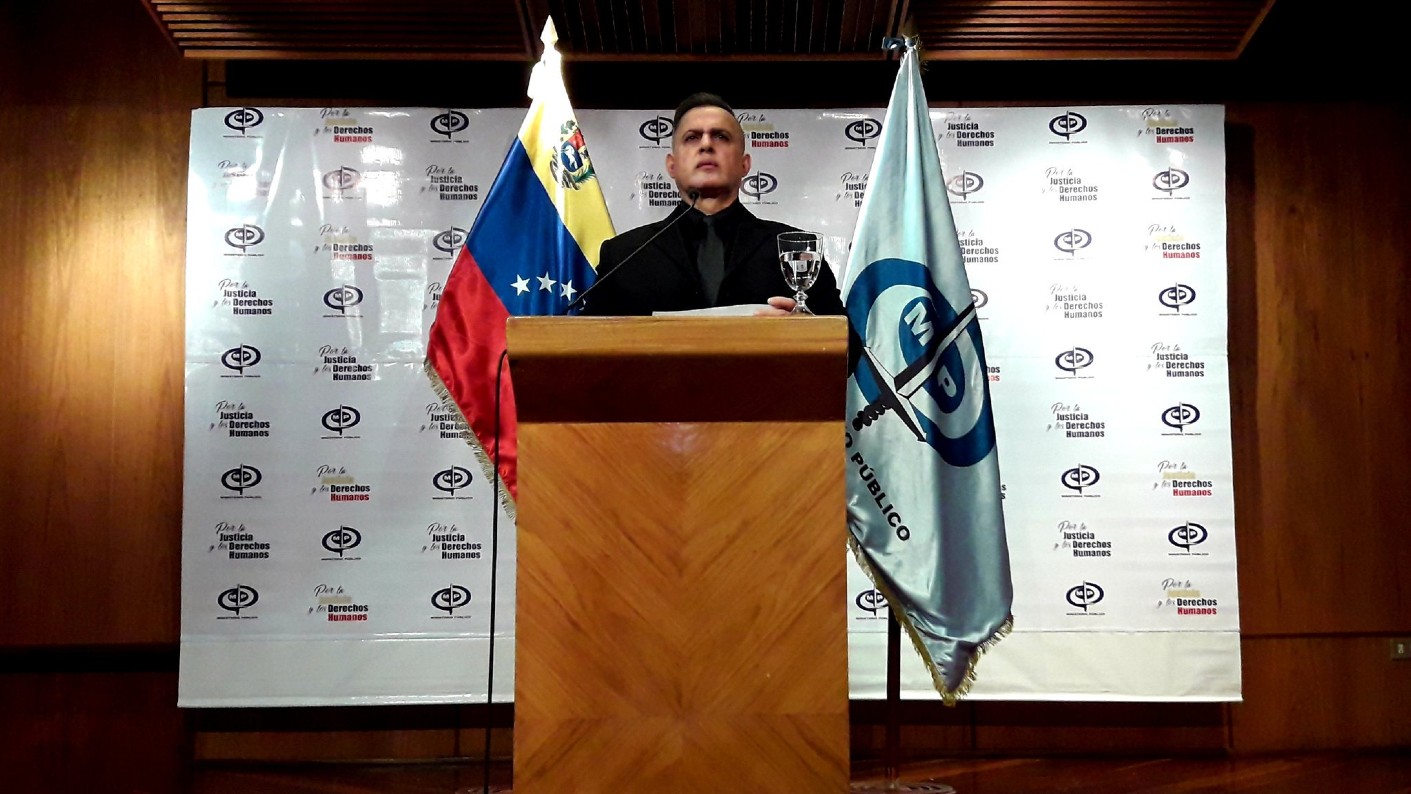
Saab’s departure from the Public Ministry is announced 56 days after the capture and extraction of Nicolás Maduro. During his administration, Venezuela became the first country in the region under formal investigation by the International Criminal Court (ICC) for crimes against humanity. It came to the Public Ministry (MP) through the back door, that of a national constituent assembly of dubious legitimacy in 2017, instead of the National Assembly, as required by the Constitution.
Tarek William Saab resigned from the Attorney General’s Office of the Republic, after nine years in charge of the organization, which has been accused of adapting to the interests of Miraflores and omitting abuses and even human rights violations such as torture and persecution.
The information was confirmed in the afternoon of February 25, 56 days after the capture and extraction of Nicolás Maduro by United States special forces, an operation that led to a killing move within the Executive, led by Delcy Rodríguez, who according to the North American government was willing to obey their requests.
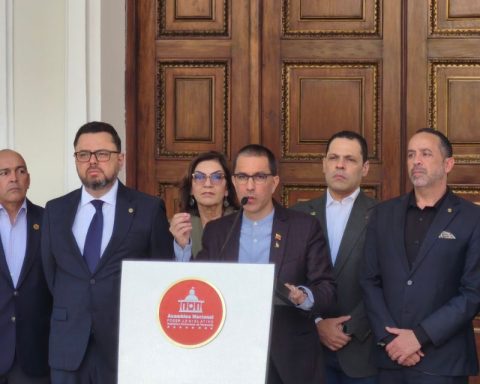
The information was announced at the ordinary session on February 25. The president of Parliament indicated that Saab informed his resignation through a letter sent to the Legislature. Alfredo Ruiz also resigned from the position of Ombudsman.
Saab came to the Public Ministry (MP) through the back door, that of a national constituent assembly of dubious legitimacy in 2017, instead of the National Assembly, as required by the Constitution.
Saab is no stranger to the Chavismo ecosystem. He served as Ombudsman between 2014 and 2017. In this position, his handling of the “La Tumba” case, at the headquarters of the Bolivarian National Intelligence Service (Sebin), was questioned. In 2015, relatives and lawyers denounced extreme isolation, without natural light and freezing temperatures. Given this, Saab declared that the detainees had signed minutes assuring that “the treatment was good.”
At that time, organizations such as Provea pointed out that Saab acted more like a public relations officer for Sebin than as a guarantor of rights, validating testimonies obtained under duress.
At the height of the 2017 protests, Saab received the most public questioning of his career and that of his inner circle: his son Yibram Saab published a video after the murder of student Juan Pablo Pernalete.
«Dad, right now you have the power to put an end to the injustice that has sunk the country. I ask you as a son and in the name of Venezuela to reflect and do what you have to do,” said the young man.
Before jumping to the Public Ministry, Saab asked the Supreme Court of Justice (TSJ) to grant the Ombudsman’s Office powers that the Constitution reserves exclusively to prosecutors, such as participating in criminal investigations and carrying out forensic analysis. Saab’s request was described by the then prosecutor Luisa Ortega Díaz and various NGOs as an institutional coup. It was the previous step for his appointment to the Prosecutor’s Office.
Under his administration, it became normal for civilians to be tried in military courts. Despite the complaints from the Inter-American Commission on Human Rights (IACHR), Saab defended the legality of these processes.
The files remain
Saab leaves, but the files in The Hague remain. During his administration, Venezuela became the first country in the region under formal investigation by the International Criminal Court (ICC) for crimes against humanity. Organizations of the stature of Amnesty International, Human Rights Watch and the UN Fact-Finding Mission They have documented what Saab always denied: that at the headquarters of Sebin and the General Directorate of Military Counterintelligence (Dgcim) torture is not an “exception”, but rather a state policy.
In marathon speeches, Saab always asserted that in Venezuela there were no political prisoners, but prisoners for common crimes, many of them conspiracies.
The recent massive releases, the approval of an Amnesty Law and the implicit recognition by the Executive of the existence of arbitrary detentions after the capture of Nicolás Maduro, refute their versions. If there were no political prisoners, who was amnesty today? If there were no abuses, why are government officials now admitting excesses or irregularities in the application of the Anti-Hate Law?
Saab, who claims to be a poet, is leaving the Public Ministry, having turned it into an arm of political persecution, according to NGOs and opposition leaders, rather than as an entity of justice. He leaves office sanctioned by the US, Canada, the European Union and Switzerland, not for his poems, but for his active role in undermining democracy.
The now former prosecutor was also governor. He held the highest regional position in Anzoátegui (2004-2012). There were accusations of opacity, use of public resources for the cult of his personality and complaints of corruption.
Cases that marked his time at the MP and that today form part of the file in The Hague:
The “suicide” of Fernando Albán (2018): A few hours after the councilor’s death in Sebin custody, Saab said it was a suicide. Three years later, and under pressure from the International Criminal Court (ICC), his office had to admit that it was a homicide, which showed that he judged first and left the investigation for later.
The murder of Captain Acosta Arévalo (2019): Rafael Acosta Arévalo arrived at a military court in a wheelchair, unable to speak and with obvious signs of torture. He died shortly after. Saab’s Prosecutor’s Office tried to classify the incident as “pre-intentional homicide.” The global scandal forced the classification to be changed to torture, although those responsible remain unpunished.
The Juan Requesens case and the “proof” of the video: Under Saab’s command, the Public Ministry used videos obtained under duress and recorded in illegal detention centers as “irrefutable” evidence.
The Guanare Massacre (Cárcel de Cepella, 2020): More than 40 inmates killed in an alleged escape attempt. While NGOs denounced a massive extrajudicial execution due to lack of food and inhumane conditions, the Prosecutor’s Office remained silent.
The 2024 post-election chase: After recent political events and the capture of Nicolás Maduro, the world put a magnifying glass on mass arrests. Saab accused citizens who demanded the recount of the minutes or who expressed their disagreement with the election results of July 2024 as “terrorists.” Today, with the Amnesty Law on the table, his accusations of “treason to the country” dissolve like salt in water, revealing that his accusations were political orders, not criminalistic findings.
The UN Fact-Finding Mission has been lapidary. In its reports, especially those from 2021 and 2024, it not only points out that crimes against humanity are committed in Venezuela, but also identifies the Public Ministry under the command of Saab as an actor that “perpetuates impunity.”
The UN has stated that the Prosecutor’s Office has failed to investigate the chain of command in cases of torture and extrajudicial executions, focusing only on low-ranking perpetrators to simulate justice before the International Criminal Court (ICC).
*Journalism in Venezuela is carried out in a hostile environment for the press with dozens of legal instruments in place to punish the word, especially the laws “against hate”, “against fascism” and “against the blockade.” This content was written taking into consideration the threats and limits that, consequently, have been imposed on the dissemination of information from within the country.
Post Views: 569