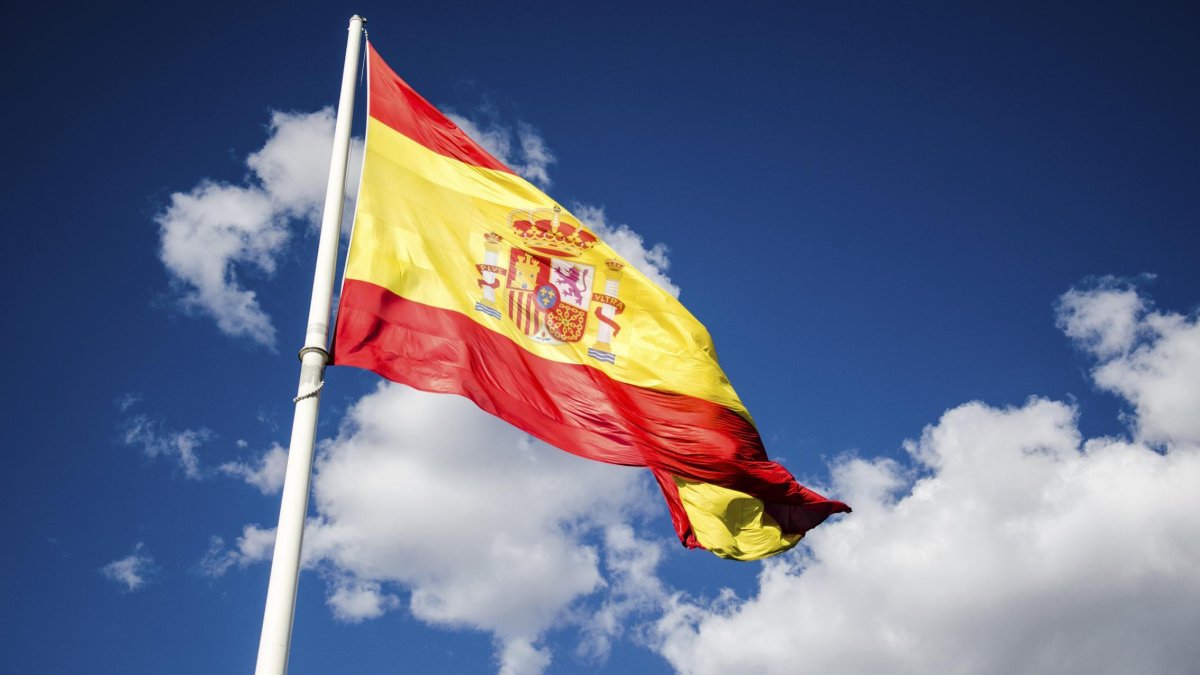
that the Spanish investment in the country has made a jump of 217% in just five years – from US$354.5 million in 2019 to US$1,126 million in 2024 – should shake our perception and lead us to the conviction that we are not facing simple figures, but rather, facing a change of signals.
Furthermore, it is not a bet restricted to tourism: it extends to strategic sectors such as renewable energy and connectivity, which reveals a broader and long-term vision.
The phenomenon is not isolated. It is part of a structural rearrangement in Europe that, for the Dominican Republic, acquires special relevance in the case of Spain. The figures confirm it: the European Union has displaced the United States and has become the leader in foreign direct investment in the country, with a participation of 34% of the total in 2024.
Spain is even consolidating itself as a bridge for European and Latin American investments that seek to expand into other markets, especially in the region. Its role transcends that of individual investor, to become a capital articulation platform.
This turn responds, to a large extent, to the deterioration of European competitiveness, the deepest since the Second World Waronly comparable to the so-called “eurosclerosis” of the 1970s and 1980s.
The industrial sector itself recognizes the seriousness of the situation. The Antwerp Declaration platform urged the members of the European Council, during the informal leaders’ retreat held recently at Alden Biesen Castle (Belgium), to adopt immediate decisions that allow “moving from diagnosis to execution” and translate into concrete measures in 2026 to stop the closure of plants and the destruction of industrial jobs.
The document, presented in the context of the European Industry Summit in Antwerp, warns that Europe faces a combination of persistently high energy and carbon costs, ruthless global competition and increasing fragmentation of the internal market. Furthermore, it warns that numerous multinationals already consider the continent “non-investable” when defining their capital allocations for the 2030s.
In this context, the Prime Minister of Belgium, Bart Deweverwas categorical: “In countries like ours – Germany, the Netherlands and France – the situation is simply dramatic. We are on the verge of an existential crisis. And the reasons are well known: energy costs, general competitiveness, regulation and Chinese ‘dumping’.”
While Europe deals with these tensions, the European Union leads foreign direct investment in the Dominican Republic, with 34% of the total in 2024. And the particular case of Spanish investment in our country has not only grown: it has changed scale. The challenge now is to convert that momentum into permanence and transform the situation into a long-term strategic relationship.