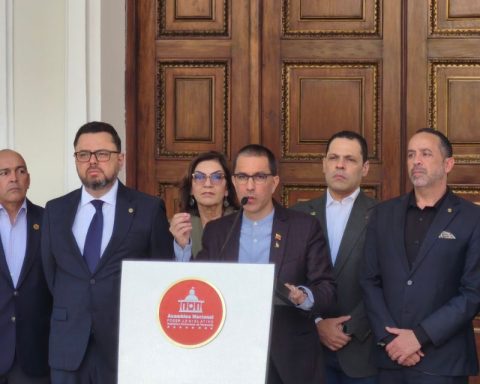
Deputy Jorge Arreaza, president of the special commission for the implementation of the Amnesty Law for Democratic Coexistence, presented a detailed assessment of the scope of this legal instrument. After a week of validity, the institutions registered a total of 6,487 requests from citizens seeking to benefit from the benefits of the regulations.
The Public Ministry processed the majority of the requests with 3,365 cases, followed by the Public Defense with 2,971 procedures. The distribution of the procedures also includes 127 requests through private defense and 24 through other subjects authorized by law.

Arreaza highlighted that the process is advancing with tangible results in the restitution of freedoms for the applicants. To date, the authorities have granted freedom to 185 people who remained in detention centers, while 3,266 citizens have received full freedom after completing precautionary measures or house arrest.
Currently, the competent agencies are evaluating 3,011 additional files to verify whether they comply with the 13 cases of violence contemplated in the legal text.
“There are many hopes and there are obligations for you, for us and for the justice system to review the cases that need to be reviewed, rectify what needs to be rectified or proceed in accordance with our laws,” said the deputy during the meeting.
Strengthening the justice system and citizen attention
To streamline the management of benefits, an exclusive office was set up to receive and process new amnesty requirements. This body seeks to centralize information and offer a timely response to interested parties. Deputy Arreaza emphasized that the structure of the justice system maintains the commitment to act quickly under the current legal framework.
For his part, the Minister of Culture, Ernesto Villegas, who accompanies the commission, highlighted the institutional coordination achieved to accelerate the reviews. Villegas positively valued the will of the different branches of public power to travel this path of reconciliation.
«We are making history. The historians of tomorrow will wonder what each person’s conduct was, and I am glad that there has been a confluence of wills,” said the official.
Villegas warned that the implementation of this law responds to a State policy and not a sign of institutional weakness. “The sectors that want to see this step as a weakness should not be mistaken, since the justice system continues to solidly comply with and enforce the laws,” the minister stated. The firmness of the institutions guarantees that the amnesty process occurs within the limits of the Constitution.
Strategic alliance for peace and coexistence
The presentation of these figures occurred at the end of a technical meeting between the special commission and the Program for Peace and Coexistence. Both bodies agreed to establish a joint work schedule to deepen the study of the remaining cases. The collaboration between the Legislative Branch and the Ministry of Culture seeks to strengthen the proposals that are submitted to the justice administration bodies.
The technical team analyzes each file to ensure that the benefit of the amnesty reaches those who effectively qualify according to the criteria of democratic coexistence. This inter-institutional effort aims to consolidate the political stability of the country through concrete legal measures.
The representatives of both bodies agreed that the law represents a significant advance for national pacification. The attention office will continue to operate to receive new requests from those citizens who consider that their cases fit the legal assumptions.
The Government hopes that these actions will reduce conflict and strengthen citizen confidence in the Venezuelan judicial system. The constant monitoring of the freedoms granted is part of the commission’s priority tasks for the coming days.